
















West Poised for Worst Grasshopper Outbreak in 30 Years
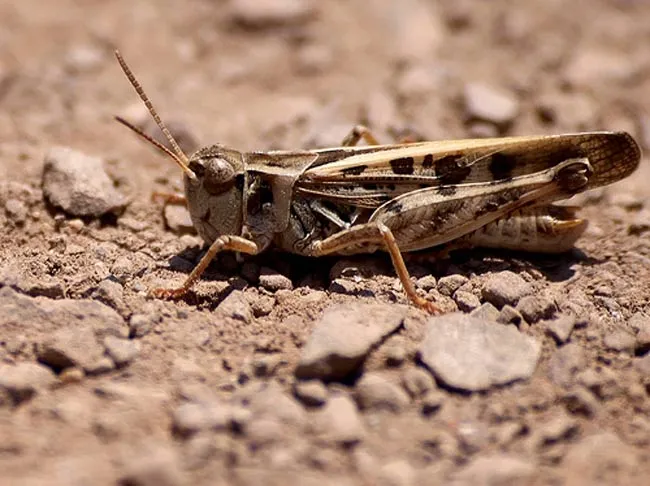
The worst grasshopper outbreak in decades may envelop the western states this summer, scientists warn.
A dramatic rise in the number of grasshoppers was found during a survey of the western states conducted last year, by the U.S. Department of Agriculture (USDA). And while that may seem bad enough on its own, it's really the grasshoppers' kids that are the threat.
If last summer's adults were successful during mating season, then the worst grasshopper infestation in 30 years could strike ranches and agricultural land in the Great Plains states between late July and early August, said Roeland Elliston of the USDA's Animal and Plant Health Inspection Service in Fort Collins, Colo., who worked on the survey.
Ecologist David Branson who was not involved with the study but specializes in grasshopper management with the USDA in Sidney, Mont., agreed.
Pacific Northwest states such as Washington are also facing their worst grasshopper infestation in 30 years, said entomologist Richard Zach of Washington State University in Pullman, Wash., who was not involved in the survey.
The USDA survey included the number of adult grasshoppers from late spring to early fall in 2009. Based on those numbers, and favorable reproductive conditions such as the mild winter this year, researchers identified areas at risk of a grasshopper infestation, including states in the Great Plains and the Pacific Northwest.
Montana, Wyoming and Nebraska — states with typically high numbers of grasshoppers due to the large expanses of open range land there — are already seeing more than eight grasshoppers per square yard. That's like walking through a field and having eight grasshoppers fly in your face with every step, Zach said.
Get the world’s most fascinating discoveries delivered straight to your inbox.
The problem is spreading to Pacific Northwest states not used to dealing with grasshopper outbreaks. In Washington, 451,000 acres of land had a grasshopper density higher than eight grasshoppers per square yard in 2009, up from 67,000 acres in 2006, Zach said. Across the 17 western states, adult grasshoppers blanketed 115 million acres at densities between eight and 15 grasshoppers per square yard, according to the USDA report.
The potential economic impact is uncertain, but federal agencies and researchers are advising farmers and ranchers to keep a watchful eye on grasshopper numbers and be ready to spray their land with pesticides if an outbreak hits.
The most troublesome species across the western states are the clear-winged grasshopper and the migratory grasshopper. These species could team up with another plant pest, the Mormon Cricket, to ravage natural grasses and plants. The Mormon Cricket is actually not a cricket at all, but is a close relative known as a shield-backed katydid.
Smaller grasshopper infestations have hit in recent years. Swarms of grasshoppers devastated over 7,000 acres of grassland in southeastern Oregon's high desert last summer. However, they normally strike open rangeland, which is not as valuable as farmland.
"They eat anything that's green. If they're hungry enough they'll even chew into the shoots," Zach told LiveScience, referring to the two troublesome species.
Most ranchers won't spray pesticides until grasshopper numbers reach 15 per square yard, because it isn't cost-effective on their sprawling ranches, Elliston said.
When grasshoppers run out of food, they will fly away and can get caught in wind currents and journey between 30 to 50 miles (48 to 81 kilometers) in search of food. Mormon Crickets cannot fly, but they can march across rangeland.
"If you have major outbreaks, as the rangeland dries up you'll get them moving into adjacent crop fields, which is also a major problem," Branson said.
The general public shouldn't worry about the outbreak, Zach said. People may notice a few more grasshoppers in their gardens, but unless their house is on the edge of rangeland, where grasshoppers prefer to feast, the outbreak won't be a serious problem for them.