













Nobody Messes with Black Belts of the Insect World

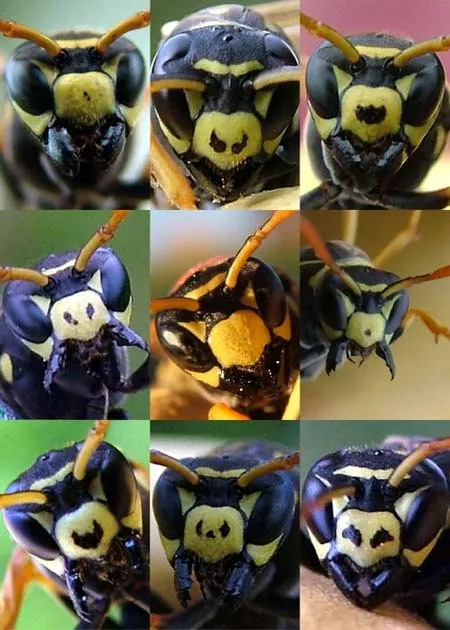
Just as some people look too scary to get into a fight with, so too do the looks on the faces of some wasps keep others away.
Like a karate black belt, paper wasps wear black spots to warn others of their grappling prowess, according to a new study that illustrates a strategy animals can use to avoid fights.
Animals spend a lot of time competing with each other over sex, food, territory or other desirables.
"Competition can be really costly, so you get these signals to reduce competition," explained researcher Elizabeth Tibbetts, a behavioral ecologist at the University of Michigan at Ann Arbor.
Tibbetts spent a lot of time looking at paper wasps (Polistes dominulus). "I noticed all these different facial patterns and wondered why," she recalled. "And then, as I pursued it, I discovered they were getting used as signals."
The better fed and larger these wasps are, the more black spots they often have on their yellow faces. Tibbetts reasoned the more spots wasp faces had, the more other wasps might shy away.
The researchers perched dead wasps on top of sugar cubes and painted their faces with specific patterns. They next saw if other wasps dared approach the cubes for some tasty sugar. "The dead wasps kind of served like scarecrows for the other wasps," Tibbetts explained.
Get the world’s most fascinating discoveries delivered straight to your inbox.
At first, the scientists tried tethering live wasps to the sugar cubes. "That turned out to be very difficult," Tibbetts told LiveScience. "They don't like that."
The researchers found that wasps preferred challenging guards with fewer spots and veered off from those with more spots. Tibbetts and her colleague Rebecca Lindsay detailed their findings online March 12 in the journal Biology Letters.
"It's like karate belts," Tibbetts said. "Someone with a black belt is better than someone with a yellow belt. ... It's a convention we have to signal fighting ability." And as any black belt knows, other people knowing you are one can keep you out of fights.
When it comes to how common the use of visual markings are in the animal kingdom to scare away potential foes, Tibbetts said, "I bet it's pretty widespread. Insects are sometimes thought to be relatively simple. So if insects can do this, chances are many other animals do it too."
- Top 10 Insect Secret Weapons
- 10 Amazing Things You Didn't Know about Animals
- Backyard Bugs: The Best of Your Images
