













Around the World: Atlantic Warming Melts Antarctic Ice

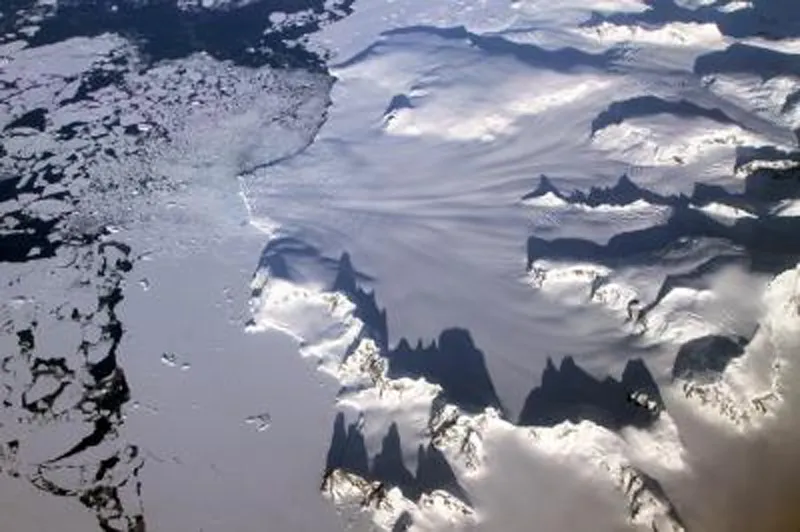
Though physically about as distant from Antarctica as you can get, water masses in the North and Tropical Atlantic Ocean significantly influence the effects of climate change on the icy southernmost continent, new research suggests.
Antarctic climate has changed considerably over the past several decades, with the Antarctic Peninsula — located on the West Antarctic Ice Sheet — experiencing more warming than any other region on Earth. Researchers have long recognized that atmospheric and oceanographic conditions, such as wind speed and direction, in the southern Pacific Ocean play an important role in the climate of Antarctica and the distribution of its ice. But Pacific conditions cannot entirely explain all the changes currently occurring in and around Antarctica, particularly during the austral (Southern Hemisphere) winter. [North vs. South Poles: 10 Wild Differences]
Now, a team of researchers based at New York University has studied more than 30 years of atmospheric data collected from around the world to try to identify other key atmospheric players in Antarctic climate. The team found that water temperatures in the North and Tropical Atlantic Ocean correlate strongly with sea-level pressure in Antarctica's Amundsen Sea, which influences the behavior of sea ice in the region.
"Those things stuck out as a sore thumb that said they were related," study co-author David Holland told LiveScience. "That doesn't mean one thing causes the other, but they are strongly related."
The team next tested whether the correlation between Atlantic and Antarctic water masses represented a true cause-effect relationship, or whether it was just a coincidence. To do so, the researchers used atmospheric models to simulate changes in the Antarctic climate under various global atmospheric and oceanic conditions. To their surprise, they found that directly raising temperatures in the North and Tropical Atlantic in their models did, indeed, have the same effects on wind patterns and ultimately the distribution of sea ice around Antarctica as the historical records showed happened in real life.
This suggests that the Atlantic temperatures and Antarctic sea ice are causally linked, Holland said.
It may seem counterintuitive that ocean temperatures in one hemisphere could have such a large impact on ice distribution in another hemisphere. However, as Holland explained, Atlantic conditions propagate out of the Northern Hemisphere in an atmospheric ripple effect: Warm water masses in the Atlantic change atmospheric conditions that eventually turn the gears of the Southern Hemisphere's atmospheric patterns, finally getting sucked down into the region surrounding Antarctica.
Get the world’s most fascinating discoveries delivered straight to your inbox.
Next, the team hopes to better understand what drives the yearly and decadal changes in the North and Tropical Atlantic Ocean that have caused observed changes in Antarctica over the past 30 years. They also want to better understand why ice in Antarctica reacts to climate change differently than does ice in the Arctic. Antarctic ice has been redistributed more than it has disappeared in recent years, while Artic ice has experienced more melting.
The study findings appear today (Jan. 22) in the journal Nature.
Follow Laura Poppick on Twitter. Follow us @livescience, Facebook & Google+. Original article on LiveScience.
