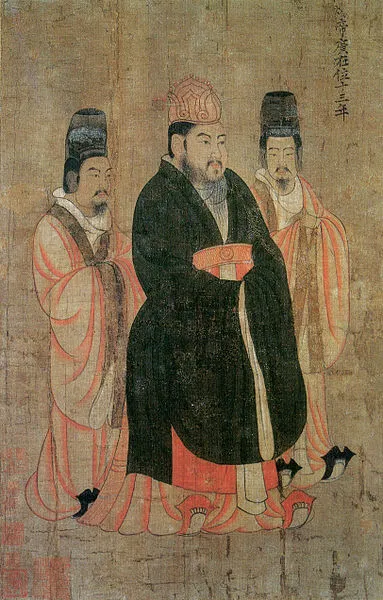
Archaeologists have found a tomb in eastern China that may be the grave of the notorious Emperor Yang of Sui, according to news reports.
With inscriptions revealing the surprising identity of the deceased, the burial chamber measures about 215 square feet (20 square meters). It was uncovered in Yangzhou, a city about 175 miles (280 kilometers) southeast of Shanghai, China's state news agency Xinhua reported.
Shu Jiaping, who leads Yangzhou's institute of archaeology, told Xinhua that researchers are "still not sure whether it was the emperor's final resting place, as historical records said his tomb had been relocated several times."
Latest Videos From
Emperor Yang, also known as Yang Guang, is remembered as a fearsome and decadent tyrant. During his rule from 606 until his death at the hands of rebels in 618, he forced millions of laborers to take part in ambitious construction projects, such as building royal palaces, completing of the Grand Canal and reconstructing of the Great Wall. Emperor Yang also launched costly military campaigns, including a failed conquest of Goguryeo, an ancient kingdom of Korea, which eventually led to the collapse of the Sui Dynasty.
Grave robbers seem to have looted the tomb in the 1,500 years since the emperor's death, according to China Daily. However, archaeologists reportedly found some items considered telltale signs of royalty inside the tomb, including a jade belt with gold details. The tomb was exposed at a construction site last year, and it is connected to another chamber that may belong to the emperor's wife, Xinhua reported.
Emperor Yang's final resting place pales in comparison to those of other Chinese rulers. An army of life-size clay warriors famously guards the city-sized tomb of China's first emperor, Qin Shi Huang, who died in 210 B.C. The main burial chamber of Qin Shi Huang has yet to be excavated, but according to legend, it has rivers of mercury and a ceiling encrusted with gems. Archaeologists recently found the emperor's palace complex at the site near the city of Xi'an.
Follow Megan Gannon on Twitter and Google+. Follow us @livescience, Facebook & Google+. Original article on LiveScience.com.