BOSTON — Drugs taken by humans can have unintended side effects — on fish, in the natural environment. Turns out, fish fed extremely low concentrations of an antianxiety drug eat more quickly, and act bolder and more antisocial than their un-medicated peers, a new study finds.
"We can see profound effects at the low levels that we find in surface water. Exposed fish are more bold," Jerker Fick, a co-author and researcher at Umea University in Sweden, said at a news conference here at the annual meeting of the American Association for the Advancement of Science (AAAS).
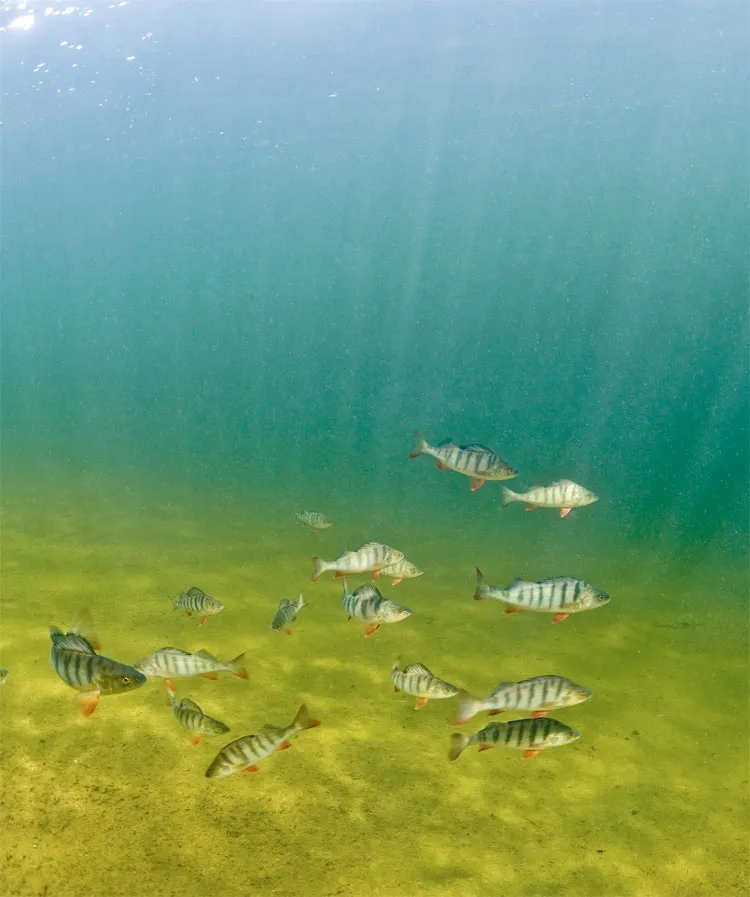
The study looked at the effect of oxazepam (also known as Serax), used to treat anxiety and panic in humans, on the widespread European perch fish. Researchers gave the fish a concentration of drugs similar to that found in rivers and streams in Sweden and elsewhere, according to a study published today (Feb. 14) in the journal Science. [Trippy Tales: The History of 8 Hallucinogens]
Latest Videos From
Here's how the drugs make their way into fishy habitats in real life: They get excreted by humans, pass through wastewater treatment facilities, which are not designed to break down such compounds, and then flow into rivers, Fick told LiveScience.
In the lab, perch were exposed to oxazepam in aquaria meant to mimic the animals' natural conditions. Once exposed, the fish became more antisocial, distancing themselves from fellow fish and likely putting themselves at greater risk of predation, said co-author Tomas Brodin, also of Umea University.
Exposed fish also ate more quickly, a trait that could have profound effects on the environment. This quick gobbling of zooplankton (tiny floating animals) could perhaps lead to blooms of algae, which zooplankton eat. If perch devour more zooplankton, more algae could survive, and their populations could explode, Brodin said.
Drug-exposed fish also left the dark enclosures in their lab homes more quickly, venturing out into open areas of the aquaria to feed, Brodin said. Fish not given drugs lingered longer in their refuges, acting more cautiously. "But the exposed fish didn't care," Brodin said.
The authors said the drug in question works by relieving stress (in both humans and animals), but a certain amount of stress is needed to prevent animals from taking unwarranted risks. Concentrations of drugs in the muscles of the laboratory fish were similar to those found in Swedish rivers, suggesting the effects seen in the study are likely happening in the environment, Fick said.
Oxazepam is a type of benzodiazepine, a very widely prescribed class of antianxiety drugs. It is the most commonly prescribed such medicine in Sweden, and is also formed when humans metabolize other benzodiazepines such as diazepam, also known as Valium, Brodin said.
These drugs are found in waterways throughout the world, and they likely affect all fish since they act on a cellular receptor found in almost all vertebrates, or animals with backbones, Brodin said.
"It's a global issue," he said. "It's probable these behavioral effects are happening around the world as we speak."
Reach Douglas Main at dmain@techmedianetwork.com. Follow him on Twitter @Douglas_Main. Follow LiveScience on Twitter @livescience. We're also on Facebook & Google+.