





-
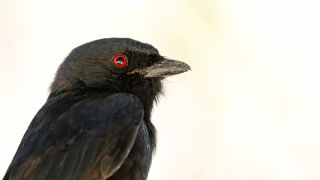 Book excerptCan animals lie? This sneaky bird might be proof.
In his new book, "Liars, Cheats and Copycats," biologist James O'Hanlon surveys deception across the animal kingdom and asks whether any of it adds up to lying.
-
-
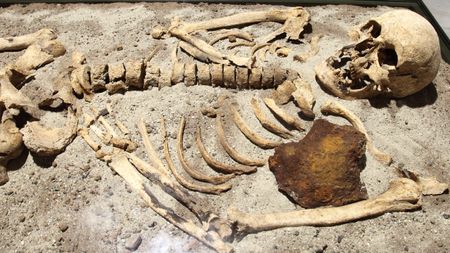 Book excerptHow purported tales of consuming vampire blood and organs spread in the 18th century
In this excerpt from "Killing the Dead," author John Blair looks at how the printed press ramped up tales of vampirism, leading to stories of people eating a supposed vampire's organs and drinking their blood in a bid to avoid the same fate.
-
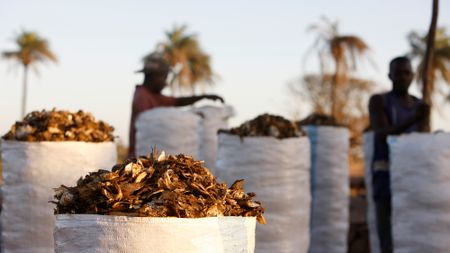 Book excerpt'They cannot compete with the prices that fish factories will pay': How demand for fish meal takes priority over feeding people
In this excerpt from "Every Last Fish," author Rose George examines the deep-rooted problems of the regulations surrounding fish meal.
-
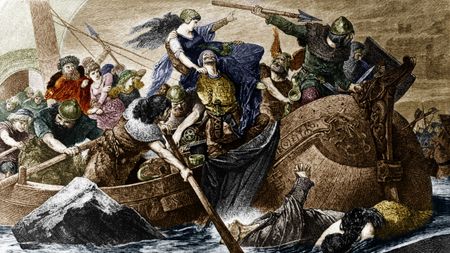 Book excerpt'The back of her head had been removed by a single blow from a sharp blade': Archaeological clues are revealing the horrific lives and deaths of the people enslaved by Vikings
In this excerpt from "The Sea-King and the Sorceress," author Neil Price looks at the lesser known lives of the people enslaved by Vikings: the thralls.
-
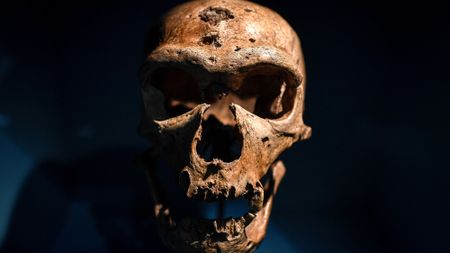 Book excerpt'News reports tweaked the science to speak to contemporary anxieties': How Neanderthal extinction is a projection of our own, modern fears
In this excerpt from "Neanderthals Among Us," author Peter Sahlins looks at the way Neanderthal extinction theories are often engrained with our own societal fears.
-


-
-
 Cosmology'A frankly embarrassing result': We still know hardly anything about 95% of the universe
"As yet, nobody has managed to understand what gives rise to this strange phenomenon, and explaining dark energy remains one of the most formidable challenges of modern science."
-
 Plants'Rising temperatures melted corpses out of the Antarctic permafrost': The rise of one of Earth's most iconic trees in an uncertain world
As the Atlantic grew wider, the ancestral population of all of today's oaks may have been straddling the continents of the Northern Hemisphere. If so, the ancestor of the oaks we know today was a widespread population that was cleaved in half as North America inched westward.
-
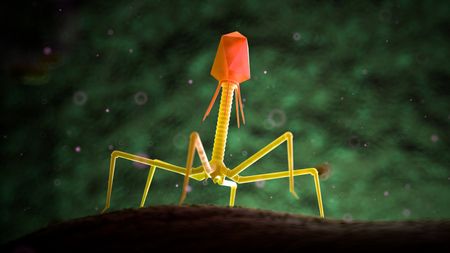 Bacterial & Fungal Infections'Medicine needed an alternative': How the 'phage whisperer' aims to replace antibiotics with viruses
"Both understood phages as medicinal agents, which the rest of the medical field viewed as nonsensical."
-
 Neuroscience'It explains why our ability to focus has gone to hell': Screens are assaulting our Stone Age brains with more information than we can handle
Modern technology has fundamentally changed how our ancient minds work.
-
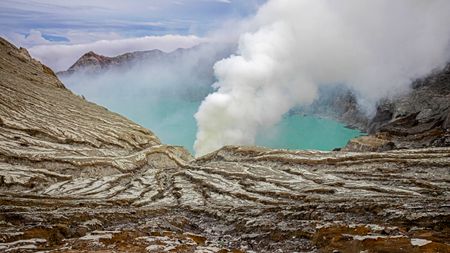 Rivers & Oceans'A challenge and an opportunity for evolution': The extreme, hidden life thriving in Earth's most acidic and alkaline lakes
"The most acidic natural inland waters are the lakes that lie in the craters of volcanoes, like Kawah Ijen in Indonesia. These lakes are so rich in sulfuric acid that they may have a pH as low as 0.1. To put this in context, fresh battery acid has a pH of about 0.7. "
-
 Artificial Intelligence'It might pave the way for novel forms of artistic expression': Generative AI isn't a threat to artists — it's an opportunity to redefine art itself
Rather than fearing the rise of generative AI, new technologies may allow creatives to define and express themselves in completely new ways.
-
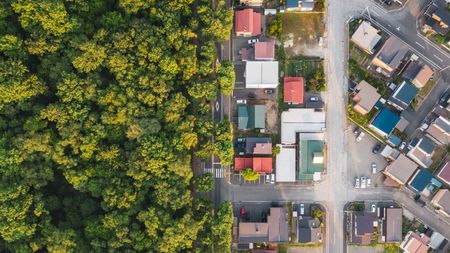 Health'The prescription is nature': How satellites can show us the healing effects of nature
"The incidence of diagnosis and treatment of mental health disorders is less the greener the environment people live in."
-
 Artificial IntelligenceAI 'can stunt the skills necessary for independent self-creation': Relying on algorithms could reshape your entire identity without you realizing
"If you constantly use an AI to find the music, career or political candidate you like, you might eventually forget how to do this yourself." Ethicist Muriel Leuenberger considers the personal impact of relying on AI.
-
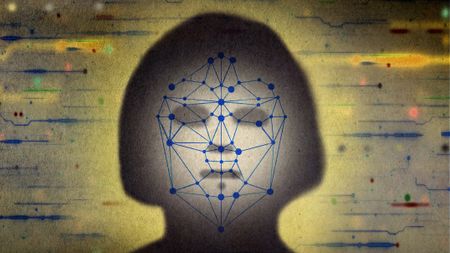 Artificial Intelligence'I'd never seen such an audacious attack on anonymity before': Clearview AI and the creepy tech that can identify you with a single picture
"Concerns about facial recognition had been building for decades. And now the nebulous bogeyman had finally found its form: a small company with mysterious founders and an unfathomably large database."
-


