








-
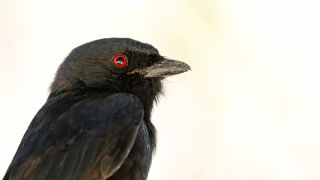 Book excerptCan animals lie? This sneaky bird might be proof.
In his new book, "Liars, Cheats and Copycats," biologist James O'Hanlon surveys deception across the animal kingdom and asks whether any of it adds up to lying.
-
-
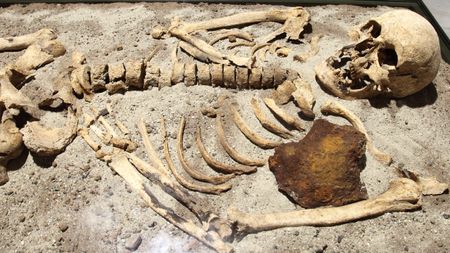 Book excerptHow purported tales of consuming vampire blood and organs spread in the 18th century
In this excerpt from "Killing the Dead," author John Blair looks at how the printed press ramped up tales of vampirism, leading to stories of people eating a supposed vampire's organs and drinking their blood in a bid to avoid the same fate.
-
 Book excerpt'They cannot compete with the prices that fish factories will pay': How demand for fish meal takes priority over feeding people
In this excerpt from "Every Last Fish," author Rose George examines the deep-rooted problems of the regulations surrounding fish meal.
-
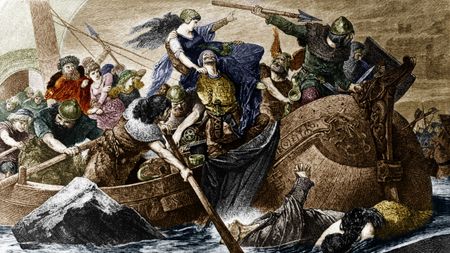 Book excerpt'The back of her head had been removed by a single blow from a sharp blade': Archaeological clues are revealing the horrific lives and deaths of the people enslaved by Vikings
In this excerpt from "The Sea-King and the Sorceress," author Neil Price looks at the lesser known lives of the people enslaved by Vikings: the thralls.
-
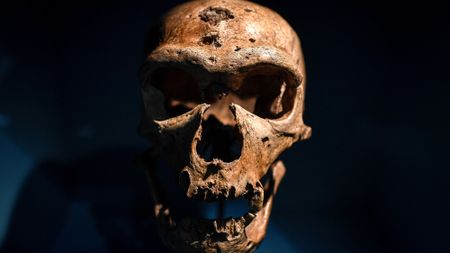 Book excerpt'News reports tweaked the science to speak to contemporary anxieties': How Neanderthal extinction is a projection of our own, modern fears
In this excerpt from "Neanderthals Among Us," author Peter Sahlins looks at the way Neanderthal extinction theories are often engrained with our own societal fears.
-


-
-
 Viruses, Infections & Disease'The Big One' could be even worse than COVID-19. Here's what epidemiologist Michael Osterholm says we can learn from past pandemics.
The new book "The Big One" describes lessons learned from past pandemics and how they might be applied to mitigate the dangers of future outbreaks.
-
 Artificial Intelligence'Foolhardy at best, and deceptive and dangerous at worst': Don't believe the hype — here's why artificial general intelligence isn't what the billionaires tell you it is
"Unfortunately, the goal of creating artificial general intelligence isn’t just a project that lives as a hypothetical in scientific papers. There’s real money invested in this work, much of it coming from venture capitalists."
10 Comments -
 Book'How could it have been allowed to happen?': The threat of 'superbugs' was known from the first antibiotic, but we've failed to stop it.
"What are sometimes called superbugs — microbes resistant to every available drug — are not merely the stuff of nightmares. They are taking lives right now."
7 Comments -
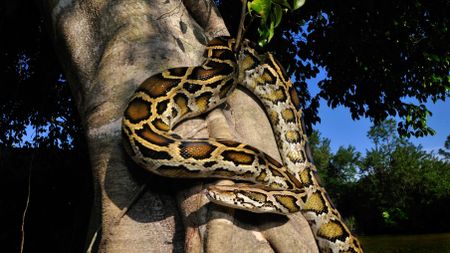 Snakes'An up-tempo version of Darwinian evolution': How a mega freeze in Florida may have caused Burmese pythons to evolve at a blindingly fast speed
"The 2010 cold snap may have created a subset of pythons better able to survive cold temperatures — and thus better adapted to spread beyond the northern boundaries of its current range."
3 Comments -
 Climate change'Heat is the final boss. Heat is a different beast': The planetary peril no one will be able to avoid
"What will be new about heat deaths is the extent to which the lived environment will become physically uninhabitable for everyone, old and young, middle-aged, healthy and ill."
-
 Insects'An artist would be challenged to create such replicas': How looking closer reveals the beauty and lethal efficiency of insects
"When a dragonfly hunts, it hovers perfectly still and positions itself between its prey and a shadow cast behind it by, say, a tree, concealing its position. It's a bit like creeping up on someone in a forest hiding behind branches."
-
 Viruses, Infections & Disease'A political division, not a physical one, determined who got measles and who didn't': Lessons from Texarkana's 1970 outbreak
"Today, Texarkana's unusual geographic and political arrangement continues to instruct us about the deeply intertwined nature of politics and health."
-
 CancerWhy America is losing its 50-year 'war on cancer,' according to scientist Nafis Hasan
"This line of attack in the War on Cancer has had few meaningful outcomes for cancer patients."
-
 Artificial Intelligence'I encountered the terror of never finding anything': The hollowness of AI art proves machines can never emulate genuine human intelligence
Looking at AI art shows that machines may never truly understand the human mind, as there are states of mind that can never be automated.
19 Comments
-


