
-
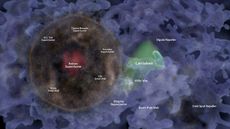 Mysterious 'fossilized' bubble 10,000 times the size of the Milky Way could be a relic from the Big Bang
Astronomers have spotted a gigantic void they believe to be a baryon acoustic oscillation — a relic from when the universe was a fiery plasma soup.
astronomy -
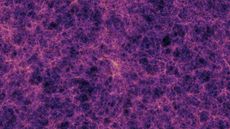 $100,000 Breakthrough physics prize awarded to 3 scientists who study the large scale structure of the universe
Mikhail Ivanov, Oliver Philcox, and Marko Simonović won the New Horizons Award for their work on large scale structures — the strands and filaments of our universe which contain buried clues to its most fundamental properties.
cosmology -
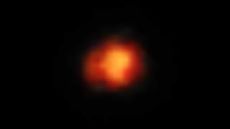 13 billion-year-old 'Maisie's galaxy' is one of the oldest objects in the universe, James Webb telescope reveals
Born less than 400 million years after the Big Bang, Maisie's galaxy is officially one of the four oldest galaxies ever discovered, a new JWST study reveals.
cosmology -
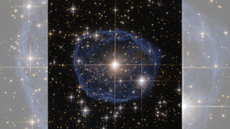 Giant 'bubbletrons' shaped the forces of the universe moments after the Big Bang, new study suggests
Meet the 'bubbletrons' — theoretical particle accelerators that may have helped build the universe as we know it.
cosmology -
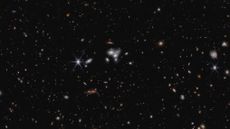 James Webb telescope discovers the oldest active black hole in the known universe
Astronomers using the James Webb Space Telescope have discovered a feeding supermassive black hole from when the universe was less than 600 million years old.
black-holes -
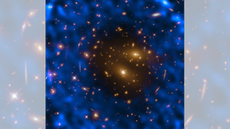 5 fascinating facts about the Big Bang, the theory that defines the history of the universe
From the Catholic priest who pioneered it, to how we can (almost) see it, here are 5 fascinating facts about the Big Bang.
cosmology -
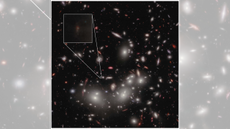 James Webb Space Telescope finds the faintest galaxy ever detected at the dawn of the universe
The James Webb Space Telescope has discovered the faintest galaxy ever seen, burning away the pitch-black gloom of the early universe 13 billion years ago.
cosmology -
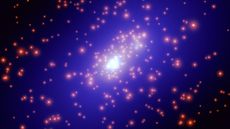 There may have been a second Big Bang, new research suggests
Within a month of the Big Bang, a second cosmic explosion may have given the universe its invisible dark matter, new research suggests.
quantum-physics -
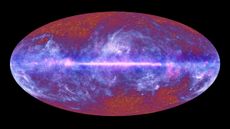 The universe might be shaped like a doughnut, not like a pancake, new research suggests
The universe may be flat, but could still be shaped like a doughnut, weird patterns in leftover light from the Big Bang suggest.
astronomy


