















We actually have trillions of 'body clocks,' not just one. Here's how they all work together.
We have trillions of body clocks — a central one in the brain and others in each cell of our body. Here's how they work with light to control our health.


Exposure to light is crucial for our physical and mental health, as this and future articles in the series will show.
But the timing of that light exposure is also crucial. This tells our body to wake up in the morning, when to poo and the time of day to best focus or be alert. When we're exposed to light also controls our body temperature, blood pressure and even chemical reactions in our body.
But how does our body know when it's time to do all this? And what's light got to do with it?
What is the body clock, actually?
One of the key roles of light is to re-set our body clock, also known as the circadian clock. This works like an internal oscillator, similar to an actual clock, ticking away as you read this article.
But rather than ticking you can hear, the body clock is a network of genes and proteins that regulate each other. This network sends signals to organs via hormones and the nervous system. These complex loops of interactions and communications have a rhythm of about 24 hours.
In fact, we don't have one clock, we have trillions of body clocks throughout the body. The central clock is in the hypothalamus region of the brain, and each cell in every organ has its own. These clocks work in concert to help us adapt to the daily cycle of light and dark, aligning our body's functions with the time of day.
However, our body clock is not precise and works to a rhythm of about 24 hours (24 hours 30 minutes on average). So every morning, the central clock needs to be reset, signalling the start of a new day. This is why light is so important.
Get the world’s most fascinating discoveries delivered straight to your inbox.
Related: Blood test could tell you what time it is in your body
The central clock is directly connected to light-sensing cells in our retinas (the back of the eye). This daily re-setting of the body clock with morning light is essential for ensuring our body works well, in sync with our environment.
In parallel, when we eat food also plays a role in re-setting the body clock, but this time the clock in organs other than the brain, such as the liver, kidneys or the gut.
So it's easy to see how our daily routines are closely linked with our body clocks. And in turn, our body clocks shape how our body works at set times of the day.
What time of day?
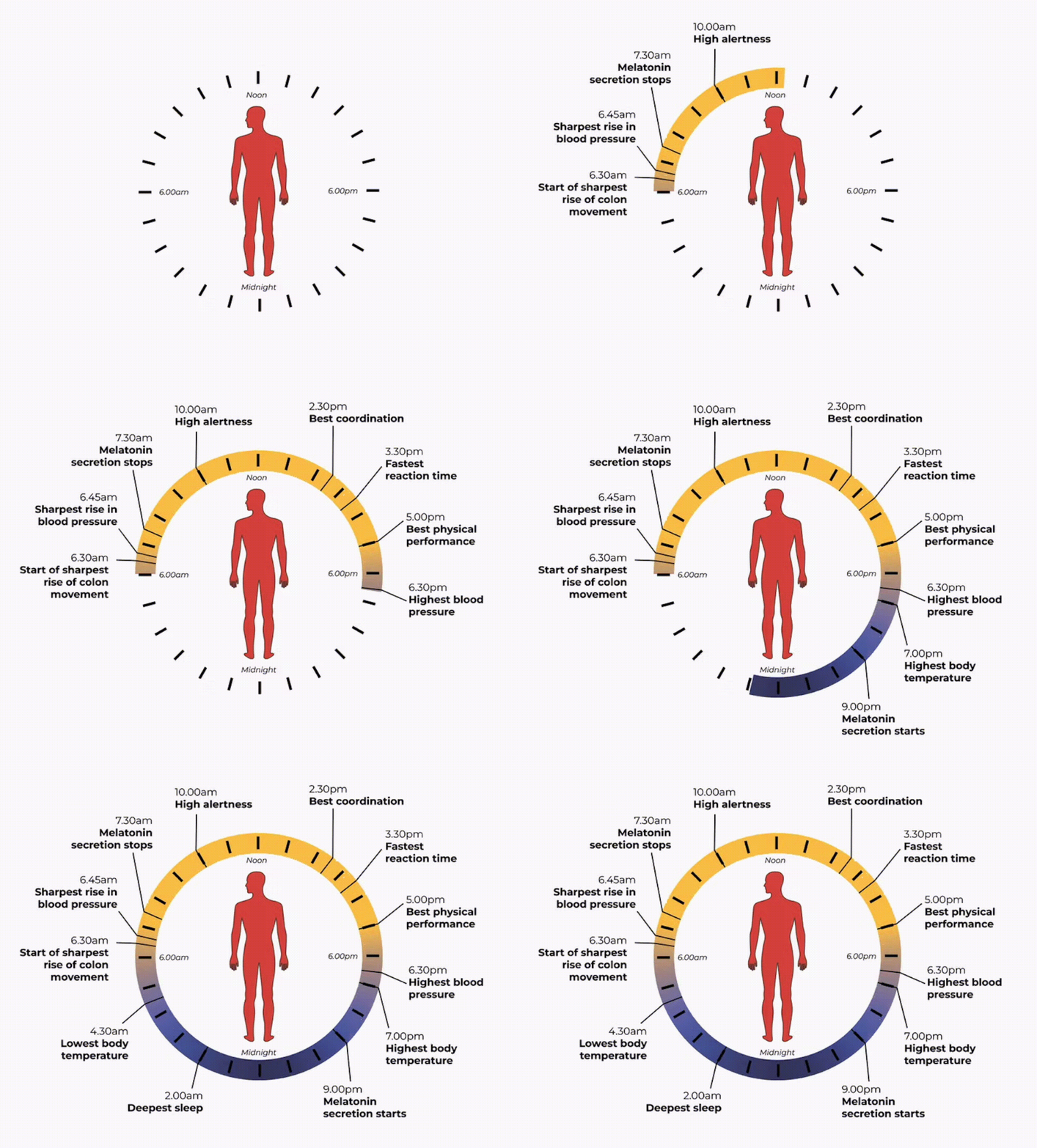
Let's take a closer look at sleep
The naturally occurring brain hormone melatonin is linked to our central clock and makes us feel sleepy at certain times of day. When it's light, our body stops making melatonin (its production is inhibited) and we are alert. Closer to bedtime, the hormone is made, then secreted, making us feel drowsy.
Our sleep is also partly controlled by our genes, which are part of our central clock. These genes influence our chronotype — whether we are a "lark" (early riser), "night owl" (late sleeper) or a "dove" (somewhere in between).
But exposure to light at night when we are supposed to be sleeping can have harmful effects. Even dim light from light pollution can impair our heart rate and how we metabolise sugar (glucose), may lead to psychiatric disorders such as depression, anxiety and bipolar disorder, and increases the overall risk of premature death.
The main reason for these harmful effects is that light "at the wrong time" disturbs the body clock, and these effects are more pronounced for "night owls".
This "misaligned" exposure to light is also connected to the detrimental health effects we often see in people who work night shifts, such as an increased risk of cancer, diabetes and heart disease.
How about the gut?
Digestion also follows a circadian rhythm. Muscles in the colon that help move waste are more active during the day and slow down at night.
The most significant increase in colon movement starts at 6.30am. This is one of the reasons why most people feel the urge to poo in the early morning rather than at night.
The gut's day-night rhythm is a direct result of the action of the gut's own clock and the central clock (which synchronizes the gut with the rest of the body). It's also influenced by when we eat.

At 6.30am, your gut really begins to get going for the day.
How about focusing?
Our body clock also helps control our attention and alertness levels by changing how our brain functions at certain times of day. Attention and alertness levels improve in the afternoon and evening but dip during the night and early morning.
Those fluctuations impact performance and can lead to decreased productivity and an increased risk of errors and accidents during the less-alert hours.
So it's important to perform certain tasks that require our attention at certain times of day. That includes driving. In fact, disruption of the circadian clock at the start of daylight savings — when our body hasn't had a chance to adapt to the clocks changing — increases the risk of a car accident, particularly in the morning.
What else does our body clock control?
Our body clock influences many other aspects of our biology, including:
- physical performance by controlling the activity of our muscles
- blood pressure by controlling the system of hormones involved in regulating our blood volume and blood vessels
- body temperature by controlling our metabolism and our level of physical activity
- how our body handles drugs and toxins by controlling enzymes involved in how the liver and kidneys eliminate these substances from the body.

If you can, avoid driving long distances at night, as you'll be less alert.
Morning light is important
But what does this all mean for us? Exposure to light, especially in the morning, is crucial for synchronizing our circadian clock and bodily functions.
RELATED STORIES
As well as setting us up for a good night's sleep, increased morning light exposure benefits our mental health and reduces the risk of obesity. So boosting our exposure to morning light — for example, by going for a walk, or having breakfast outside — can directly benefit our mental and metabolic health.
However, there are other aspects about which we have less control, including the genes that control our body clock.
This edited article is republished from The Conversation under a Creative Commons license. Read the original article.

Frédéric Gachon received his PhD in 2001 from the University of Montpellier (France). Between 2001 and 2006, he performed his post-doctoral training with Prof. Ueli Schibler at the department of Molecular Biology of the University of Geneva, where he started to work on the regulation of physiology by the circadian clock. In 2006, he worked at the Institute of Human Genetic in Montpellier as a junior group leader before continued his career in Switzerland as an Assistant Professor in the Department of Pharmacology of the University of Lausanne and as a group leader at the Nestlé Institute of Health Sciences, Lausanne. He finally joined the Institute of Molecular Bioscience of the University of Queensland as an Associate Professor in 2019. During all these years, research of the Gachon group focussed on the understanding of the role of feeding and circadian rhythms on mouse and human physiology, contributing to the fundamental basis for chronopharmacology and chrononutrition.