

-
 Engineers build world's first portable diamond-powered quantum computer — it works at room temperature and can be plugged into an outlet
The world's first portable, room-temperature quantum computer with more than 10 qubits utilizes flawed lab-made diamonds. The quantum system fits into a standard server rack and connects to a typical power grid.
quantum -
 IBM scientists claim they've achieved 'quantum advantage' — and they've dared others to prove them wrong
Using IBM's quantum computer, scientists say they have shown in three different experiments that quantum computers can outpace classical machines in useful computations.
quantum -
 Quantum computing wielded to create extremely rare material critical to nuclear fusion
Nuclear fusion inches closer after scientists combine supercomputing, AI and quantum computing to blueprint a way to create more tritium.
quantum -
 New chip harnesses quantum computing's biggest weakness — and tries to turn it into a strength
A new quantum computing chip turns destructive noise into a programmable feature, helping scientists study signal loss and error correction to build more effective systems in the future.
quantum -
 IBM creates world's first sub-1nm computer chip — cramming 100 billion transistors into a tiny fingernail-sized space
IBM's NanoStack architecture has helped scientists cram 100 billion transistors onto a computer chip, delivering 50% better performance and consuming 70% less energy than the current generation.
computing -
 Scientists trained an AI model using an IBM quantum computer — and it answered questions correctly that the base model couldn't
When running an AI model through a quantum computer, scientists have increased accuracy by only adding a relatively small number of parameters.
22 Commentsquantum -
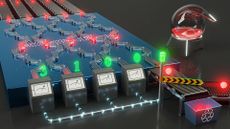 Breakthrough in experimental light-powered quantum computers could mean scaling them up is now far more viable
Scientists have achieved a breakthrough by "distilling" light to eliminate the noise that prevents photonic quantum computers from scaling.
2 Commentsquantum -
 IBM quantum processor achieves highest fidelity calculations for the longest period of time on record
Scientists have developed a novel approach to error correction that resulted in the highest-ever fidelity of entangled, logical qubits on a superconducting quantum processor.
quantum -
 Acing this new AI exam — which its creators say is the toughest in the world — might point to the first signs of AGI
Humanity’s Last Exam is a PhD-level benchmark designed to test the limits of AI reasoning. Although Google’s Gemini 3 scored a staggering 48.4%, experts stress that this does not indicate the arrival of artificial general intelligence (AGI).
2 Commentsartificial-intelligence -
 Scientists build 'most accurate' quantum computing chip ever thanks to new silicon-based computing architecture
Researchers say they have created the world's first scalable atomic quantum processor that achieves record-breaking 99.99% fidelity.
quantum -
 Record-breaking feat means information lasts 15 times longer in new kind of quantum processor than those used by Google and IBM
The novel design for the new qubit uses the chemical element tantalum in tandem with a special silicon substrate, creating what researchers say are the most coherent superconducting qubits to date.
2 Commentsquantum -
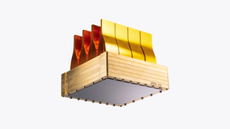 Breakthrough 3D wiring architecture enables 10,000-qubit quantum processors
The novel 3D wiring architecture and chip fabrication method enable quantum processing units containing 10,000 qubits to fit in a smaller space than today's 100-qubit chips.
quantum -
 Scientists say they've eliminated a major AI bottleneck — now they can process calculations 'at the speed of light'
A new architecture replaces traditional bottlenecks with a passive, single-shot light-speed operation that could become the foundational hardware for AGI, scientists argue.
3 Commentscomputing -
 Quantum computing 'lie detector' finally proves these machines tap into Einstein's spooky action at a distance rather than just faking it
Researchers developed an experimental method for confirming quantum activity in a quantum computing system.
quantum -
 Quantum record smashed as scientists build mammoth 6,000-qubit system — and it works at room temperature
A new system, made by splitting a laser beam into 12,000 tweezers and trapping 6,100 neutral atom qubits, hit new heights for coherence times.
2 Commentsquantum -
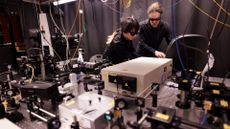 Electronics breakthrough means our devices may one day no longer emit waste heat, scientists say
A new "optoexcitonic switch" already achieves state-of-the-art performance over current electronics and could serve as the basis for classical and quantum computing devices capable of operating at room temperature.
electronics -
 IBM and Moderna have simulated the longest mRNA pattern without AI — they used a quantum computer instead
Scientists used IBM's R2 Heron quantum processor to predict the secondary protein structure of a 60-nucleotide-long mRNA sequence.
quantum -
 'Like a master Tetris player': Scientists invent quantum virtual machines — they'll slash turnaround times from days to hours
New quantum computing system allows multiple users to run programs simultaneously using virtual machines.
quantum -
 Scientists hit quantum computer error rate of 0.000015% — a world record achievement that could lead to smaller and faster machines
The record-breaking achievement could lead to practical, utility-scale quantum computers that are both smaller and faster.
2 Commentsquantum -
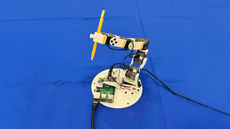 MIT's new AI can teach itself to control robots by watching the world through their eyes — it only needs a single camera
The new training method doesn't use sensors or onboard control tweaks, but a single camera that watches the robot's movements and uses visual data.
robotics -
 'Quantum AI' algorithms already outpace the fastest supercomputers, study says
Researchers have successfully demonstrated quantum speedup in kernel-based machine learning.
quantum -
 Microsoft breakthrough could reduce errors in quantum computers by 1,000 times
Microsoft scientists developed a 4D geometric coding method that reduces errors 1,000-fold in quantum computers.
quantum -
 IBM's monster 10,000-qubit quantum computer coming in 2029 after science behind fault-tolerenance 'solved'
The quantum computer, called Starling, will use 200 logical qubits — and IBM plans to follow this up with a 2,000-logical-qubit machine in 2033
quantum


