Get the world’s most fascinating discoveries delivered straight to your inbox.
You are now subscribed
Your newsletter sign-up was successful
Want to add more newsletters?
Join the club
Get full access to premium articles, exclusive features and a growing list of member rewards.
An account already exists for this email address, please log in.
Oops! Ancient Bronze Age shaman long assumed to be a man was actually a woman, DNA reveals
A DNA analysis of a 4,000-year-old skeleton buried with an elaborate metalworking tool kit near Stonehenge has revealed that the individual, long assumed to be a male shaman, was actually a woman.
The "Upton Lovell Shaman" burial included an elaborate metalworking tool kit: stone axes, flint tools, a scribe for marking metal, and a dark touchstone used to test the purity of gold and other metals.
An Early Bronze Age metalworker and shaman discovered over 200 years ago in a lavish burial near Stonehenge and long assumed to be male was actually female, a new genetic analysis reveals.
The results of the ancient DNA analysis of the "Upton Lovell Shaman," carried out by researchers at the Francis Crick Institute in London, break the previously held stereotype of Early Bronze Age women, according to a statement from the Wiltshire Museum, where the remains and grave goods are housed.
"It completely tears up previous assumptions," David Dawson, director of the Wiltshire Museum, told The Guardian. "We're so used to the assumption [that] men do everything, men are the leaders, men are the metalworkers. Here we have smoking gun evidence of a female metalworker. And metalworking was the space science of its day."
The nearly 4,000-year-old burial was unearthed in 1801 near the village of Upton Lovell, about 10 miles (16 kilometers) west of Stonehenge. The human remains were surrounded by an unusually rich tool kit containing stone axes, metalworking implements with traces of gold on them, a touchstone for testing metal purity by comparing streaks left by different metals, and pierced animal bones that were likely once sewn onto a garment as decorations, hinting at a ceremonial cloak.
The mix of high-status metalworking tools and objects thought to have ritual significance led archaeologists to interpret the individual as a spiritual specialist, earning the remains the nickname, the "Upton Lovell Shaman."
William Cunnington, the English archaeologist who excavated the burial mound, known as a barrow, noted at the time that, "from the largeness of the bones," the burial "appeared to be a stout man," according to the statement. For the next two centuries, the individual's assumed sex was male, with its museum display depicting a bearded male figure.
Among the grave goods were four fossil sponges hollowed out into cups, hinting that their owner was once a crafter.
(Image credit: Wiltshire Museum)
The DNA analysis was originally intended to trace the individual's ancestry, but the results showed sex chromosomes of XX, instead of XY, catching the researchers off guard. To be certain, the team tested DNA from a tooth and a toe — and got the same answer each time, with no evidence that the grave held more than one person, according to the statement.
Sign up for the Live Science daily newsletter now
Get the world’s most fascinating discoveries delivered straight to your inbox.
Other clues in the skeleton revealed more details about the individual. She stood around 5 feet, 4 inches (165 centimeters), which was unusually tall for a Bronze Age woman, and died at about age 45. She was robustly built, with arthritis in her right wrist but not her left — a pattern that fits years of the repetitive work with metalworking tools, the statement reported.
A 2022 study found that the individual was likely a skilled goldsmith who fashioned gold ornaments. This ability may have seemed magical during the Bronze Age,Susan Greaney, an archaeologist at the University of Exeter who wasn't involved in the study, told Live Science at the time.
"The ability to transform other objects by the delicate and skilled process of covering them with gold sheet may have been seen as a magical or ritual process, a secret method known only to a few people,"Greaney said in a 2022 email. "This research shows how metalworking was closely related to magical, ritual and religious beliefs."
This is not the first time an ancient elite individual has been mistakenly identified as male. For instance, an elite person from Sweden's Viking Age who was buried with weapons and strategy games was thought to be male but waslater verified to be female, and ahigh-ranking individual from Copper Age Spain was thought to be male until a DNA analysis showed they were female.
"We now have a whole new understanding of this burial, rewriting their story, breaking stereotypes, and putting women front and centre in our understanding of early Bronze Age society," Lisa Brown, curator of the Wiltshire Museum, said in the statement.
The findings will be unveiled Thursday (July 16) in a new exhibition on ancient DNA, "We Go Way Back," opening at the Francis Crick Institute.
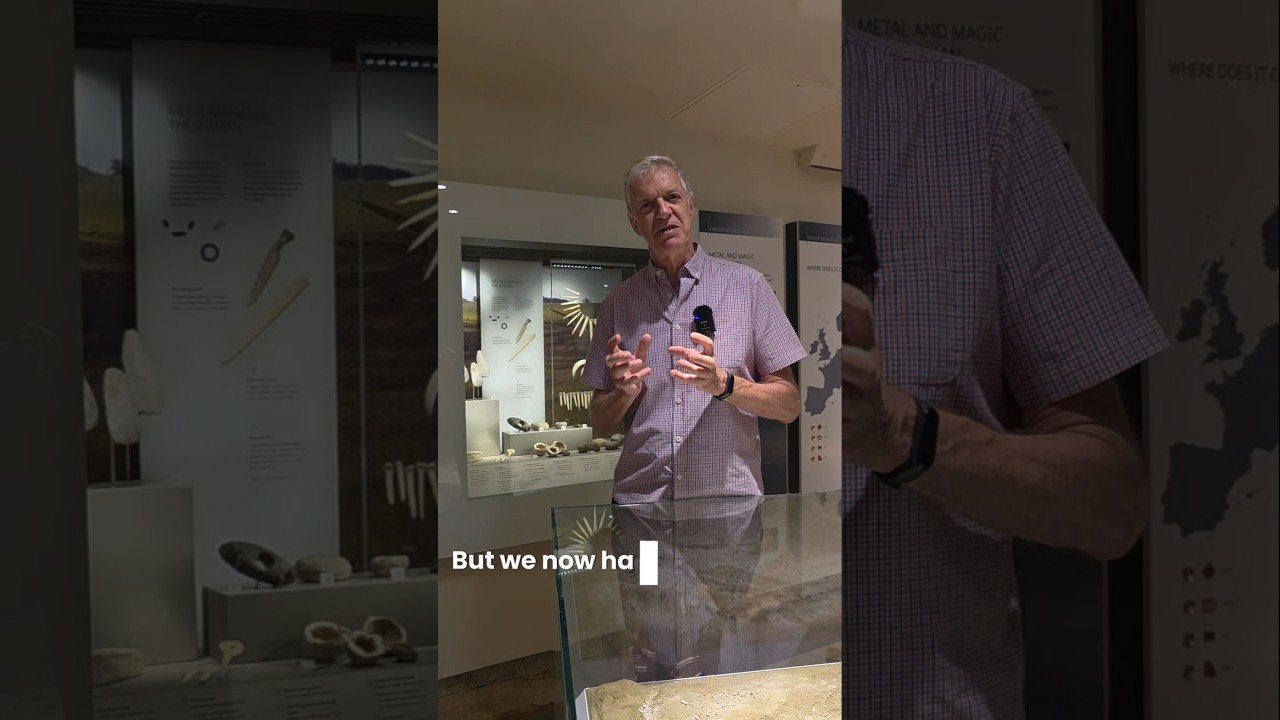
New DNA evidence for Upton Lovell Shaman #dnaevidence #archaeology #museum #stonehenge #metalworking - YouTube
Olivia Maule is a science journalist whose beats include space, biotechnology and the environment. She holds a B.A. in biology and a B.S. in anthropology from the University of Florida and completed a master's degree in science communication at U.C. Santa Cruz. A 2025 AAAS Mass Media Fellow, she wrote stories and produced videos during a summer at El Nuevo Día, Puerto Rico's largest newspaper, and has written for Eos, Mongabay, Science magazine and Stanford Report. Olivia is a native Spanish and English speaker.
You must confirm your public display name before commenting
Please logout and then login again, you will then be prompted to enter your display name.