
-
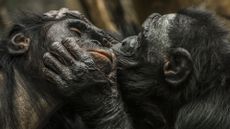 Kissing goes back 21 million years, to the common ancestor of humans and other large apes, study finds
Scientists traced kissing back to a primate ancestor that lived around 21 million years ago.
primates -
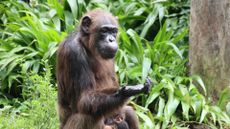 Chimps 'think about thinking' in order to weigh evidence and plan their actions, new research suggests
Chimpanzees use a variation of the "scientific method" — discarding prior beliefs if convincing new evidence comes along to change their minds, research shows.
primates -
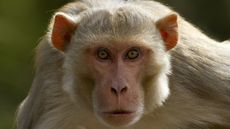 Lab monkeys on the loose in Mississippi don't have herpes, university says. But are they dangerous?
Authorities have killed several lab monkeys that escaped from an overturned truck in Mississippi. The rhesus macaques were initially thought to be diseased and dangerous, but that's not necessarily the case.
4 Commentsprimates -
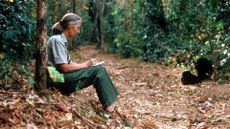 Jane Goodall revolutionized animal research, but her work had some unintended consequences. Here's what we've learned from them.
Following Jane Goodall's death, chimp experts explain how her early observations still influence our understanding of our ape cousins.
2 Commentsprimates -
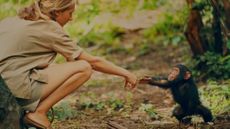 From tool use to warfare — here are 5 ways Jane Goodall revolutionized our knowledge of chimpanzees
Pioneering primatologist Jane Goodall has died at age 91. These are her five biggest contributions to how we understand about our closest living relatives.
primates -
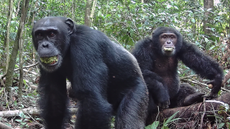 Chimps eat fruit full of alcohol, but no, they don't get drunk
Chimps' ability to metabolize fermented fruit could explain our own predilection for alcohol.
2 Commentsprimates -
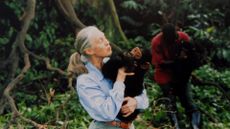 Jane Goodall, famed primatologist who discovered chimpanzee tool use, dies at 91
Dame Jane Goodall, the world's preeminent chimpanzee expert, died of natural causes.
3 Commentsprimates -
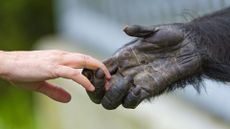 Do humans and chimps really share nearly 99% of their DNA?
The frequently cited 99% similarity between human and chimp DNA overlooks key differences in the genomes.
primates -
 Earth's early primates evolved in the cold — not the tropics
Opinion Fossil spore and pollen data reveal our early ancestors evolved in cold, dry environments, with some even colonizing Arctic regions.
Opinion


