
-
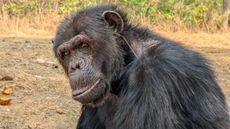 Chimps develop fashion trend by shoving grass in their ears — and in their butts
Chimpanzees are running around with grass in their ears and butts at the Chimfunshi Wildlife Orphanage in Zambia. This is the second time a bizarre fad-like behavior has gripped the sanctuary's chimps, but wearing the grass accessories in their butts is a new twist.
primates -
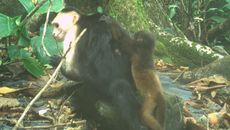 Capuchins have started abducting newborn howler monkeys in bizarre, deadly fad
Young male capuchins have developed a strange trend of acquiring baby howler monkeys. It doesn't end well for the babies.
8 Commentsprimates -
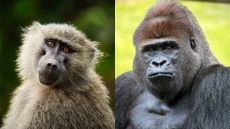 What's the difference between apes and monkeys?
Primatologists explain how apes and monkeys differ.
4 Commentsprimates -
 Humans heal much more slowly than chimps do. Researchers are still trying to figure out why.
Researchers have found that wounds heal three times more slowly in humans than in other primates and rodents, suggesting we may have evolved slower healing at some point in our ancestry.
primates -
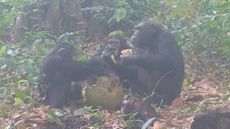 Chimps filmed sharing alcoholic food for first time
Videos of chimpanzees sharing alcoholic fruit suggest that this behavior could have led to feasting in humans, a new study finds.
primates -
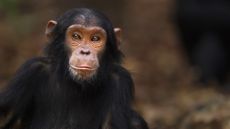 Primates: Facts about the group that includes humans, apes, monkeys and other close relatives
Discover interesting facts about the origins of primates, what they eat, and if they have thumbs.
primates -
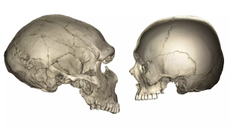 Why modern humans have smaller faces than Neanderthals and chimpanzees
We have smaller faces than Neanderthals and even chimps. A new study may explain how this came to be.
2 Commentsprimates -
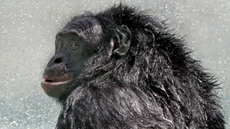 'Bonobo genius' Kanzi, who could understand English and play Minecraft, dies at 44
The bonobo Kanzi, who learned to make stone tools, play Minecraft and communicate at the level of a 2-year-old human, has died.
primates -
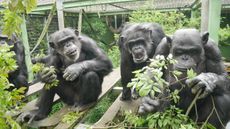 'Contagious' peeing may have deep evolutionary roots, chimp study suggests
People often go to the bathroom in groups, and according to new research chimpanzees do the same, possibly to strengthen group social bonds.
primates


