














Remnant of Huge Eruption Smolders On

By
Live Science Staff
Published
In
News
(Image credit: NASA/Jesse Allen and Robert Simmon)
Follow us
Add us as a preferred source on Google
Subscribe to our newsletter
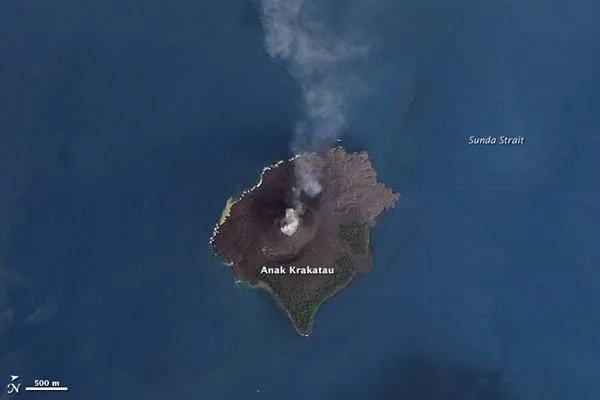
Site of one of the largest volcanic eruptions of the 19th Century, Anak Krakatau (also known as Krakatoa) has been intermittently active for the past several decades. On July 31, 2011, a wispy ash plume rose above the volcano and drifted west (up in this image).
This natural-color satellite image was acquired by the Advanced Land Imager (ALI) aboard Earth Observing-1 (EO-1). Dark gray areas of Anak Krakatau are composed principally of lava flows deposited in the 1970s, '80s, and '90s. These flows are topped by a young cinder cone near the center of the island. Green vegetation covers older lavas along the eastern coastline.
- Hawaii Volcano Just Keeps Going, and Going...
- Italy's Fiery Mount Etna Erupts Again
- Ancient Source of Earth's Biggest Eruptions Found
Sign up for the Live Science daily newsletter now
Get the world’s most fascinating discoveries delivered straight to your inbox.

For the science geek in everyone, Live Science offers a fascinating window into the natural and technological world, delivering comprehensive and compelling news and analysis on everything from dinosaur discoveries, archaeological finds and amazing animals to health, innovation and wearable technology. We aim to empower and inspire our readers with the tools needed to understand the world and appreciate its everyday awe.