













Earth's Limited Supply of Metals Raises Concern

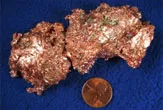
If all nations were to use the same services enjoyed in developed nations, even the full extraction of metals from the Earth's crust and extensive recycling may not be enough to meet metal demands in the future, according to a new study.
To investigate the environmental and social consequences of metal depletion, researchers looked at metal stocks thought to exist in the Earth, metal in use by people today, and how much is lost in landfills.
Using copper stocks in North America as a starting point, the researchers tracked the evolution of copper mining, use and loss during the 20th century. They then combined this information with other data to estimate what the global demand for copper and other metals would be if all nations were fully developed and using modern technologies.
According to the study, all of the copper in ore, plus all of the copper currently in use, would be required to bring the world to the level of the developed nations for power transmission, construction and other services and products that depend on the metal.
The study, led by Thomas Graedel of Yale University, was detailed in the Jan. 17 issue of the journal for the Proceedings of the National Academy of Sciences.
For the entire globe, the researchers estimate that 26 percent of extractable copper in the Earth's crust is now lost in non-recycled wastes. For zinc, that number is 19 percent.
These metals are not at risk of immediate depletion, however, because supplies are still large enough to meet demands and mines have become more efficient at extracting these ores.
Get the world’s most fascinating discoveries delivered straight to your inbox.
But scarce metals, such as platinum, face depletion risks this century because of the lack of suitable substitutes in such devices as catalytic converters and hydrogen fuel cells.
The researchers also found that for many metals, the average rate of usage per person continues to rise. As a result, the report says, even the more plentiful metals may face similar depletion risks in the future.
- Gold in Them Thar Rings
- Underground Gold Mine for Research
- Power of the Future: 10 Ways to Run the 21st Century
- Planet Earth: A Year of Pictures
