













Worship Site Predates Zeus
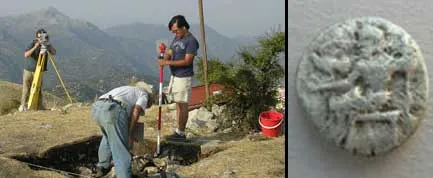
Ancient pottery found at an altar used by ancient Greeks to worship Zeus was actually in use at least a millennium earlier, new archeological data suggest.
The pottery shards were discovered during an excavation last summer near the top of Mt. Lykaion in southern Greece.
The finding, which dates back to 3000 B.C., indicates that the tradition of divinity worship on the site is very ancient and may even pre-date the introduction of Zeus into the Greek world, said David Gilman Romano, a researcher at the University of Pennsylvania Museum of Archaeology and Anthropology and co-director of the excavation project.
"We don’t yet know how the altar was first used, and whether it was used in connection with natural phenomena such as wind, rain, light or earthquakes, possibly to worship some kind of divinity male or female or a personification representing forces of nature,” Romano said.
A rock crystal seal bearing an image of a bull, of probable Late Minoan times (1500 - 1400 B.C.), also was found on the altar, suggesting an early connection between the Minoan isle of Crete and Arcadia.
Early analysis on various bones recovered from the site has shown they belonged to animals, not humans. Ancient texts had mentioned human sacrifice being practiced at the altar of Zeus, but so far, no evidence of this has been found.
The mountaintop altar is known as one of the mythological birthplaces of Zeus. A meadow below the mountain featured a racetrack, stadium and buildings once used to host an athletic festival that rivaled the original Olympic games, held at nearby Olympia.
Get the world’s most fascinating discoveries delivered straight to your inbox.