













Forecasters Predict Busy 2008 Hurricane Season

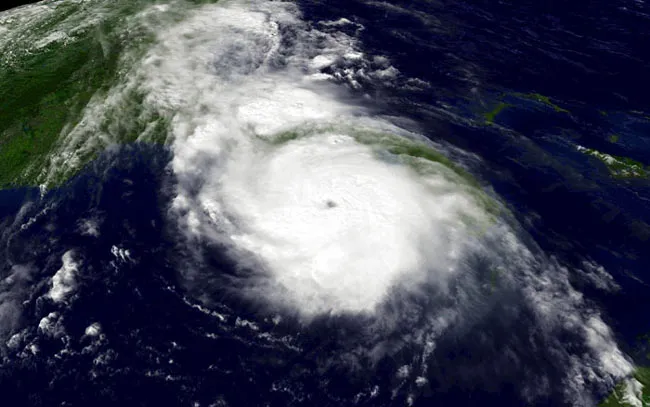
Forecasters are calling for another busy hurricane season this year with eight hurricanes expected to form in the Atlantic basin, it was announced today. The hurricane forecasting team at Colorado State University issued their 25th yearly forecast for the Atlantic hurricane season, which begins on June 1. They have predicted that 15 named storms will form, with eight of those becoming hurricanes, including four that would become major hurricanes. "Current oceanic and atmospheric trends indicate that we will likely have an active Atlantic basin hurricane season," said well-known forecaster William Gray. Storms are named when they become tropical storms, with winds above 39 mph (63 kilometers per hour). These storms become hurricanes when their winds whip above 74 mph (119 kph). Major hurricanes (Categories 3 to 5 on the Saffir-Simpson scale) have winds above 110 mph (177 kph). Gray and fellow Colorado State forecaster Philip Klotzbach said there is an above-average chance that a hurricane will make landfall in the United States. "Based on our latest forecast, the probability of a major hurricane making landfall along the U.S. coastline is 69 percent compared with the last-century average of 52 percent," Klotzbach said. "We are calling for a very active hurricane season this year, but not as active as the 2004 and 2005 seasons." Last year marked the first time that two Category 5 storms made landfall in the same season (Hurricane Dean slammed into Mexico in August and Hurricane Felix hit Nicaragua in September). The team has predicted above-average storm activity for several years in a row. Their seasonal forecasts have met with varied success in the past few years; here is a comparison of their spring pre-season predictions to what actually happened in each season for the past three years: 2007 (predictions/reality): Named storms (17/14) Hurricanes (9/6) Major hurricanes (5/2)
2006:
Named storms (17/10) Hurricanes (9/5) Major hurricanes (5/2)
2005:
Named storms (11/28) Hurricanes (6/15) Major hurricanes (3/7)
The 2005 hurricane season saw a record number of named storms, far exceeding initial predictions and exhausting the National Hurricane Center's list of names. Hurricanes Katrina and Rita became notorious that year after striking New Orleans and the Gulf Coast. The flopped forecast of 2006 was the result of a late-developing El Nino that hampered storm development, meteorologists have said. The development of El Ninos in the months from August to October is difficult to predict this far in advance and meteorologists must make a best guess at the odds one will develop. The purpose of issuing forecasts so far in advance of the season is not to nail all the numbers, but to keep coastal populations and others in the potential paths of hurricanes on their toes. Gray and his team will issue an updated forecast for the 2008 season on June 3.
- Natural Disasters: Top 10 U.S. Threats
- What Should You Do When a Hurricane Approaches?
- Quiz: Test Your Hurricane Knowledge
Get the world’s most fascinating discoveries delivered straight to your inbox.

Andrea Thompson is an associate editor at Scientific American, where she covers sustainability, energy and the environment. Prior to that, she was a senior writer covering climate science at Climate Central and a reporter and editor at Live Science, where she primarily covered Earth science and the environment. She holds a graduate degree in science health and environmental reporting from New York University, as well as a bachelor of science and and masters of science in atmospheric chemistry from the Georgia Institute of Technology.