













Smiles Predict Marriage Success

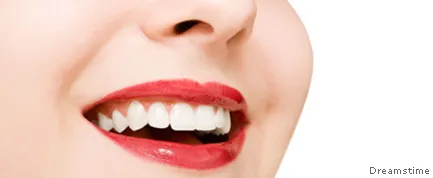
If you want to know whether your marriage will survive, look at your spouse's yearbook photos.
Psychologists have found that how much people smile in old photographs can predict their later success in marriage.
In one test, the researchers looked at people's college yearbook photos, and rated their smile intensity from 1 to 10. None of the people who fell within the top 10 percent of smile strength had divorced, while within the bottom 10 percent of smilers, almost one in four had had a marriage that ended, the researchers say. (Scoring was based on the stretch in two muscles: one that pulls up on the mouth, and one that creates wrinkles around the eyes.)
In a second trial, the research team asked people over age 65 to provide photos from their childhood (the average age in the pictures was 10 years old). The researchers scored each person's smile, and found that only 11 percent of the biggest smilers had been divorced, while 31 percent of the frowners had experienced a broken marriage.
Overall, the results indicate that people who frown in photos are five times more likely to get a divorce than people who smile.
While the connection is striking, the researchers stress that they can't conclude anything about the cause of the correlation.
"Maybe smiling represents a positive disposition towards life," said study leader Matthew Hertenstein, a psychologist at DePauw University in Indiana. "Or maybe smiling people attract other happier people, and the combination may lead to a greater likelihood of a long-lasting marriage. We don’t really know for sure what's causing it."
Get the world’s most fascinating discoveries delivered straight to your inbox.
Hertenstein said he has considered other explanations, such as the possibility that people who smile more often tend to attract more friends, and a larger support network makes it easier to keep a marriage healthy. Or it could be that people who smile when a photographer tells them to are more likely to have obedient personalities, which could make marriage easier.
The results of the study fit into a larger pattern of research that has found many personality characteristics can be determined from very thin slices of behavior. Basically, we often reveal ourselves in the most subtle, simple ways.
And smiling in photographs has been shown to be correlated with a number of traits, including a generally happier disposition.
"I think [our results] go along with a lot of the literature that’s been coming out over the last five to 10 years, which shows that positive emotionality is incredibly important in our lives," Hertenstein told LiveScience. "There are many, many beneficial outcomes to a positive disposition."
The findings are also notable because they found a connection between photos taken when people were young and marriage outcomes that sometimes occurred much later.
"It feeds into this idea that what's occurring earlier in our lives in terms of our present situation and our mental state can predict things that occur decades later," Hertenstein said. "Showing the continuity in who we are is really important."
The study is detailed in the April 5 issue of the journal Motivation and Emotion.
- News and Information on the Science of Marriage
- Key to Successful Marriage: Say 'Thank You'
- 10 Surprising Sex Statistics
