













The Reason More of Today's Scientists Hire Armed Guards
When Charles Darwin boarded the H.M.S. Beagle in 1831 as the ship's naturalist, he had only one challenge — to keep himself entertained for the next five years. His scientific assignment was to collect anything that crawled, swam or flew, and to keep track of all sorts of biological measures such as water temperature and currents. But really, boredom was the big problem.
Charles Darwin came of age as a scientist during the Golden Age of Exploration; doing science meant crossing the globe in search of specimens, working by living and breathing biology in the field.
That era in science is long over, and it has been replaced by a much more dangerous mission — figuring out how to do science amid political strife and disintegrating habitats.
Ran Boytner of the University of California, Los Angeles, and Lynn Swartz Dodd of the University of Southern California know all about the modern conundrum of the field scientist. Over the past five years they have been working on an agreement between Palestinians and Israelis to protect thousands of ancient artifacts and delicate archaeological sites from political bickering.
And their situation is common for field scientists today.
Over the past three decades, archaeologists, animal behaviors, botanists and others have had to curtail their research, or step right into the conflict, to do their work. It's no longer just about science, it's also about politics, poverty and diplomacy, subjects they don’t teach in graduate school.
For my field, primatology, this difficult situation became shockingly real back in 1975 when four research assistants were kidnapped from Jane Goodall's chimpanzee site in Tanzania. After months of talks, they were released by Zairian rebels, but the field of primatology was never the same.
Get the world’s most fascinating discoveries delivered straight to your inbox.
Every primate researcher who goes abroad, every professor who takes students into the field, worries endlessly about safety.
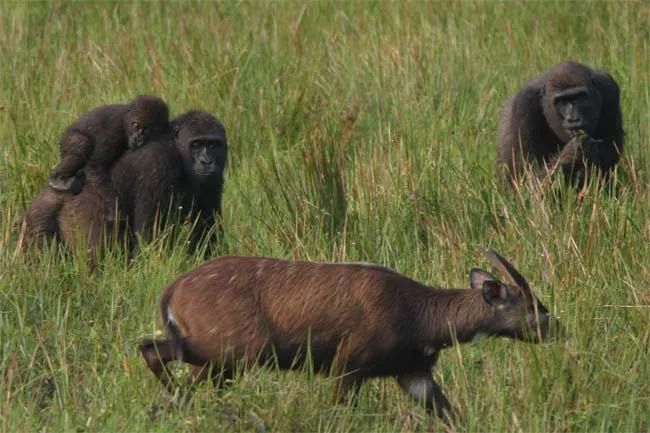
And these worries have changed the path of research and affect what we know, or will ever know, about monkeys and apes. For example, it's now nearly impossible to watch the elusive Bonobo in The Democratic Republic of Congo because of civil war; some say that only someone with a death wish would walk into a forest there. However, somehow a group of Wildlife Conservation Society scientists did just that and discovered a previously unknown trove of critically endangered western lowland gorillas.
Primatologists have tried to adapt, but it isn’t easy. Some hire locals, with rifles, to walk beside them over hill and dale following animals, knowing that at any moment a bullet might whiz by. Or they switch their study sites to more peaceful countries. But to walk away from years or decades of the intricate details of animals that you have grown to know and care about is like throwing your life, and the animals, away.
For every field primatologist, there is also the specter of habitat destruction, especially in countries sunk in poverty. Do you fight to save the habitat and the animals, or do you come down on the side of people living in poverty who might need the life-saving resources of a forest?
And there is the guilt of knowing the road you need for access to a field site is the same road that opens up virgin forest to corporate exploitation and poaching.
Scientists of Darwin's time and those of today are linked by a love of nature and a curiosity about how it works. And they share is a sense of urgency that compels them off to far-flung places.
But for Darwin and his ilk, it was about gathering nature in all its complexity. Today, it's all about keeping that nature from destruction.
Meredith F. Small is an anthropologist at Cornell University. She is also the author of "Our Babies, Ourselves; How Biology and Culture Shape the Way We Parent" (link) and "The Culture of Our Discontent; Beyond the Medical Model of Mental Illness" (link).
- Video: Clever Primates
- Top 10 Species Success Stories
- Top 10 Missing Links