















Ancient Mural Portrays Ordinary Mayans
Very old artworks provide a fascinating glimpse of ancient life, but not without limitations: They typically portray the lifestyles of the rich and famous (rulers, royals, generals, and priests), abandoning the masses to the mists of history.
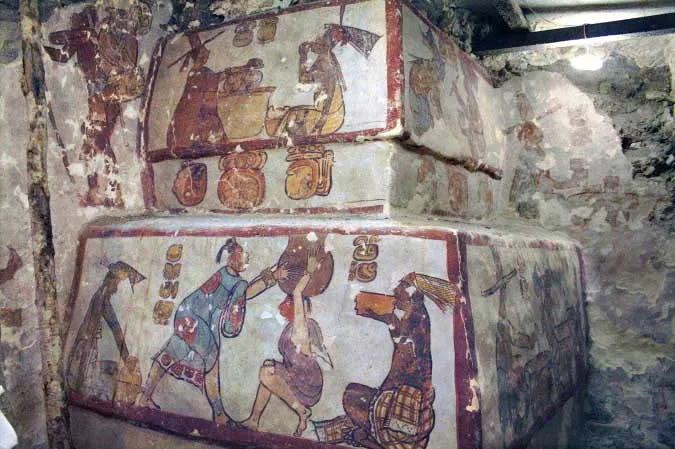
That's why the recent discovery of a 1,300-year-old mural at Calakmul, Mexico, is so significant. It is the only known pre-Columbian artwork depicting ordinary Maya engaged in everyday activities, rather than serving the wealthy.
Archaeologists first unearthed the pyramid bearing the painted exterior walls in 2004 and are still in the process of restoring it. The murals show Maya of both sexes preparing and dispensing food, or carrying baskets, sacks, and large vessels. (Previously discovered images mainly show men.) The women wear face paint, and both sexes sport broad-brimmed hats, earrings, necklaces, and pendants. Hieroglyphic captions identify some people by their trades: salt person, tobacco person, and maize-gruel person, for example.
Ramón Carrasco Vargas, of the National Institute of Anthropology and History in Campeche, Mexico, directed the excavation with two colleagues. The trio report an intriguing observation: The original pyramid was expanded over the centuries, but its murals were preserved with packed mud before being built over.
The Mayan builders may have had to cover the murals—you can’t stop progress—but they were apparently still reluctant to destroy such exceptional artwork.
This research was published in the journal Proceedings of the National Academy of Sciences.
Get the world’s most fascinating discoveries delivered straight to your inbox.