













How 450-Million-Year-Old Bacteria Evolved into a Dangerous Superbug

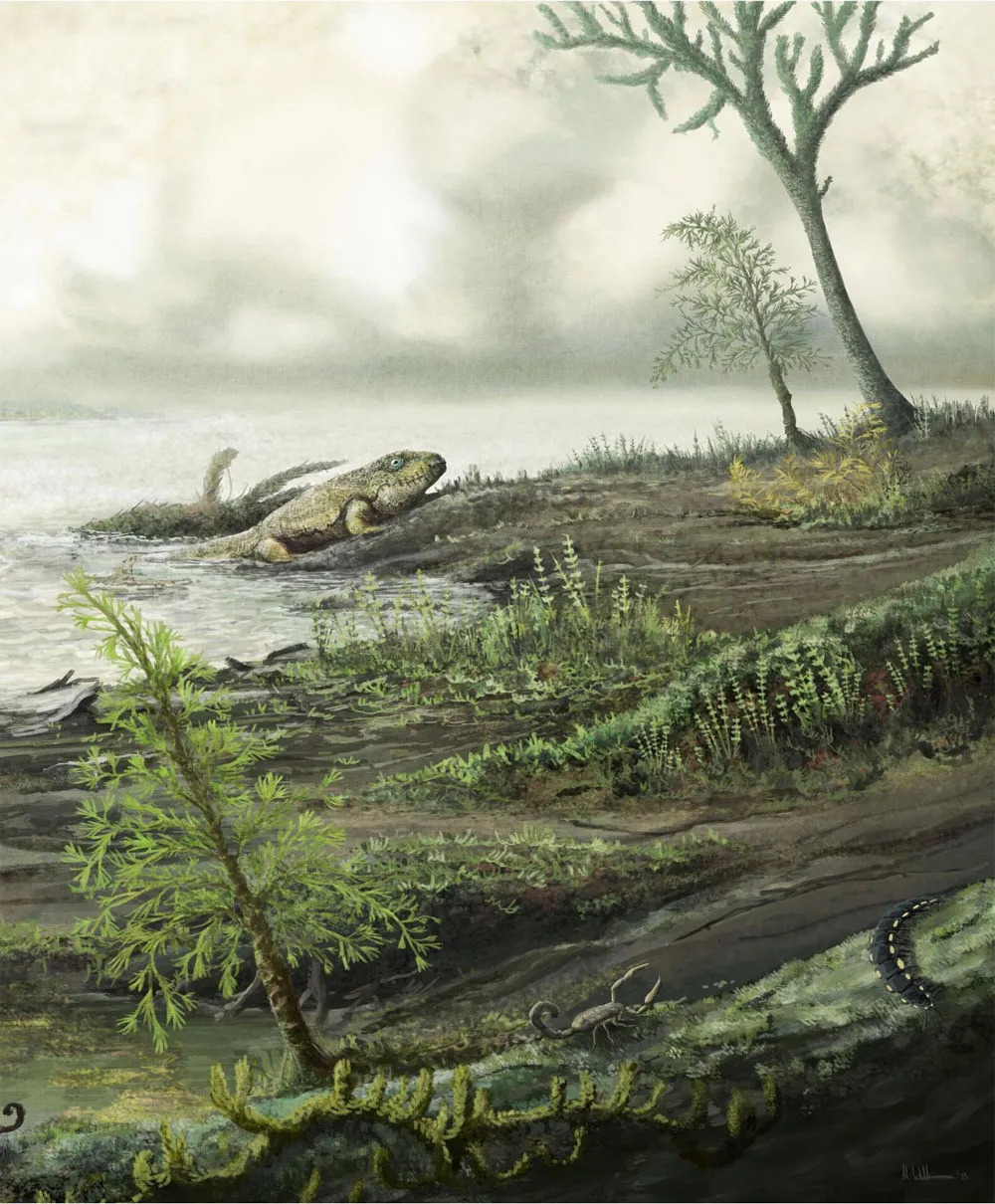
A dangerous bacteria found in hospitals might have originated from an ancestor that lived in the guts of the first animals to walk on land, according to a new study.
The bacteria, called Enterococcus, is a so-called superbug, meaning it is resistant to antibiotics and cleaning products. In the new study, the researchers found that some of the same traits that give this superbug its dangerous resistance today might have helped it survive as its ancient animal hosts transitioned from water to land, some 450 million years ago, the researchers said. [6 Superbugs to Watch Out For]
By analyzing the genomes and growing patterns of Enterococcus, the researchers "were able to rewind the clock back to their earliest existence and piece together a picture of how these organisms were shaped into what they are today," study co-author Ashlee Earl, group leader for the Bacterial Genomics Group at the Broad Institute of MIT and Harvard, said in a statement.
Enterococcus bacteria are found normally in the human gut, but they can cause infections in the blood, urinary tract and other organs. The researchers were interested in the question of why Enterococcus appears to be so well adapted to surviving in modern hospitals and resisting many types of antibiotics. Infection with Enterococcus bacteria is one of the top causes of hospital-acquired infections, according to Medscape.
The researchers analyzed genetic data from a number of Enterococcus species to determine when this genus originated. (The researchers did this by using a technique that takes into account the expected rate of change of the bacteria's DNA, allowing them to estimate when this genus would have emerged.)
The scientists estimated that Enterococcus originated about 425 million to 500 million years ago, around the time when animals first moved from the ocean to land.
The researchers also found that, when Enterococcus diverged evolutionarily from a closely related genus called Vagococcus, the former acquired genes for a hardened cell wall and a better ability to cope with environmental stress.
Get the world’s most fascinating discoveries delivered straight to your inbox.
In a separate experiment, the researchers grew Enterococcus species in lab dishes under a number of different conditions. They found that Enterococcus was better able to grow in harsh conditions — such as dryness, starvation and exposure to disinfectants — compared with other closely related bacteria. All of the Enterococcus species tested in the study were also naturally resistant to a number of antibiotics, even if the species had never before been found in a hospital, the researchers said.
Together, the findings suggest that Enterococcus emerged from ancestors that lived in the guts of animals as they transitioned from living in water to living on land, the researchers said.
In a water environment, bacteria living in the guts of animals are excreted into the ocean, sink to the seafloor and are consumed by sea scavengers that are later eaten by other fish. However, on land, bacteria are excreted in feces, and may be left alone for long periods to dry out and die, the researchers said. But Enterococcus bacteria are especially adapted to surviving in these dry, harsh conditions, the scientists said. The same traits that allowed Enterococcus' ancestors to survive a dry environment, starvation and other harsh conditions on land appear to have helped these bacteria survive in modern hospitals.
"Life on land would have selected for the precise traits that now allow pathogenic [Enterococcus] to survive desiccation, starvation and disinfection in the modern hospital," the researchers wrote in their paper, published today (May 11) in the journal Cell.
The researchers plan to conduct further studies on the genes that allow Enterococcus to survive harsh conditions, with the hope that they may be able to design new types of antibiotics and disinfectants that specifically target this type of bacteria.
The researchers noted that their study presents a hypothesis that fits with their data but that it's difficult to prove definitely, given the hundreds of millions of years that have passed since animals first crawled onto land.
Original article on Live Science.

Rachael is a Live Science contributor, and was a former channel editor and senior writer for Live Science between 2010 and 2022. She has a master's degree in journalism from New York University's Science, Health and Environmental Reporting Program. She also holds a B.S. in molecular biology and an M.S. in biology from the University of California, San Diego. Her work has appeared in Scienceline, The Washington Post and Scientific American.