













Antarctic Ice 'Cork' Melting Could Lead to Unstoppable Sea Rise

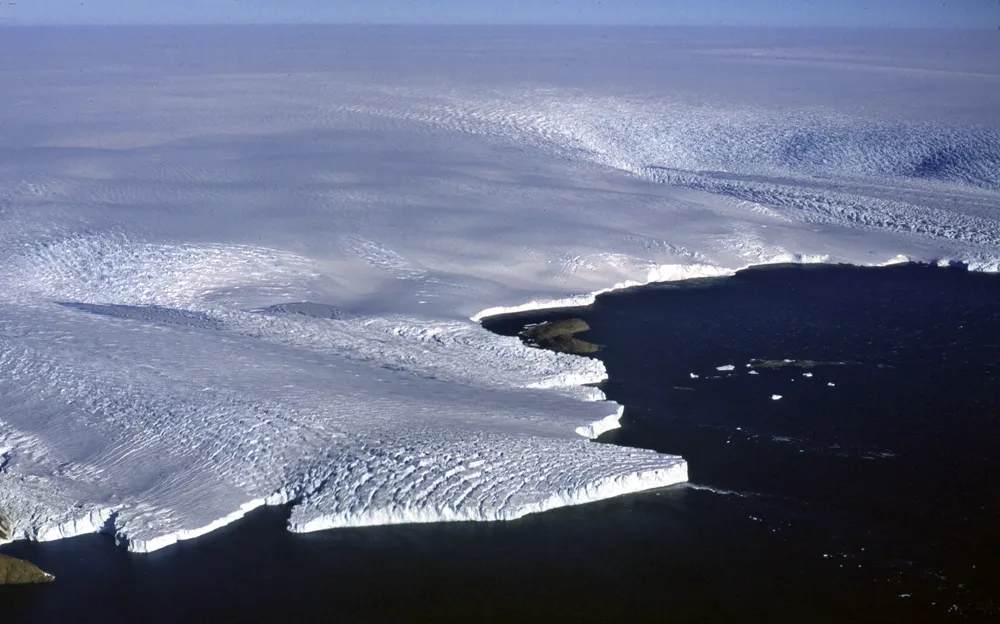
If a relatively small chunk of ice currently plugging the edge of an ice sheet in Antarctica were to melt, it could release massive amounts of ice into the ocean that would significantly increase global sea level for the next 10,000 years, according to a new report.
The ice plug sits on a ridge beneath the East Antarctic Ice Shelf in a region called the Wilkes Basin that has previously been overlooked in sea level projections, because it has appeared to be stable compared to regions of the West Antarctic Ice Sheet, which sits closer to sea level. These new findings, however, suggest the Wilkes Basin region could, indeed, play a major role in future sea level rise, contributing as much as 9.8 to 13 feet (3 to 4 meters) across the world's oceans if even just half of the cork were unplugged, the researchers found. [Images of Melt: Earth's Vanishing Ice]
"Until recently, only West Antarctica was considered unstable, but now we know that its 10 times bigger counterpart in the East might also be at risk," study co-author Anders Levermann, a researcher at Potsdam Institute for Climate Impact Research in Germany, said in a statement.
The team studied the shape of the land beneath the ice sheet and created computer simulations of ice dynamics. They wanted to see how the ice behavior would change if water temperatures were to increase at the rate projected by the Intergovernmental Panel on Climate Change, an international organization that assesses the risks and impacts of global warming. They found that melting of half the ice cork, beneath the East Antarctic Ice Shelf, would cause the ice sheet to flow uncontrollably into the ocean for thousands of years until it retreats to a ridge about 500 miles (800 kilometers) away from its current edge. In the simulations, the glacier finally stabilizes again within 25,000 years, when the ice rests atop this ridge.
The simulations suggest that the greatest rate of sea level rise produced by this event would be about 0.02 inches (0.5 millimeters) per year, which is two times the rate of Antarctica's current total contribution to sea level rise, the team reports.
The Wilkes Basin likely experienced a similar episode of massive ice discharge about 4.8 million to 3.5 million years ago, according to sediment remains in the area. That past discharge occurred during the Pliocene epoch when global climate was warmer than it is today, but similar to the climate projections for the end of the 21st century. A similar mechanism has also caused the modern instability and retreat of West Antarctica's Pine Island Glacier, which contributes more to sea level rise than any other Antarctic glacier.
Given the instability of the scenario, even if measures were taken to slow or stop climate warming, global sea level would still rise uncontrollably if the cork were pulled from the Wilkes Basin, the team emphasizes.
Get the world’s most fascinating discoveries delivered straight to your inbox.
"This is the underlying issue here," study co-author Matthias Mengel said in a statement. "By emitting more and more greenhouse gases we might trigger responses now that we may not be able to stop in the future."
The study findings were detailed on Sunday (May 4) in the journal Nature Climate Change.
Follow Laura Poppick on Twitter. Follow us @livescience, Facebook& Google+. Original article on Live Science.
