


Bobcats and Humans Swap Diseases in Urban Areas

Updated Nov. 7 at 6:40 p.m. ET.
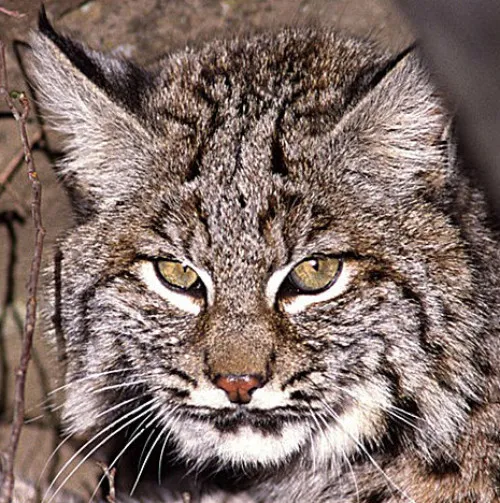
Bobcats that take up residence in urban areas not only share turf with humans but also diseases, a new study shows.
Researchers collected bobcat fecal samples from rural areas in Colorado as well as more densely populated regions on the Colorado Front Range, which includes cities such as Denver and Boulder, and in California's Ventura County, outside of Los Angeles. The samples were analyzed for disease-causing parasites, such as the mind-altering Toxoplasma gondii and two other bugs, Giardia duodenalis and Cryptosporidium spp., which can upset the stomach and cause diarrhea.

Test results showed that bobcats from the more densely populated regions were more likely to carry parasites than their country counterparts.

"The growing interaction of humans and wildlife means that we now share our diseases with each other at an ever-increasing rate," said Sam Scheiner, of the National Science Foundation's Evolution of Infectious Diseases (EEID) program. "This study demonstrates that we and our wild animal neighbors are closely interconnected in ways that affect the health of us all."
The researchers believe the bobcats were first exposed to the parasites from human water supplies around cities. Now the pathogens can travel from human to bobcat and bobcat to human almost as quickly as a virus that runs through an entire household, the scientists said.
"Along these boundaries, close living quarters make it easy for one species to transmit diseases to another," researcher Sue VandeWoude, of Colorado State University at Fort Collins, said in a statement.
Get the world’s most fascinating discoveries delivered straight to your inbox.
Bobcats are not the only wild animals moving in to North America's cities and suburbs. Coyotes are thriving in big numbers around urban areas like Chicago, which some researchers warn sets the stage for larger predators like wolves, mountain lions and bears to follow.
The study, which was funded by the EEID and led by Scott Carver, now at the University of Tasmania, was detailed in a recent issue of the Journal of Clinical Microbiology. (The work was completed while Carver was at Colorado State University.)
Editor's Note: This article was updated to add the fact that Scott Carver was at Colorado State University when the research was conducted.
Follow LiveScience on Twitter @livescience. We're also on Facebook & Google+.
