













Strong Earthquake Strikes Costa Rica

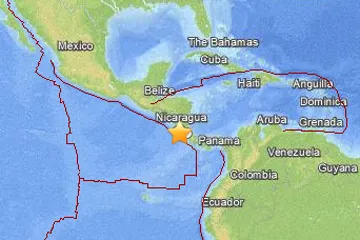
An earthquake of preliminary magnitude 7.6 struck today in Costa Rica, according to the U.S. Geological Survey (USGS).
The temblor's epicenter was 6 miles (10 km) northeast of Hojancha, and 87 miles (140 km) west of the capital San Jose. It originated 25 miles (40 km) deep and struck at 8:42 a.m. local time (14:42 UTC) the USGS reports.
This is a major earthquake. Events of this size can cause localized devastation, especially to poorly built structures. Even well built structures can be heavily damaged or destroyed. Earthquakes of this size are often followed by significant and potentially severe aftershocks. But the damage caused by any single event depends on the quake's depth, proximity to populated areas, building standards in the region, as well as the type of earthquake. The USGS frequently updates the magnitude of an event after more data is analyzed.
An earthquake's magnitude is a measure of the energy released at the source. It is just one predictor of the shaking that may ensue, which is affected by local and regional geology. Scientists know in a general sense what causes Earthquakes but are unable to predict specific quakes.
This article will be updated if significant additional information becomes available. Find more earthquake news here.
Get the world’s most fascinating discoveries delivered straight to your inbox.
