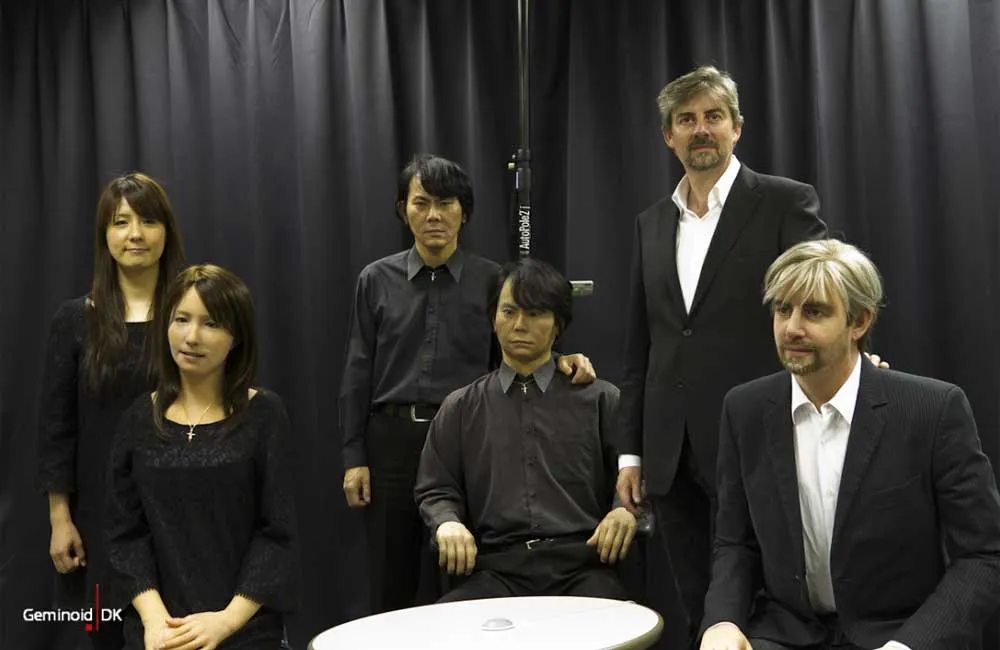
When a Japanese robotics pioneer first described the "uncanny valley" of creepy objects, he filled its imaginary depths with human cyborgs, corpses and undead zombies. But four decades can change a man — he now finds the faces of dead humans and Buddha statues more comforting than the faces of the living.
Masahiro Mori created the uncanny valley metaphor in 1970 to suggest how artificial figures can steadily seem more likable as they appear or behave more like humans, but only up to the point before their likability takes a sharp plunge into creepiness. His metaphor has since become a common explanation for why android robots or Hollywood's latest computer-animated films can creep people out rather than win their hearts and minds.
But the uncanny valley was never a perfectly defined concept —researchers still debate its existence in the human mind and how it triggers such eerie sensations. Mori described his own change of heart about dead people's faces in a short message addressed to a 2005 workshop on the uncanny valley (link provided courtesy of Karl MacDorman, a robotics researcher at Indiana University who translated Mori's "uncanny valley" essay into English).
Latest Videos From
"A dead person's face may indeed be uncanny: it loses color and animation with no blinking," Mori wrote. "However, according to my experience, sometimes it gives us a more comfortable impression than the one given by a living person's face. Dead persons are free from the troubles of life, and I think this is the reason why their faces look so calm and peaceful."
Mori also said he no longer found living human beings to be the most attractive faces on the upper right-hand slope of the uncanny valley chart. Instead, he pointed to the faces of Buddhist statues as "the artistic expression of the human ideal" with a sense of serenity "beyond the worries of life."
Such interest in what lies beyond the veil of mortal life also emerged in a new Q&A with Mori that accompanied a new translation of the original "uncanny valley" essay in IEEE Robotics and Automation Magazine. Mori suggested that the "teachings of Buddha is the best way to understand humans" in the process of making robots.
This story was provided by InnovationNewsDaily, a sister site to LiveScience. You can follow InnovationNewsDaily Senior Writer Jeremy Hsu on Twitter @ScienceHsu. Follow InnovationNewsDaily on Twitter @News_Innovation, or on Facebook.

 Live Science Plus