

-
 This obscure, 80-year-old machine might be the key to unlocking the full potential of AI today
Opinion Leading American engineer and scientist Vannevar Bush thought that the memex was the answer to information nightmare of the 1940s.
Opinion -
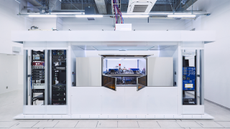 Scientists achieve 'magic state' quantum computing breakthrough 20 years in the making
Scientists demonstrate a process called "magic state distillation" in logical qubits for the first time, meaning we can now build quantum computers that are both error-free and more powerful than supercomputers.
quantum -
 Cosmic images from the world's largest digital camera are so big they require a 'data butler'
The amount of data generated by the Rubin Observatory is going to blow all previous cosmic datasets out of the water, but handling that much information poses a severe challenge.
-
 Small, room-temperature quantum computers that use light on the horizon after breakthrough, scientists say
Scientists say they’ve cracked a key challenge in scalable quantum hardware after generating an error-correcting, light-based qubit on a chip for the first time.
5 Commentsquantum -
 'Quantum AI' algorithms already outpace the fastest supercomputers, study says
Researchers have successfully demonstrated quantum speedup in kernel-based machine learning.
quantum -
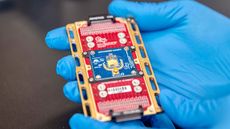 Millions of qubits on a single quantum processor now possible after cryogenic breakthrough
Scientists in Australia have developed a quantum control chip that removes a key obstacle to getting qubits into practical, real-world computing systems.
4 Commentsquantum -
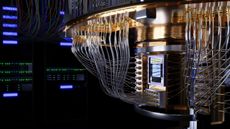 Breakthrough quantum computer could solve problems 200 times faster than a supercomputer
Scientists have built a compact physical qubit with built-in error correction, and now say it could be scaled into a 1,000-qubit machine that is small enough to fit inside a data center. They plan to release this machine in 2031.
quantum -
 Microsoft breakthrough could reduce errors in quantum computers by 1,000 times
Microsoft scientists developed a 4D geometric coding method that reduces errors 1,000-fold in quantum computers.
quantum -
 IBM's monster 10,000-qubit quantum computer coming in 2029 after science behind fault-tolerenance 'solved'
The quantum computer, called Starling, will use 200 logical qubits — and IBM plans to follow this up with a 2,000-logical-qubit machine in 2033
quantum


