

-
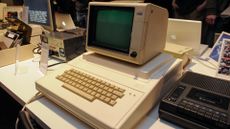 Computing quiz: Can you match these 'ancient' devices to their pictures?
Think you know your technology? Put your computing knowledge to the test by matching classic and modern devices to their images.
computing -
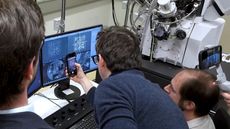 World's smallest QR code can store data for thousands of years — but you need an electron microscope to see it
Scientists created a tiny matrix that stores data by etching its grid into a thin ceramic film with a focused ion beam.
5 Commentscomputing -
 Meet the world's smallest AI supercomputer — it packs 'doctorate-level intelligence', its makers say, and can fit into your pocket
The portable computing powerhouse is capable of running 120-billion-parameter LLMs, roughly three times larger than GPT-3, without needing to access the internet or the cloud.
5 Commentscomputing -
 Ultrafast quantum chemistry engine could speed up the development of new medicines and materials
The powerful software can reduce the time needed to simulate reactions with large molecules from weeks to just minutes.
quantum -
 'Thermodynamic computer' can mimic AI neural networks — using orders of magnitude less energy to generate images
Researchers generated images from noise, using orders of magnitude less energy than current generative AI models require.
computing -
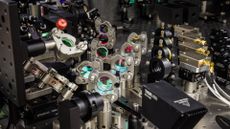 Microsoft can now store data for 10,000 years on everyday glass thanks to laser breakthrough
Improvements to data writing and reading techniques, alongside a new way to store data, mean the technology is more accessible than before.
8 Commentscomputing -
 MIT designs computing component that uses waste heat 'as a form of information'
Proof of concept uses passive components to redirect heat across a chip, allowing temperature patterns to be used for data processing.
computing -
 Google Glass has found yet another lease of life — but is it too little too late for smart glasses?
Opinion Augmented reality-powered smart glasses have seen a muted resurgence lately. Will Google's intervention reinvigorate what feels like a tired concept?
Opinion -
 Tapping into new 'probabilistic computing' paradigm can make AI chips use much less power, scientists say
A new digital system allows operations on a chip to run in parallel, so an AI program can arrive at the best possible answer more quickly.
computing


