


'Other' comet ATLAS disintegrating

C/2025 K1 (ATLAS) snapped before its disintegration by astrophotographer Dan Bartlett on Oct. 29 from June Lake in California.
Good morning and welcome back, science fans. We're returning with a fresh batch of science news and more images that show the "other" Comet ATLAS (C/2025 K1) breaking apart.
Scientists initially thought the comet, which is unrelated to the interstellar comet 3I/ATLAS, survived its recent close approach to the sun. But images from The Virtual Telescope project revealed its tragic demise.
The comet's disintegration is likely the consequence of the sun's powerful gravitational pull, which has caused it to splinter into three brighter fragments, photographer Michael Jäger told spaceweather.com.

Man infected with H5N5 bird flu strain dies

A Washington state resident who was the first person to be infected with the H5N5 strain of bird flu has died of complications from the virus, CNN reports.
The patient, an older adult with underlying health conditions, kept a backyard flock of mixed domestic birds, making this a likely source of his infection, state health officials said.
While this first infection of the H5N5 is notable, it's not believed to be a greater threat to human health than the H5N1 virus, which has caused a wave of around 70 reported human infections — most of them poultry and dairy farm workers experiencing mild illness — in the US in 2024 and 2025.
Here are a couple of stories on how to best avoid bird flu infections, and what can be done to prevent the virus spilling over into human to human transmission.
Why cat siblings don't look alike

When we adopted our cat "Scallop" from the ASPCA as a kitten, she left behind a brother, "Clam," who had been picked up from the same litter of strays. Scallop looked like an adorable blue-point Siamese, while Clam was an (also adorable) gray domestic short-hair with white socks.
I've always wondered why the two had little resemblance to each other.
Now, a story from our former (and much missed) content manager, Marilyn Perkins, explains why cat siblings look so different from each other.
You can read the full story here.

Live Science roundup
Here's a roundup of some of the stories Live Science published today and over the weekend:
- Pectoral with coins: 'One of the most intricate pieces of gold jewelry to survive from the mid-sixth century'
- Scientists say they've eliminated a major AI bottleneck — now they can process calculations 'at the speed of light'
- Why do vultures circle?
- Did Neanderthals have religious beliefs?
Science history: The discovery of Lucy

On this day in 1974, two anthropologists digging in the earth of Hadar, Ethiopia discovered something that would transform the story of human evolution, Tia writes.
The object they spotted, glinting in a gully, was the fossilized remains of a 3.2 million-year-old human ancestor. As they discussed the find, the Beatles song "Lucy in the Sky with Diamonds" played in the background, leading a member of the dig to suggest they name the find "Lucy."
Lucy, whose species would become known as Australopithecus afarensis, was the oldest and most complete skeleton of a human ancestor ever found. And her discovery sparked the realization among anthropologists that human evolutionary history is more like a braided stream than a family tree.
You can read the full story here.
Chimp baby boom (yay) after lethal conflict (boo)

Sophie here, Live Science's resident chimp aficionado. Hot off the press is the news that the Ngogo chimps in Uganda saw a huge baby boom after they successfully invaded the territory of a neighboring community.
Now, I don’t want to give our closest living relatives a bad rep — chimpanzees and bonobos are typically very cooperative with members of their own group. But chimps in particular really don't gel with out-group individuals.
Study co-author Brian Wood told Live Science contributor Chris Simms that this new discovery sheds light on the evolution of violence in humans. It's very common for biological anthropologists to use chimpanzee behavior as a window into our own evolutionary past: humans share a lot of DNA with chimps, and our human ancestors probably looked and behaved quite like modern-day chimpanzees.
It is worth bearing in mind, though, that the amount of chimp lethal aggression varies a lot across Africa, largely dictated by the community’s social structure.
Also, East African chimps are known to be more aggressive than those in West Africa and the Ngogo community is the largest chimpanzee community in the world. Personally, I'd love to see if this post-conflict spike in fertility is found across sites. Then we can see if this is a species-wide trend (which would lend more support to the idea of a shared evolutionary benefit) or if this is unique to Ngogo.
You can read the full story here.

Hurricane Melissa smashes wind speed record
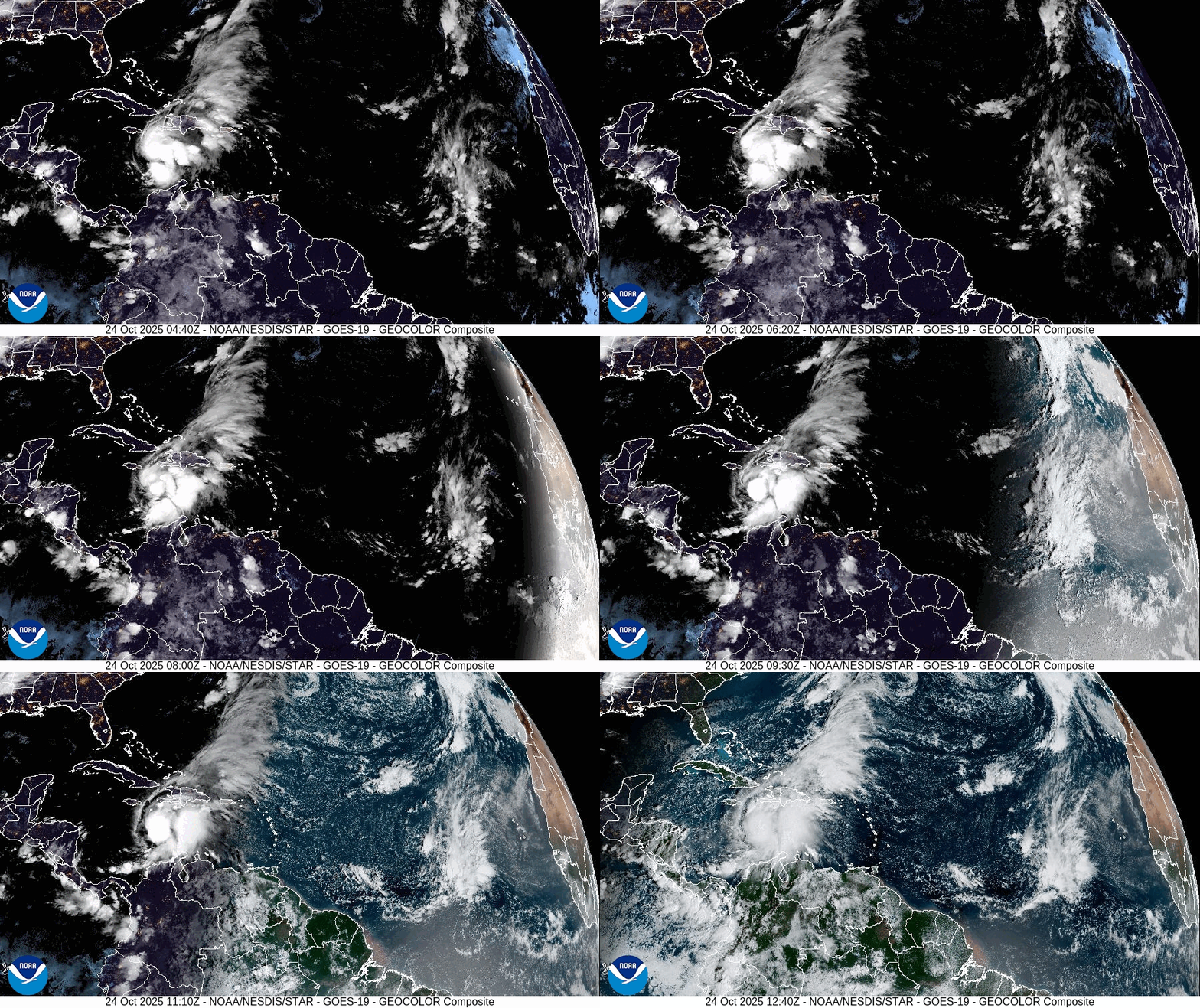
Climate change is causing hurricanes to grow stronger, do it faster, and become ever more dangerous than before, leading some scientists to float the introduction of an extra Category 6 to capture the destructiveness of some of these superstorms.
And the case for a new category could become clearer with newly-released data showing that Hurricane Melissa, already one of the most powerful Atlantic storms, smashed the record for the most powerful gusts ever recorded in a tropical cyclone with winds as strong as 252 miles per hour (402 kilometers per hour).
The Wallonia bonesaw massacre

Study author Hélène Rougier displays the butchered Neanderthal bones in a 2016 image.
A discovery from a cave in southern Belgium has unearthed a horrifying prehistoric secret — a group of six Neanderthals, all of them women and children, were eaten by a group of unidentified cannibals roughly 45,000 years ago, Live Science’s Kristina Killgrove writes.
The exact reasons for the grisly event, or whether the perpetrators were an outside group of Neanderthals or early Homo sapiens, all remain unclear. (Although the researchers believe that signs of cannibalism at other Neanderthal sites in France and Croatia suggest the former).
The researchers propose the deaths could have resulted from lethal intergroup tension during a period marked by a decline of Neanderthal cultural diversity.
You can read the full story here.
You’re much nicer when Batman is watching, scientists confirm

Ever felt like you could have been kinder to your fellow humans, especially when taking public transport?
Well perhaps you would have been, if you knew Batman was watching.
In one of the strangest behavioral studies we’ve seen in a while, train passengers have been shown to be more than twice as likely to offer their seat to a pregnant woman when a person dressed as Batman (a member of the research team, what a gig) entered from another door.
The researchers suggest that it was the unexpected nature of Batman’s appearance, and not his reputation for fighting crime, that promoted subconscious prosociality among the train passengers.
Although we’ll be waiting on a follow-up study with a researcher dressed as The Joker before we can confirm that.
Could the Arctic 'methane bomb' be a bust?

It's hard to find good news on climate change these days, which is why this next bit of research is something of a welcome rarity.
If you're a regular reader of Live Science, news of microbes trapped inside the permafrost that could one day release accelerating greenhouse gas emissions is probably not news to you. However, a new study has revealed that such a "methane bomb" could, hopefully, turn out to be a dud.
That's because, under some conditions, there could end up being more methane-eating microbes than methane-making microbes released by the melt, transforming the Arctic's soil into a carbon sink, a new study claims.
Could it be a lifeline for humanity's future in our warming world? Or are the findings just a load of hot air?
You can check out the full story here to learn more.
Signing off
That’s all from us on the U.K. side, but as always our North American colleagues will keep you abreast of all the latest developments. Keep checking back for updates!
How Antarctic melt could create a carbon sink

A view of the Admiralty Mountains near Cape Roget, East Antarctica
East Antarctica's ice sheets, which scientists once thought were holding steady in the face of human-caused climate change, are melting during warm snaps in the Southern Hemisphere's summer.
But there's a spot of good news here. As ice sheets melt and mountaintops are exposed, iron-rich minerals will be carried into the surrounding ocean, a study published today (Nov. 24) in the journal Nature Communications has found.
"Our results show that exposed bedrock in Antarctica acts like an iron factory," study lead author Kate Winter, a geography professor at Northumbria University, said in a statement.
This spike in iron-rich minerals in the ocean could help soak up carbon dioxide from the atmosphere, the study authors suggest — though it could take thousands of years for that to happen, the authors say.
The earliest black hole in the universe?

The galaxy GHZ2 (white box) was discovered by the James Webb Space Telescope in 2022. Its light had to travel some 13.4 billion years to reach Earth.
Space and physics editor Brandon here. In 2022, the light from a distant galaxy called GHZ2 reached the James Webb Space Telescope’s sensors after beaming across the cosmos for more than 13.4 billion years.
Now, new research hints that the patterns in that ancient galaxy’s light may point to something even more remarkable: evidence of the earliest, most distant supermassive black hole in the known universe.
Read the full story by Live Science contributor Shreejaya Karantha to see why scientists are making this supermassive claim, and what it could mean about the mysterious origins of the universe’s first black holes.

The end of monkey research at the CDC?

While health agencies are moving to rely less and less on monkey research, for now, it still fulfills a function in preclinical science that cannot be replicated with emerging laboratory models.
Health editor Nicoletta here to highlight exclusive new reporting from Science on the state of primate research at federal agencies. The Centers for Disease Control and Prevention (CDC) has been directed to phase out all its research with monkeys, sources told Science's online news editor David Grimm. The directive came from a former Department of Government Efficiency (DOGE) employee who's recently become the CDC's deputy chief of staff.
In recent years, federal agencies including the CDC and Food and Drug Administration have moved to reduce their reliance on animal research, pointing to new technologies such as organ chips, organoids and sophisticated AI models as alternate ways to collect data on disease states, drug mechanisms and toxicology. That said, these technologies are not yet advanced enough to replace all animal research.
At the CDC, monkeys are currently used to study infectious diseases, including HIV/AIDS; in fact, CDC monkey research was integral to the recent invention of long-term preventive medications for HIV, Dr. Demetre Daskalakis, former director of the CDC's National Center for Immunization and Respiratory Diseases, told reporters on a call last week. These new drugs are seen as potential game-changers in the effort to end the HIV epidemic worldwide, sources previously told Live Science.
The fate of the laboratory monkeys affected by this phase-out is still unclear, as are the motivations behind the directive itself. The Make America Healthy Again platform spearheaded by RFK Jr. has emphasized phasing out animal research, so that's one factor. But in addition, the administration has taken aim at funding for HIV research on several occasions, and more broadly, has deemphasized research into viruses and the treatment and prevention of infectious disease. So as I see it, the rationale for the cuts is likely multifactorial.
Read more about the monkey research phase-out at Science, and more about the CDC's decline here on Live Science.
Has the obesity rate plateaued?
A few months ago, national survey data was released that suggested that age-adjusted obesity rates in the U.S. had declined slightly. What once was an upward trending line appears to be leveling out into a plateau.
But what do experts think about the trend? Long-time Live Science contributor Stephanie Pappas has a deep dive on what's really going on behind the data.
Read the full story to learn more about some of the more puzzling aspects of the data and whether experts think we're finally past the peak of the curve.
Alzheimer's drug fails in big trial
Tia here with news that a trial of the pill form of the GLP-1 drug semaglutide has failed to delay Alzheimer's progression in a big, phase III trial, drugmaker Novo Nordisk reported today (Nov. 24). As a result, the Nordic drug giant is now cutting the cord on another big trial testing the injectable form of semaglutide for Alzheimer's.
It's "a setback for the field," Dr. Daniel Drucker, an endocrinologist who had done consulting work for Novo Nordisk in the past, told Scientific American health and medicine editor Lauren Young.
Many were optimistic because earlier, observational trials suggested these weight-loss drugs might benefit Alzheimer's patients. And there was some rationale behind it: GLP-1 agonists seem to reduce inflammation, and brain inflammation plays a role in Alzheimer's pathology.
One possibility is that the fatty coating surrounding the pill version of semaglutide may prevent the drug from reaching brain regions that are critical in Alzheimer's, like the hippocampus, Drucker told SciAm. Earlier observational studies looked at people who were mostly using the injectable form of the drug, he noted.
In general, GLP-1s seem to have a host of knock-on effects that we don't fully understand. A massive study in January showed the drugs seemed to benefit more than 60 conditions they were not originally prescribed for, while worsening others, Live Science former staff writer Emily Cooke reported at the time.
The drugs are also fascinating because they seem to work in multiple ways — both in the gut, slowing gastric emptying, and in the brain, reducing hunger signaling. They've also been found, at least in early trials, to help with alcohol addiction. But again, these are early-stage trials and it remains to be seen whether those benefits will be borne out in gold standard, phase III, randomized trials.
Early data on Ozempic and pregnancy signals need for more research

There are very, very few studies of GLP-1 use in people who are planning to conceive.
Nicoletta again, with some news about popular weight-management and diabetes drugs.
The use of GLP-1s — meaning drugs like Ozempic, Wegovy and Zepbound — continues to skyrocket. But even as these weight- and blood-sugar-managing medications become more commonplace, some fundamental questions about them remain unanswered.
One glaring example exists in the realm of pregnancy. On paper, there may be health benefits to starting a GLP-1 in the years prior to pregnancy, given that high BMI, insulin resistance and related factors are tied to worse pregnancy outcomes. But based on animal studies, scientists think the drugs may pose a risk of birth defects and other issues if you continue to take them during gestation. And so, you have a population of people taking GLP-1s who then stop taking them leading up to conception, or just after conception, in the case of unplanned pregnancies.
We know that, in general, weight gain and related health metrics rebound when a person stops taking GLP-1s — but does that rebound have any harmful risks in pregnancy that we need to watch out for? A new study published today is starting to unravel that question, but at this point, there's still a lot we don't know. The first author of the study told me that it's too early to use these findings to guide clinical practice or to give advice to patients. But nonetheless, the research does point to a critical gap in our knowledge that needs filling as more and more people use these medicines.
Read the story here, with the caveat that no single study should be taken as gospel.
Signing off until tomorrow
That's it from the U.S. team! We'll see you tomorrow with more science news.
In the meantime, I leave you with this classic:
"Why did the white bear dissolve in water?
...because it was polar!"
Shenzhou-22 to the rescue

The Shenzhou-21 crew of Zhang Lu (right), Wu Fei (center) and Zhang Hongzhang (left) before they launched into space on Oct. 31.
Good morning, science fans. We’re back with news that China successfully launched its uncrewed Shenzhou-22 spacecraft to dock with the Tiangong space station this morning.
The craft’s arrival brings an end to an ordeal that began three weeks ago, when space debris rendered the return vessel of the Shenzhou-20 crew unsafe to return in. This led the Shenzhou-20 crew to take the Shenzhou-21 crew’s capsule home, leaving the latter trio (Zhang Lu, Wu Fei and Zhang Hongzhang) without a safe return vessel for a little over a week.
While the two successive stranding does highlight a potential flaw in China's space protocols, the China Manned Space Agency certainly brought their astronauts back significantly faster than NASA’s stranded astronauts, whose unplanned stay at the International Space Station stretched from eight days to nine months.
We’ll update this post with a link to our full story when it arrives.
Live Science roundup
Here's a roundup of some of the stories Live Science published this morning and last night:
- 'I had never seen a skull like this before': Medieval Spanish knight who died in battle had a rare genetic condition, study finds
- Twin tornadoes tear perfectly parallel tracks through Mississippi during deadly 'superstorm' — Earth from space
- Study links GLP-1 use to some pregnancy risks — but the study has key caveats
NASA scales back Boeing Starliner missions

And while we’re on the topic of Boeing’s botched Starliner mission, NASA has announced that it will slash the number of astronaut missions on Starliner’s contract from six to four and fly its next cargo mission to the International Space Station (ISS) without a crew.
If this mission goes well, it will leave three Starliner flights for ISS crew exchanges before the station is decommissioned in 2030.
Long-skulled knight likely had Crouzon syndrome

The extremely-long skull of a medieval knight who died in battle was likely the result of a genetic condition, Kristina writes.
While excavating a cemetery full of medieval knights in Spain, archaeologists discovered the remains of a middle-aged man with two stab wounds on his head and a bashed-in knee, suggesting he died in battle.
But when they took a closer look at the skeleton, they were shocked by his unusually long and narrow head, which was likely the result of craniosynostosis caused by Crouzon syndrome. The man’s survival into adulthood with the condition is remarkable, especially during the medieval period, according to the archaeologists.
You can read the full story here.
A very clever wolf

A still from camera trap footage of a wolf retrieving an underwater crab trap in the Haíɫzaqv Nation Territory of coastal British Columbia.
Patrick, here, dropping in to tell you about a recent wolf discovery that I thoroughly enjoyed covering.
Researchers have shared footage of a wolf performing a complex sequence of behaviors on the central coast of British Columbia, which they say could be the first recorded case of tool use in wild canids (members of the wolf and dog family).
A camera trap filmed the wolf swimming out of deep water with a buoy in its mouth. The buoy was attached to an underwater crab trap, which the wolf couldn't see but seemed to know was there. Once back on shore, the wolf reeled in the crab trap and broke it open to get at the bait inside.
Tool use is a surprisingly convoluted subject in animal behavior research, as I explain in my new article. However, regardless of whether the wolf is considered a tool user or not, this crab trap behavior has never been seen before and is remarkable to watch.
You can read the full story here.

Is that a parakeet in your pants?

California has become a hotspot for wildlife trafficking, with people smuggling live birds, reptiles and even monkeys across the southern border so they can be sold as exotic pets, Mongabay reports.
Earlier this month, a U.S. citizen living in Tijuana was indicted for allegedly attempting to smuggle two sedated orange-fronted parakeets (Eupsittula canicularis) across the border inside his underwear.
Officials at the Otay Mesa Port of Entry noticed that the man had a suspicious bulge in his trousers, which he insisted was his "pirrin," a Spanish word for penis, according to the U.S. Attorney's Office, Southern District of California.
The story is pretty funny, until you consider the suffering that trafficked animals endure and the fact that orange-fronted parakeets are vulnerable to extinction. Researchers have found that social media has fueled the illegal wildlife trade, with buyers and sellers connecting on social media and a plethora of cute but deceptive animal posts that ultimately increase demand for exotic pets.
COP out
Climate deliberations at the United Nations’s COP 30 conference in Belém, Brazil have finally drawn to a close after all-night negotiations. So did the world’s leaders (at least the ones who attended) save the planet?
Despite a non-binding plan to curb fossil fuels and some new financing commitments, not really — the conference ended in compromises, voluntary measures and no clear mention of fossil fuels in the final text.
That’s not to say that the conference didn’t deliver in important areas. But its failure on the most crucial one of all, building a roadmap to keep the world within 1.5°C of post-industrial warming, will have ramifications for years to come.
An disturbingly apt metaphor. Via @emilypont.bsky.social: heatmap.news/sparks/cop30...
— @michaelemann.bsky.social (@michaelemann.bsky.social.bsky.social) 2025-11-25T16:04:13.645Z
Shall I compare thee to an adversarial attack?

"What are poets for in a destitute time?" The German romantic poet Friedrich Hölderlin once asked.
Well, now he has his answer: Hacking large language models.
According to a team of researchers, formulating hostile prompts as poetry can trick AI models into ignoring their safety guardrails 62% of the time, granting potential hackers the opportunity to spread misinformation or conduct cyberattacks by jailbreaking systems with florid verse.
Called "Adversarial Poetry", it's definitely not what Hölderlin had in mind. But after artificial intelligence illegally hoovered up the output of poets and many other writers, it is a rather poetic form of revenge.
Hayli Gubbi volcano erupts
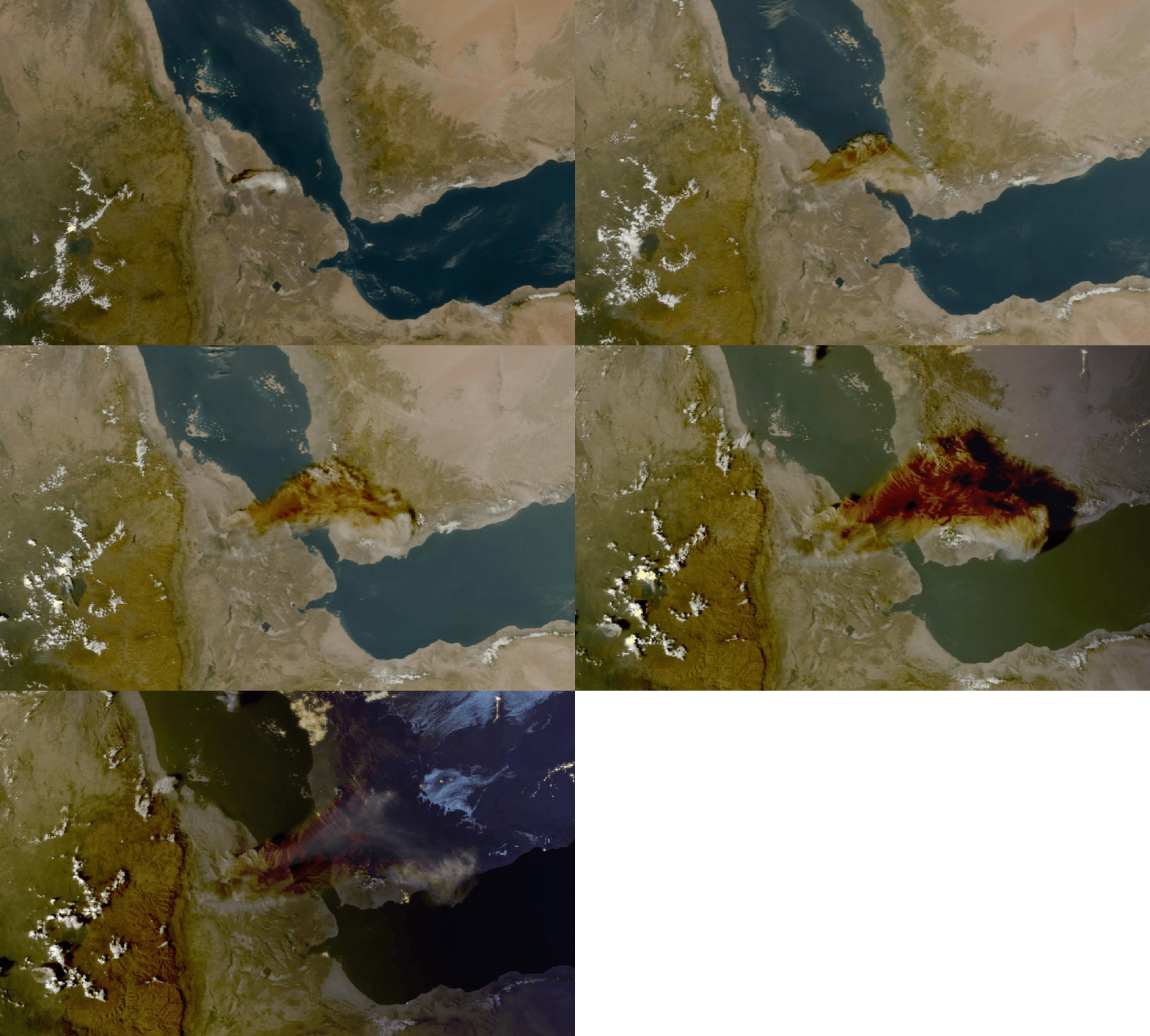
Ethiopia’s long-dormant Hayli Gubbi volcano has erupted for the first time in at least 12,000 years, sending a cloud of ash and smoke across the Red Sea.
The eruption, visible from space, is the first time the volcano has blown since the start of the Holocene epoch, Live Science contributor Skyler Ware writes.
Thankfully, no casualties have been reported from the blast, but the region’s surrounding villages have been covered in a blanket of ash that could make feeding livestock difficult.
You can read the full story here.
Signing off
That’s all from us today on the U.K. side of Live Science, but check back for more updates from our U.S. colleagues.
Oh, and what do you call a wolf that’s become sentient?
Awarewolf.
Comet, interrupted
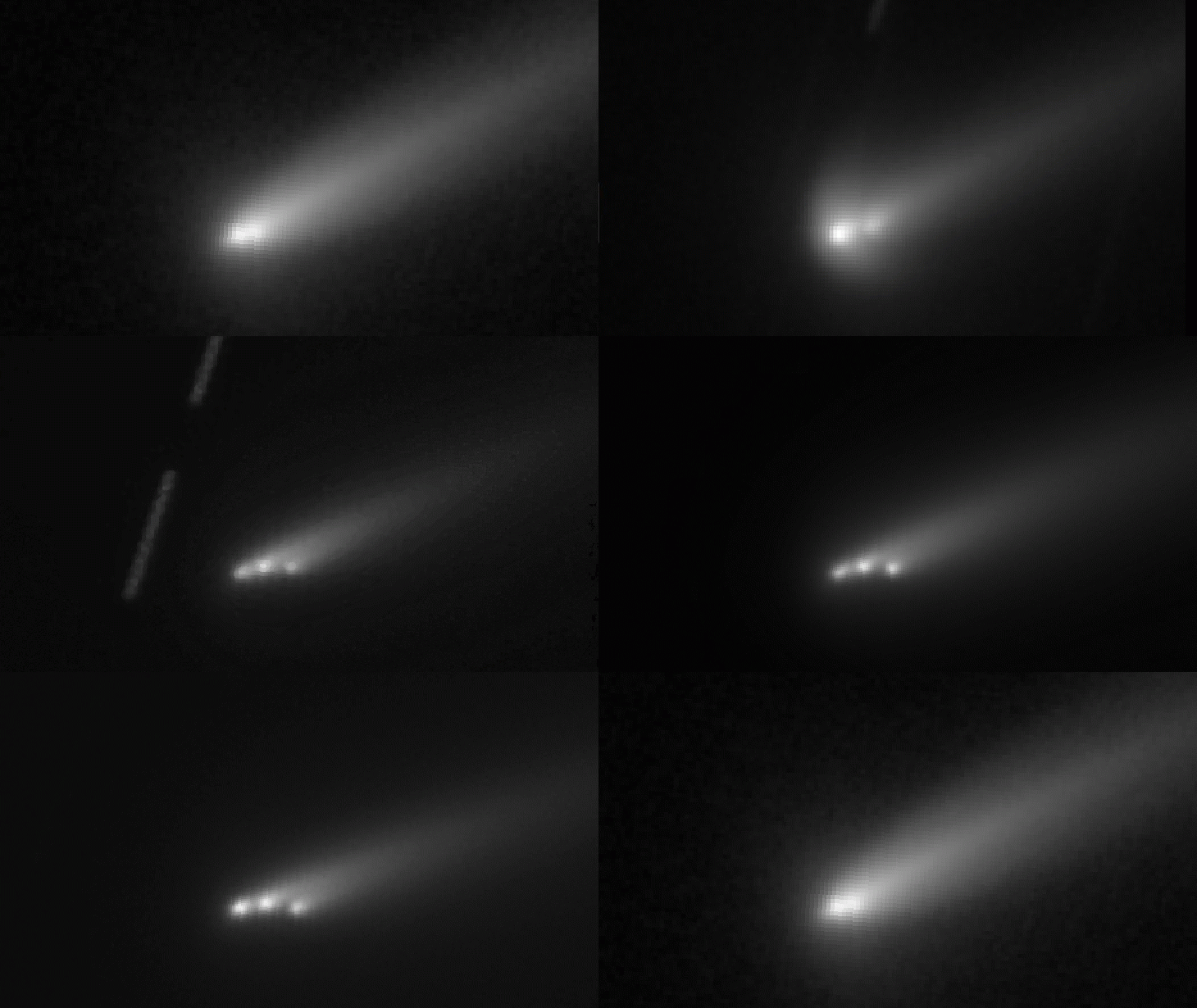
Looped animation of comet C/2025 K1 (ATLAS) disintegrating
The universe giveth, and the universe taketh away.
Just as the much-publicized interstellar comet 3I/ATLAS careens toward its closest encounter with our planet on Dec. 19, a separate and unrelated comet called C/2025 K1 (ATLAS) completes its own close approach to Earth today — and has seemingly exploded in our skies.
In an incredible new series of photos taken from Nov. 12 to 20th, astrophotographer Michael Jäger shows us that comet C/2025 K1 has broken into three discrete chunks (plus a fourth chunk not visible here) over the course of eight days. Why did this local solar system comet perish while its interstellar elder persists? Read senior writer Harry Baker's story to see what scientists have been saying.
California identifies infant botulism cases predating current outbreak

Infant botulism is caused by toxins produced by Clostridium botulinum, a bacterium.
The U.S. is contending with a multistate outbreak of infant botulism that has so far impacted more than 30 children in 15 states. This large outbreak began in August — but now, California health officials say they've identified several cases of the disease that predate this ongoing outbreak, CIDRAP has reported.
According to the California Department of Public Health (CDPH), at least six cases of infant botulism took place in the state between November 2024 and June 2025. Previously, there was not enough information to link these half dozen cases to one another. And for the moment, "CDPH is continuing [to] investigate, but at this time we cannot connect any pre-August 1 cases to the current outbreak," a spokesperson told CIDRAP.
But that said, both sets of botulism cases have been linked to a common source: ByHeart infant formula products. The exact source of the contamination within these products is still being investigated in both cases. ByHeart formulas have been recalled and should not be sold, bought or used, officials have warned.

Gramma, 141-year-old Galapagos tortoise, dies at San Diego Zoo

Gramma, a Galápagos tortoise who lived to be roughly 141 years old, has died at the San Diego Zoo.
Laura here, with news that a Galápagos tortoise who had reached the astonishing age of roughly 141 years has died.
Gramma, a Galápagos tortoise and the oldest resident at the San Diego Zoo, died on Nov. 20. The zoo reported that she struggled with age-related bone conditions, and she was euthanized, according to the Associated Press.
Gramma was born in the Galápagos islands and previously lived at the Bronx Zoo until 1928 or 1931, when she arrived in San Diego.
Galápagos tortoises are known for their longevity, living for more than 100 years in the wild, although they typically live longer in zoos, the AP reported. The oldest known Galápagos tortoise, a female named Harriet at the Australia zoo, lived to be 175.
Currently, the oldest living tortoise — who also holds the title for oldest known living land animal — is Jonathan, a Seychelles giant tortoise (Aldabrachelys gigantea hololissa), who turns 193 in December. It's thought that Jonathan was born in 1832, which, to put that in perspective, is five years before Queen Victoria ascended the British throne. Jonathan lives on the island of St. Helena in the South Atlantic Ocean.
Other long-lived animals include saltwater crocodiles (Crocodylus porosus), which can live more than 120 years; freshwater pearl mussels (Margaritifera margaritifera), which are bivalves that can live more than 250 years; and Hydra, a group of small marine invertebrates with soft bodies that may practically be immortal.

Doomed stars put Einstein to the test

A binary star system spotted by the Hubble Space Telescope
Physicists are watching a slow-motion trainwreck unfold in a star system about 4,000 light-years from Earth.
Two stars, collectively called ZTF J2130, are steadily spiraling toward each other — their shared orbit tightening almost imperceptibly with every passing second. One day, the stars will merge, triggering a brilliant supernova explosion that could be visible from Earth with the naked eye. But in the meantime, scientists are using the stars' incessant orbital decay to test the predictions of Einstein's theory of gravity.
New research into the doomed star system offers the most precise measurement yet of its slowly shrinking orbit. But how well does this measurement fit with the theory of relativity? Live Science contributor and astrophysicist Paul Sutter unravels the details behind this stellar dance of death in his latest article.
Signing off
Laura here. We're signing off on the U.S. side, but stay tuned for our U.K. colleagues on Wednesday morning. Since I run the Life's Little Mysteries series, I'll leave you with a timely mystery to ponder: Why are bananas berries but strawberries aren't?
With Thanksgiving fast approaching, did you know that pumpkins are berries, and so are cranberries? But, as the headline suggests, strawberries are not true berries, and neither are raspberries nor blackberries. Read the mystery to find out why.
Dark matter revealed?

Good morning science fans, did you miss us? We’re back with big news, or for now just a very big claim, that an astrophysicist working with NASA’s Fermi Gamma-ray Space Telescope may have found the very first direct evidence for the existence of dark matter.
Dark matter is one of the universe's most mysterious components. It makes up 27% of our universe, with ordinary matter only accounting for 5%, but because it does not interact with light, it can't be detected directly.
But characteristic flashes spotted in this new study could be a smoking gun pointing to dark matter being made up of weakly interacting massive particles, or wimps, which are 500 times heavier than protons.
Much more work is needed to rule out other explanations, so astronomers are responding to the claims with characteristic caution. But if they can finally unveil the mass-ter of disguise, it will offer a major boost for our best theory of the universe.
Live Science roundup
Here are some of the stories we published today and yesterday, in case you missed them:
- RIP 'other ATLAS': Watch the doomed comet explode into pieces in incredible new images
- 'Like a sudden bomb': See photos from space of Ethiopian volcano erupting for first time in 12,000 years
- Marooned no more! Stranded Chinese astronauts finally have a way home following launch of unmanned 'lifeboat'
- Most modern dogs have wolf DNA from relatively recent interbreeding. Here's which breeds are the most and least 'wolfish.'
Inside your chihuahua there are 0.2 wolves

You don’t need any breaking news updates from me to tell you that dogs came from wolves. But a new study has found that most modern dog breeds also have wolf ancestry from long after human domestication split them into a separate species, Live Science contributor Skyler Ware writes.
So which are the most wolfish dogs? Czechoslovakian and Saarloos wolfdogs, unsurprisingly, top the list. Yet some large guardian dogs, such as bullmastiffs and Saint Bernards, don’t have any detectable wolf ancestry, whereas chihuahuas still do — something that makes total sense if you own one, the researchers said.
You can read the full story here.
3I/ATlAS shrugged

We’re still tracking comet 3I/ATLAS after last week’s headline-grabbing NASA stream revealing the agency’s images of the potentially 7-billion-year-old interstellar visitor.
Astronomers are racing to learn everything they can about the comet as it approaches its closest point to Earth on Dec 19., with some even having devised a new way to measure the size of the comet’s nuclei.
And another preprint paper suggests that the comet’s trajectory could be altered by gravitational interactions with the gas giant Jupiter as it zips out of our solar system, with an ideal potential observation window for the Juno spacecraft sometime in March 2026.
World’s biggest 'ghost' particle detector in China releases its first results

The first results from the world’s largest neutrino detector could hint at its capacity to reshape physics, Live science contributor Rory Harris writes.
China’s Jiangmen Underground Neutrino Observatory (JUNO) finished its construction in August of this year. And after a short time online, the 20,000-ton tank of liquid was able to narrow down on two key parameters that describe neutrinos — achieving in 59 days what it previously took scientists 50 years to measure.
Neutrinos, or ‘ghost particles’ as they’re commonly called, are not supposed to have mass, according to our best model of particle physics. Yet the discovery that they do, besides winning the scientists who made it the 2015 Nobel Prize in physics, could point to some fascinating holes in our understanding of the universe, which JUNO could be a portal to.
You can read the full story here.
Louisiana official who called COVID-19 vaccines 'dangerous' given key CDC post

Last week, we reported on the situation at the U.S. Centers for Disease Control and Prevention (CDC), as its website explicitly adopted debunked anti-vaccine views which US Health Secretary Robert F Kennedy Jr revealed he personally instructed.
Now, it seems that these shifts were just a prelude as Ralph Abraham, Louisiana’s health official who described COVID-19 vaccines as dangerous and ordered his state health department to stop promoting flu shots during a surge of cases, has been hired to be the CDC’s principal deputy director, the Washington Post reports.
As the CDC currently has no permanent director, this means that Abraham will essentially be running the agency.
I speak therefore AIm?

Is a handy command of language the same thing as intelligence? This writer would sure like to tell you otherwise but alas, according to a fascinating long-read on large language models by The Verge, that’s simply not the case.
It’s based on this Nature commentary article, which argues that language is simply a means of communication for thought, not thought itself. If they’re right, there’s likely a fundamental limit to the creativity of large language models, making them tools for spitting out common sense and received wisdom, and not much more.
RIP 'other ATLAS'
In case you missed it, yesterday senior writer Harry Baker covered new images of "other ATLAS" comet exploding. C/2025 K1 (ATLAS) originated from the Oort Cloud beyond Neptune and was nicknamed "other ATLAS" because it shares some of its name with the famous comet 3I/ATLAS — you know, the one that definitely isn't aliens.
You can read the full story here.
I love the smell of soot in the morning

Pollution standards regulating potentially deadly soot could soon be a thing of the past.
The Associated Press reports that the Trump administration is looking to role back a rule that established strict standards on soot pollution during the Biden administration.
When the Environmental Protection Agency finalized stricter soot pollution standards last year, it argued that lowering levels of fine particle matter from vehicles and industrial sources could prevent thousands of premature deaths every year.
However, the standards have proven controversial in many republican-led states, with 25 joining lawsuits to block their introduction, arguing they would increase costs for manufacturers and families, among other concerns.
News of the potential soot pollution changes come after the Trump administration has sought to limit federal protections of wetlands and streams and make revisions to the Endangered Species Act, the Associated Press has reported.
Something's a foot in human evolution research

Sophie here, taking my first steps into reporting on the potential solving of the mystery surrounding the 3.4 million-year-old Burtele foot.
New research has revealed that the foot — which was discovered not far from the famous Lucy fossil and shows signs of adaptation for living in trees — could have belonged to the now-extinct human relative Australopithecus deyiremeda.
One expert I spoke to for this called Yohannes Haile-Selassie, the first author of the new study, a "fossil magnet." Haile-Selassie previously discovered Ardipithecus ramidus, Ardipithecus kadabba and the nearly complete skull of the oldest known australopithecine, Australopithecus anamensis, to name but a few.
And he certainly hasn't disappointed when it comes to he and his team's latest findings.
But, as with everything in the world of human evolution research, this new discovery is not without controversy. While some are swept off their feet by the species designation, others think the jury is still out on which ancient human relative left behind the Burtele foot.
Have a read of my story here to get in on the action!
Over and out

We're heading home on the U.K. side, but keep checking back for more science posts from our U.S. counterparts.
I hope you all have enjoyable evenings. I'm off to watch woolly mammoths fight off saber-toothed cats in "Prehistoric Planet: Ice Age," which dropped today on Apple TV.
I had a blast covering the launch of "Prehistoric Planet" back in 2022. The first two series focused on the age of dinosaurs, but now the CGI nature doc is shooting ahead to the last ice age.
Personally, I'm very excited about the change. We've lost the iconic narration of Sir David Attenborough, replaced with Tom Hiddleston (the MCU Loki guy), but you can't have everything in life.
Roman-style burial with Greek inscription found in France

An archaeologist removes the coin stash found in the Roman-era burial. The coins may have been deposited in a decorated purse.
Kristina here. Archaeologists working at a medieval site in France recently found a Roman-era burial underneath the remains of centuries-old grain silos. But they are unsure why there is a single Roman cremation burial in this area, which has not yet yielded any other graves or even houses.
One intriguing artifact in the burial is a possible "bulla" — a necklace that was given to Roman boys at nine days old. For rich Romans, the bulla was made of gold and opened like a locket, while less wealthy Romans wore a pouch made of leather or cloth. Parents placed protective amulets (often phallic symbols meant to ward off evil spirits) inside the bulla. Boys wore the bulla until they came of age as a Roman citizen around 16 years old.
The other unusual object is a gold signet ring with a Greek inscription — Allallé — which may be the person's surname. Finding a person with a Greek name in a Roman-style burial is not particularly uncommon, but the isolated nature of the grave has sparked intrigue.
Because the deceased was cremated, it will take time for researchers to fully study the hundreds of bone fragments in the burial and determine the person's age-at-death and sex. But it wouldn't surprise me if the deceased turns out to be a young boy with Greek heritage.
You can read the story here to learn more about the unusual burial.

Third Kentucky infant dies of whooping cough

Three infants have died of whooping cough in Kentucky in the last 12 months.
Kentucky health officials have announced that an infant in the state recently died of pertussis, also called whooping cough. This marks the state's third infant death from pertussis in the last 12 months.
The three infants had not been vaccinated against the respiratory disease, officials confirmed, nor had their mothers been vaccinated during pregnancy, as is recommended in order to pass protective antibodies to babies before birth.
Kentucky is experiencing its biggest spike in pertussis cases since 2012, with 566 cases documented as of Nov. 19. The three infant deaths mark the first fatalities from the disease seen in the state since 2018.
Meanwhile, nationwide, the Centers for Disease Control and Prevention (CDC) has recorded more than 25,000 pertussis cases so far this year, AAP News reported. This is a lower number of cases than was reported this time last year, at nearly 34,000. But looking back further, 2024 and 2025 have been notably active years for whooping cough infections. Prior to 2024, the last time annual case counts topped 25,000 was in 2014. The concerning trend has been attributed to falling vaccination rates.
NSF cancels grant scheme for social science research

The entrance of the National Science Foundation building in Alexandria, Virginia.
Kristina here. Y'all know me as the archaeology staff writer, but I also got my Ph.D. in bioarchaeology at a perpetually underfunded state university. This update is important to me because a research grant from the U.S. National Science Foundation helped me get to where I am today — and scores of future archaeologists have just lost a major source of financial support for their groundbreaking work.
Yesterday afternoon, the U.S. National Science Foundation quietly "archived" grants that have supported dissertation research in archaeology, biological anthropology and cultural anthropology for at least two decades.
The grant program, called the Doctoral Dissertation Research Improvement Grants (DDRIG), was available to Ph.D. students in U.S. institutions who are conducting scientific research. Per the NSF's website, DDRIG grants typically ranged between $15,000 and $40,000 and supported Ph.D. students undertaking significant data-gathering projects.
As of this writing, there are no current DDRIG grants available for any discipline in the Directorate for Social, Behavioral and Economic Sciences, as it appears that the NSF has archived — which means cancelled — the DDRIG grants in every SBE field, including archaeology, cultural anthropology, geography and spatial sciences, linguistics, biological anthropology, economics, law and social science, political science, and sociology.
While senior research awards appear to still exist in these fields, archiving of the DDRIG means the primary source of research funding for many Ph.D. students has disappeared overnight, leaving students and their advisors scrambling.
On Bluesky, biological anthropologist Robin Nelson in Arizona State University's School of Human Evolution and Social Change wrote, "Please speak with your grad students and plan accordingly. To say I am angry and depressed about this is an understatement."
I know how these academics feel. My own 2010 dissertation on "Migration and mobility in Imperial Rome" was funded by an NSF DDRIG. I couldn't have lived in Rome, studied hundreds of ancient skeletons, and done chemical analysis of the bones and teeth without that grant. That research project has been cited hundreds of times in the last 15 years, and other researchers regularly compare their datasets to mine.
So the cancellation of NSF DDRIGs will certainly mean the loss of untold research advances and will likely lead to more early-career researchers being lost to the "leaky pipeline" of science.
There is currently no information about whether these grants will be resumed.
Cara Ocobock, director of the Human Energetics Laboratory at the University of Notre Dame, shared on the Human Biology Association group on Facebook that the NSF is sending the following standard language in response to inquiries about the future of the DDRIG:
"Thank you for your interest in the directorate for Social Behavioral and Economic Sciences Doctoral Dissertation Research Improvement Grant program. The solicitations for this program were recently archived as we work to improve how we support the SBE research community. Future solicitations to support early career talent development will appear on nsf.gov."
Signing off in the US

It's turkey time.
It's the night before Thanksgiving, and we're signing off on the U.S. side. But as the archaeology editor, I can't leave without a historical note about this festive holiday. In school, we typically learn that the Pilgrims and Wampanoag shared a harvest feast, but what happened, exactly?
The Pilgrims landed in what is now Massachusetts in 1620, and the first Thanksgiving happened the following year. The Wampanoag had already been in contact with Europeans for over a century at that point, and for various reasons made an alliance with the English Pilgrims.
In the fall of 1621, the English celebrated their first harvest and celebrated by shooting guns into the air. The Wampanoag thought it was a cry for help and rushed to their aid. What happened next is history.
You can read more about the first Thanksgiving here.
Perseverance detects lightning on Mars

Good morning, science fans. To kick off the blog this morning, we have news that NASA’s Perseverance rover has detected what scientists believe to be lightning on Mars, Science Alert reports.
The news comes as a shock, but perhaps not a surprise — key laboratory experiments in the 1970s suggested that electrical discharges should spark on the Red Planet’s atmosphere. Yet unlike Jupiter, Saturn, Neptune or Uranus, it has proven elusive.
The crackling sounds picked up by the rover’s microphone suggests the lighting is tiny, consisting of arcs of just a few centimeters long heard inside the planet’s many dust storms. 55 of these sparks were picked up by Perseverance across an observation window of two Martian years.
Scientists think that studying them further could offer insights into the chemistry of possible past life on our now-dessicated neighbor planet.
Live Science roundup
Here are some of the stories we published today and yesterday, in case you missed them:
Take me to your nonna

A sleepy town in the foothills of the Italian Alps has once again had a visit from an eerie, UFO-like halo of light, Harry writes.
It’s become a common refrain of ours with all the comet 3I/ATLAS coverage, so I’m sorry to say the line again — it’s not aliens.
The strange ring that appeared above the town of Possagno is actually a rare lightning-related phenomenon called "emission of light and very low-frequency perturbations due to electromagnetic pulse sources," or ELVEs. It occurs during thunderstorms and can only be detected by cameras.
For a full breakdown on how ELVEs work alongside other rare optical phenomena, check out the full story here.
Your brain was almost inevitable

Death, taxes, headphones getting tangled in pockets, many things in life are predictable. But what about the evolution of human intelligence?
It sounds far-fetched, but it’s the contention of neuroscientist Nikolay Kukushkin that the evolution of eukaryotic cells made the emergence of something resembling the human brain a somewhat unsurprising development on Earth, he told Nicoletta.
To read more about the nature of human consciousness, check out the full interview here.
Ancient predators of ash

Two weeks ago I brought you bone-crushing "hell pigs" from the Society of Vertebrate Paleontology 2025 annual meeting in Birmingham, England. Now, I’m back with conference findings about very different bone munchers, this time of the canine variety.
Researchers have discovered large, bone-crushing dog footprints at the "Rhino Pompeii" ashfall site in Nebraska, suggesting that large canid stalked the ashy wastes of North America in the wake of a devastating Yellowstone supereruption 12 million years ago.
The Ashfall Fossil Beds are nicknamed "Rhino Pompeii" because they're known for preserving lots of extinct North American rhinos (Teleoceras) that perished in widespread volcanic fallout.
The dog tracks mark the first direct evidence of large carnivores in the beds, and surprisingly, they seem to have survived the cataclysmic event that wiped out the rhinos and so many other animals.
Check out the full story here.
How much does your brain know about your brain?
If you're fresh out of Nicoletta's neuroscience interview and fancy flexing yours, take a little look at this quiz.
What killed the dinosaurs?

A giant asteroid ended the reign of dinosaurs — at least, all of the ones that didn't become modern birds. However, there is still debate about how much other factors helped the asteroid in doing the iconic reptiles in.
The debate will roar a little louder now that a new study has revealed that multiple massive volcanic eruptions occurred before the Chicxulub asteroid strike at the end of the Cretaceous period, around 66 million years ago.
The researchers concluded that about 70% of the lava from these eruptions flowed 300,000 years before asteroid armageddon, producing toxic gases that "set the stage for mass extinction."
It's worth nothing that researchers are still very much piecing together the dinosaur record. Just last month, I wrote about fossils in New Mexico that suggested some of the last dinosaurs were doing just fine before the asteroid annihilated them all.
Catching some cosmic rays

Researchers at Michigan State University are helping to solve the mystery of where galactic cosmic rays come from.
Galactic cosmic rays are high-energy particles zipping around space, which originate from outside of our solar system. This form of space radiation has been bombarding comet 3I/ATLAS for billions of years, and may have left it extremely irradiated.
Anyway, the new research has involved identifying and classifying cosmic ray sources, including tracing them to a pulsar wind nebula — charged particles whirling around a pulsar (a spinning collapsed star).
See ya
The Brits are signing off, so we'll see you tomorrow morning for more science news as it happens.
Joke of the day from Beano.
Why can't the T-rex clap its hands?
Because it's extinct!
Brilliant…
It's Thanksgiving... in space

NASA astronaut Chris Williams boards the International Space Station on Nov. 27, 2025
No matter how far you traveled for Thanksgiving this year, NASA astronaut Chris Williams has you beat.
Today at 7:34 a.m. EST, Williams and two Russian cosmonauts – Sergey Kud-Sverchkov and Sergei Mikaev – docked at the International Space Station (ISS) aboard a Soyuz MS-28 spacecraft that launched from Kazakhstan early this morning. The entire flight time was only about three hours, but required the holiday space travelers to complete two full orbits of Earth before nuzzling up to the ISS, according to NASA.
It took nearly three more hours before Williams and the cosmonauts were allowed to open the hatch of their capsule and join their crew of seven colleagues on the ISS – bringing the space station's total capacity to 10. (And you think your Thanksgiving table is cramped?) You can watch the whole joyous affair on NASA's live stream here.
The now-10-member-crew will remain on the ISS for the next two weeks, at which point three of the astronauts will conclude their respective missions and begin the long journey home. Due to the long-term effects of spaceflight on the human body, the returning astronauts will have to be carried out of their capsule on stretchers for an immediate medical examination, but it still beats air travel on Earth, am I right??
Thanksgiving conversation starters (with science)

Wow, that's a big pun'kin
Already running out of things to talk about with the extended family? Here are some free Thanksgiving conversation starters, courtesy of our weekly Life's Little Mysteries series. (Don't forget to sign up for the free newlsetter!)
- More people used to dream in black and white before the rise of color television and movies in the 1960s. (At least, that’s how they remembered their dreams looking.)
- There is no limit to how large pumpkins can grow. The largest on record is more than 2,700 pounds (1,225 kilograms), but this could well be surpassed.
- The color purple, as we know it, only exists because of the way our brains process light.
- The sunlit side of the moon is hotter than the hottest desert on Earth, but the "dark side" of the moon is colder than Antarctica.
- As of this year, mosquitoes have been discovered in every country on Earth.
- The last time all humans were together on the planet was Nov. 2, 2000. That’s the day the first crew arrived at the International Space Station and — in the 25 years since — there’s been at least one human in space at all times.
For more free fun facts, sign up for the Life's Little Mysteries newsletter here.
Catching fire over the Great Lakes

Three screenshots taken by three videos of the green fireball meteor.
Before dawn on Nov. 23, a bright green fireball blazed through the sky over the Great Lakes. Witnesses in Michigan, Wisconsin, Indiana and Ohio reported seeing the meteor, which came and vanished within seconds.
NASA later confirmed the fireball to be a chunk of a comet, falling toward Earth at nearly 100,000 miles per hour before disintegrating a few dozen miles above Lake Huron. Surprisingly, the comet does not appear to be related to the ongoing Leonid meteor shower, but is rather being characterized as a one-off event, NASA added.
Read Live Science production editor James Price's story to see local video footage of the early morning fireball.
'Turkey coma' molecule spotted in space

An image of the asteroid Bennu produced by the OSIRIS-REx mission.
Is this space rock responsible for your post-Thanksgiving-dinner sleepiness? Probably not. But new research hints that asteroids like this may be the reason the infamous amino acid tryptophan exists on Earth.
Tryptophan is an amino acid found in turkey and many other foods. It often gets blamed for the annual "turkey coma" that so many of us feel after a big Thanksgiving meal. (In reality, carbs, alcohol consumption, and inactivity are the more likely causes).
But it's not just found in our food. New research published Monday (Nov. 24) in the journal Proceedings of the National Academy of Sciences reports the detection of tryptophan in samples of the near-Earth asteroid Bennu, which NASA collected and returned to our planet as part of its ambitious OSIRIS-REx mission in 2023. According to the study authors, it's the first time tryptophan has been spotted in a meteor or asteroid sample.

View of the OSIRIS-REx container with lid removed, unveiling the bulk of asteroid Bennu sample inside.
While it doesn't mean much on it's own, the tryptophan detection adds to a long list of dozens of amino acids and "building blocks of life" previously discovered in samples of Bennu. It all helps paint a picture of the early days of our solar system, when these building blocks may have formed freely in space before being "seeded" to other bodies, like Earth, the authors suggest.
"Asteroids were the early Earth's grocery delivery service, having provided a wealth of molecules to our prebiotic world," Kate Freeman, a professor at Penn State University not involved in the study, told CTV News.
So, don't blame tryptophan for your turkey coma... but maybe blame space rocks for tryptophan.
Have a great night
We're signing off for the night to digest today's news, and also a metric ton of sweet potatoes.
Happy Thanksgiving, if you celebrate — and happy last Thursday in November, if you don't.
We'll be back tomorrow with more science news.
— Brandon Specktor
Fat bottomed birds
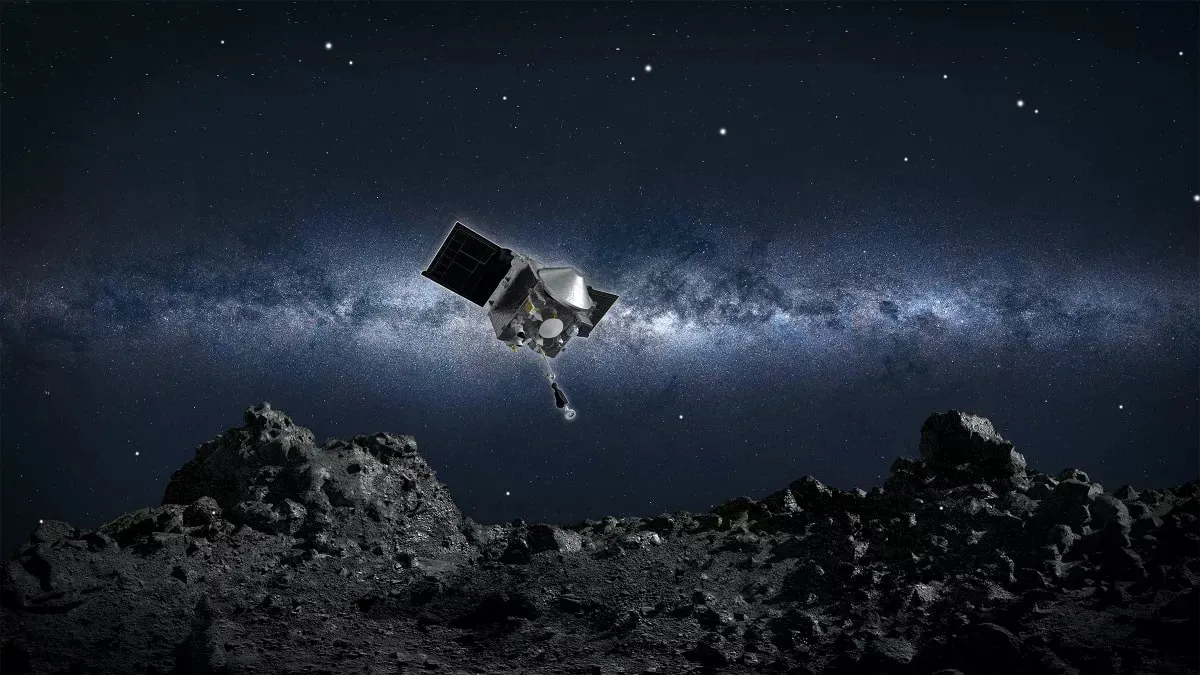
Good morning, science fans. Last night Brandon wrote about the discovery of tryptophan — the amino acid that’s often blamed for Thanksgiving "turkey comas" — has been discovered on the near-earth asteroid Bennu.
I won’t repeat much of his excellent summary (you can just scroll down for that). But it does give me the opportunity to shamelessly plug a 2023 interview with Queen guitarist Brian May on his involvement with the OSIRIS-REx mission that made the discovery.
Check it out here, if you’re not too busy digesting turkey.
Live Science news roundup
Here are some of the best Live Science stories published last night and today:
- People in China lived alongside 'chicken-killing tigers' long before domestic cats arrived
- 100,000 mph 'comet fragment' explodes in green fireball over Great Lakes, eerie videos show
- Decades-long droughts doomed one of the world's oldest civilizations
- Shrinking tree canopy at California schools could put kids at risk of extreme heat
Who’s afraid of the big bad comet?

This artist's illustration shows the interstellar object (ISO) Oumuamua travelling through our solar system. We know of three ISOs, but there must be many more.
On some days the only danger comet 3I/ATLAS seems to pose to humanity is the mass derangement caused by arguing whether or not it’s aliens (it’s almost certainly not).
Yet now, a new study has assessed the more direct dangers posed by interstellar objects like 3I/ATLAS to our planet. Although we’ve only started tracking these objects as recently as 2017, there have certainly been countless passing through our solar system during its 4.6-billion-year history.
So is there any way to quantify the risk they pose? Not exactly, to do that we'd need to know how many there are. But the results are intriguing — showing a slightly elevated impact risk in the northern hemisphere, where 90% of humanity lives.
You can give the full story a read here.
Did Chinese state-backed hackers really launch the world’s first AI cyber attack?

The artificial intelligence lab Anthropic is known for its rather dramatic claims about the capabilities of its chatbot, Claude.
So when company representatives announced this month that their software had been hijacked by a Chinese state-sponsored espionage group to plan and execute a 90% autonomous cyber espionage attack on 30 worldwide organizations, we were a little skeptical.
So Live Science contributor Carly Page chased up the claims with experts for us. Her report reveals that even if the automation narrative is exaggerated, they’re now very concerned about the abilities of AI models to accelerate widespread hacking attempts.
You can read the full story here.
Earthquake in Alaska

The skyline in Anchorage, Alaska.
Alaska's largest city has been rattled by a magnitude 6 earthquake, the Associated Press reports. The earthquake struck about 67 miles (108 kilometers) from Anchorage, rocking the city's metropolitan area yesterday morning.
The earthquake was Anchorage's strongest since 2021. We're not seeing any reports of serious damage or fatalities, and the earthquake hasn't produced a tsunami.
From sink to source

Africa's forests are producing more carbon than they're absorbing — and have been for a while, the Guardian reports.
A new study, published today in the journal Scientific Reports, found that forests and woody savannas in Africa underwent a transition in 2010, going from being a carbon sink to a carbon source.
Farmers clearing land for food production, infrastructure development, mining and global warming have forced this change, which will exacerbate global warming even further as more heat-trapping carbon makes its way into the atmosphere.
Africa's forests aren't alone. A 2021 study published in the journal Nature found that the Amazon rainforest is releasing more carbon into the atmosphere than it's removing. Again, this shift is largely driven by human activities.
Forest fires contribute to and are fueled by climate change, which causes the forests to become hotter and drier. These conditions then make them more flammable, creating a destructive feedback loop.
No-Bell Prizes: Today in science history

Fifty-seven years ago today, physicist Jocelyn Bell Burnellan noticed something strange. The then astronomy graduate student found repeating signals in data from the Mullard Radio Astronomy Observatory, which she famously dubbed "LGM," short for "little green men."
The signals weren’t actually aliens, but instead turned out to be the first detection of pulsars. These spinning neutron stars (collapsed stars) send out sweeping beams of radio waves into space, kind of like a lighthouse.
The discovery of pulsars was an important one, and in 1974, led to the first Nobel Prize win for breakthroughs in astronomy. Did Burnellan claim her prize? Nope.
So why was she snubbed? Check out the full story here.
The 'Holy Grail of shipwrecks'

Researchers have presented some treasures from the San José galleon, commonly dubbed "the Holy Grail of shipwrecks," which was sunk by the British off the coast of Colombia in 1708.
The treasures include three coins, a porcelain cup and a cannon, James reports.
Check out the full story here.
And we're out
We're heading home on the U.K. side, so buh-bye for now. Keep checking back for more science news from our North American colleagues.
I'd leave you with a joke about sunken treasurer, but that ship has sailed.
See you Monday.
Soyuz launch pad seriously damaged by ISS launch

A Russian Soyuz rocket being prepared for a mission at Baikonur Cosmodrome in Kazakhstan. The 20-ton service tower is seen opening around the rocket.
Yesterday, NASA astronaut Chris Williams and Russian cosmonauts Sergey Kud-Sverchkov and Sergei Mikaev lifted off from Baikonur Cosmodrome in Kazakhstan in a Thanksgiving morning flight to the International Space Station (ISS). Riding aboard a Russian Soyuz MS-28 spacecraft, all three travelers arrived safely at the ISS within hours, joining the crew of seven astronauts waiting for them there.
But not all went to plan. According to a statement released thursday night by Roscosmos, the state-owned corporation that manages Russia's Soyuz program, the Site 31 launch pad at Baikonur was damaged during the liftoff, temporarily putting it out of service.
That means that, for now, Russia's only launch pad configured for Soyuz launches is out of commission, putting the immediate future of country's participation in ISS launches in question, according to Ars Technica's senior space editor, Eric Berger.
Roscosmos is downplaying the damage as minor, but video footage shows the 20-ton service tower at site 31 plunging into a trench below the launch pad, Berger added. Repairing Site 31, or making another launch pad ready to accommodate Soyuz launches, could be a costly process that tests Russia's committment to the aging ISS.
Previously, Russia begrudgingly agreed to continue participation in ISS missions until the station is decommissioned in 2030.
Have a great weekend
Live Science is signing off for the day, but we've got some great stories lined up for you this weekend. (Whisper, whisper: Stop by tomorrow morning if you're interested in UFOs.)
Since Ben didn't have time for a proper nautical joke, I'll leave you with this:
I just watched a great new documentary about how ships are built.
It was riveting.
Take care, - Brandon Specktor