
-
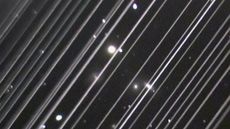 SpaceX’s Starlink satellite constellation is interfering with radio telescope observations
Astronomers have long voiced concerns about Starlink's satellite constellation interfering with observations of the universe, and a new survey by Curtin University confirms those fears.
-
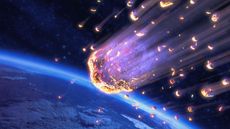 'City killer' asteroid 2024 YR4 could shower Earth with 'bullet-like' meteors if it hits the moon in 2032
There is currently a 4.3% chance that the giant space rock 2024 YR4 will hit the moon in seven years. If this does happen, debris from the nuclear bomb-like impact could trigger a "spectacular" meteor shower that will endanger Earth-orbiting satellites.
2 Commentsasteroids -
 The closer a volcano is to erupting, the greener the trees around it look from space
Scientists have found a way to monitor volcanic carbon dioxide levels — one of the first signs a volcano might be about to blow — that doesn't involve trekking up a mountain.
6 Commentsvolcanoes -
 What goes up must come down: How megaconstellations like SpaceX's Starlink network pose a grave safety threat to us on Earth
Opinion Thousands of satellites with incredibly short lifetimes are being sent up into low Earth orbit. When they fall back down they're fireballs of pollution — and what doesn't burn up hits the ground.
4 CommentsOpinion -
 'No radio astronomy from the ground would be possible anymore': Satellite mega-swarms are blinding us to the cosmos — and a critical 'inflection point' is approaching
Invisible radiation leaking out of private satellites, like SpaceX's Starlink spacecraft, is disrupting radio astronomers' ability to detect important signals from across the universe. If left unchecked, we could reach an "inflection point" beyond which we can no longer properly study the cosmos, researchers warn.
9 Commentsastronomy -
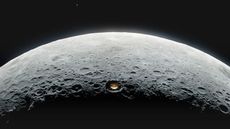 NASA plans to build a giant radio telescope on the 'dark side' of the moon. Here's why.
A NASA-funded plan to build a large radio telescope on the moon's far side is nearing final approval and could become a reality by the 2030s, researchers say. The ambitious project will help safeguard astronomy from satellite "megaconstellations" — and help scientists unravel more of the radio spectrum.
2 Commentsspace-exploration -
 How many satellites could fit in Earth orbit? And how many do we really need?
The number of satellites orbiting Earth is rising fast, thanks to private companies such as SpaceX. But just how big will these "megaconstellations" become? And what problems might they cause?
space-exploration -
 'White streak' appears over US as China dumps experimental fuel in space
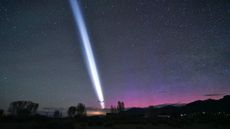
A recent launch of China's Zhuque-2E rocket triggered a giant white streak of light to appear above at least seven U.S. states after deploying six satellites into low-Earth orbit. The light show, which was visible in at least seven states, was the result of a "fuel dump," experts say.
36 Commentsspace-exploration -
 How many satellites orbit Earth?
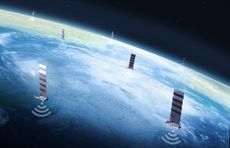
The number of satellites orbiting our planet is rising fast, thanks to private "megaconstellations" that pose various threats to space exploration and astronomy. But how big has the problem already become?
space-exploration


