
-
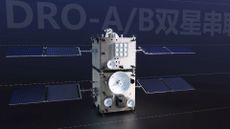 China saves 2 doomed satellites with novel 'gravitational slingshot'
Chinese engineers have rescued two satellites that were stuck in the wrong orbit using a novel 'gravitational slingshot' method.
space-exploration -
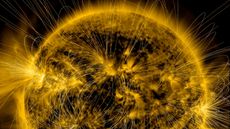 A mysterious, 100-year solar cycle may have just restarted
New research suggests that the unexpected intensity of the ongoing solar maximum may be partly tied to a lesser-known, 100-year solar cycle. If true, solar activity could spike further in the coming decades. But some experts are skeptical.
7 Commentsthe-sun -
 SpaceX's Starlink satellite constellation 'under threat' by Russia and China
SpaceX's Starlink internet satellite constellation has become a prime target for Russia and China, according to a new report assessing the counterspace capabilities of a dozen countries over the past year.
communications -
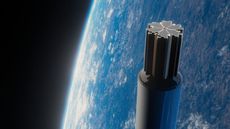 US company to use giant spinning cannon to blast hundreds of pancake-like 'microsatellites' into space
Rocket start-up SpinLaunch wants to catapult hundreds of flattened "microsatellites" into space at once, using a cannon-like machine that accelerates objects by spinning them. The first orbital demonstration is scheduled for next year.
6 Commentsspace-exploration -
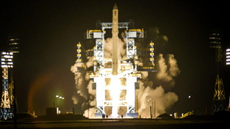 Secretive Russian military satellites release mystery object into orbit
The classified Kosmos satellite trio has sparked intrigue in space-tracking circles.
space-exploration -
 Parts of San Francisco and Los Angeles are sinking into the sea — meaning sea-level rise will be even worse
A study led by NASA and NOAA has found that California is sinking in some areas, which means the projected sea level rise for parts of Los Angeles and San Francisco has doubled.
4 Commentsplanet-earth -
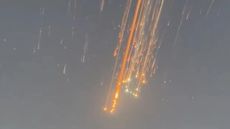 How much did SpaceX's Starship Flight 7 explosion pollute the atmosphere?
Scientists are not sure how much metallic dust remained in the atmosphere after the most recent SpaceX rocket 'disassembly.'
space-exploration -
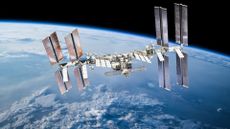 ISS dodges its 39th piece of potentially hazardous space junk. Experts say it won't be the last.
The ISS performed its 39th ever space junk collision avoidance maneuver on Nov. 19. Although it was the first such maneuver in 2024, it may not be the last, experts say.
space-exploration -
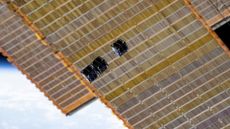 Solar maximum just knocked 3 satellites out of orbit. Here's why more may be on the way.
The Sun's activity is what gives us beautiful auroras — but it also has dramatic negative effects on satellites that go around Earth in a low orbit.
the-sun


