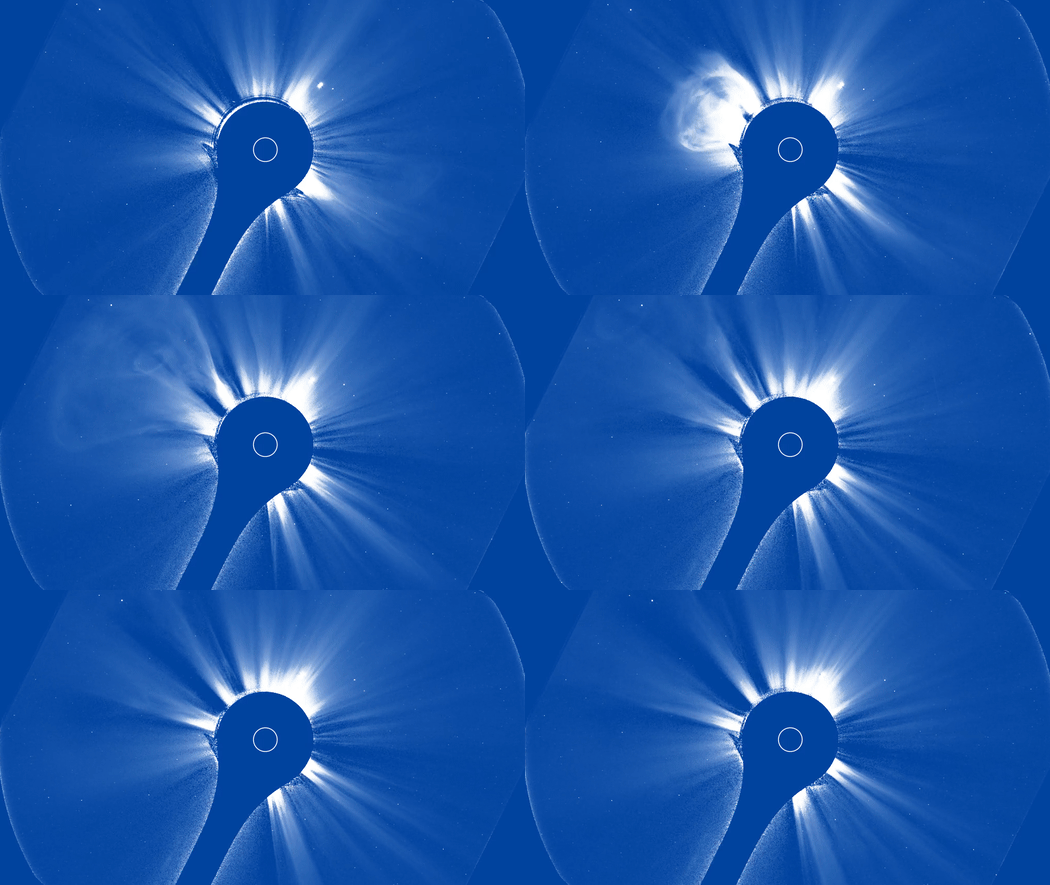
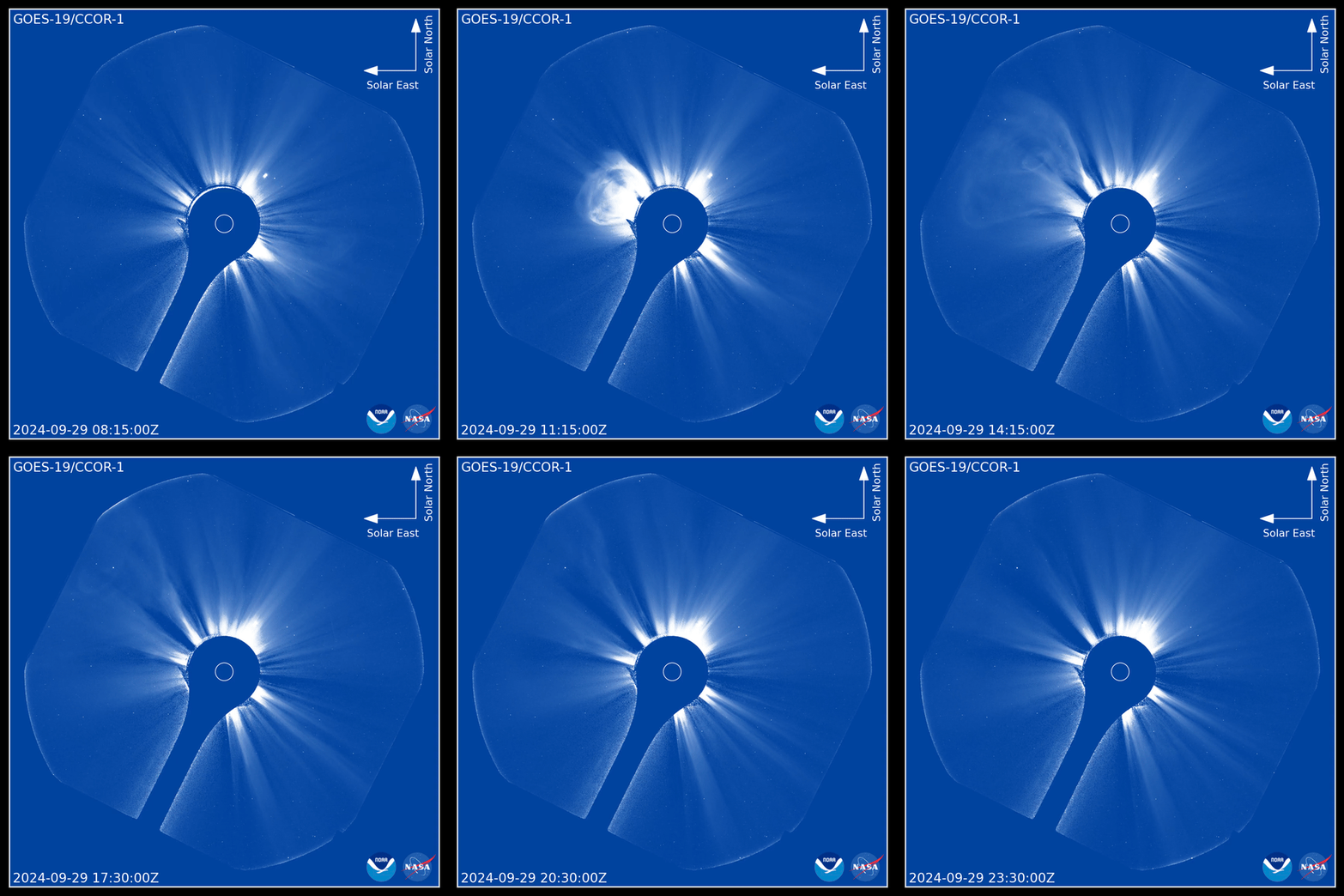
The first images from a new space-based telescope launched into Earth's orbit to monitor the sun captured a striking solar storm outburst.
The National Oceanic and Atmospheric Administration (NOAA) shared the first images taken by its Compact Coronagraph (CCOR-1), the world's first operational space-based coronagraph. CCOR-1 is mounted on NOAA's newest geostationary satellite, GOES-19, which launched into orbit above Earth on June 25.
CCOR-1 began its mission to observe the sun's corona — the faint outermost layer of the solar atmosphere — on Sept. 19. The powerful solar telescope uses an occulting disk, visible as a dark blue circle in the images, to block the light from the sun. This instrument, called a coronagraph, allows the telescope to observe the sun's corona, which would otherwise be masked by the bright light of the sun's surface.
CCOR-1 marks a significant advancement in space weather monitoring. Compared to ground-based instruments, space-based coronagraphs do not have to deal with Earth's atmosphere, which can scatter light and impact the clarity of observations. That means CCOR-1 has an uninterrupted view of the sun's corona.
CCOR-1 is built to capture new images of the sun's corona every 15 minutes, providing earlier warnings of coronal mass ejections (CMEs) — large expulsions of plasma and magnetic fields hurled into space from the sun — that can trigger geomagnetic storms on Earth. While other space-based coronagraphs have been used in the past, NOAA says these previous instruments were used for scientific research while CCOR-1 "will be used operationally for regular, real-time activities and monitoring."
(Image credit: NOAA/NASA)
Using the new instrument, CCOR-1 recently captured a CME outburst on Sept. 29. Video footage from the coronagraph shows a "clearly defined" CME emerging from the east limb (left side) of the sun at 8:15 a.m. EDT (1200 GMT), according to a statement from NOAA.
"The sun also dazzles with its small and large streamers, bright radial structures along which the solar plasma travels steadily outward," NOAA officials said in the statement. "The CME explosions bend and sometimes disrupt the streaming plasma, buzzing past it at speeds of hundreds to thousands of miles per second."
Sign up for the Live Science daily newsletter now
Get the world’s most fascinating discoveries delivered straight to your inbox.
Luckily, this CME was directed away from our planet. When a solar storm is directed toward Earth, it can disrupt the planet's magnetic field, leading to power outages, radio and communication blackouts and pose greater risk to astronauts on the space station. Improved monitoring of the sun's corona will therefore enable scientists to better predict the impacts of CMEs.
LASCO is technically a research instrument that was designed for experimental purposes. CCOR-1 will be used operationally for regular, real-time activities and monitoring. Granted, LASCO has been used operationally, but it is now being replaced by a modern, dedicated…October 22, 2024
The GOES-19 satellite launched on June 25, 2024 atop a SpaceX Falcon Heavy rocket. It was the 10th launch of SpaceX's heavy-lift vehicle.
GOES-19 is still undergoing post-launch testing to ensure its instruments and systems are operating as expected. While the recent CCOR-1 observations are preliminary, they show how the instrument will aid in space weather forecasting and preparedness once the space telescope is fully operational in spring 2025.
NOAA plans to launch additional coronagraphs to monitor the sun from space as part of the organization's Weather Follow-On and Space Weather Next initiatives.