In the three decades between 1993 and 2024, measles in the U.S. was relatively rare — a few hundred cases each year, at most. But suddenly, the disease has become so entrenched in American life that it sometimes fails to make headlines when a new outbreak erupts.
As of March 2026, measles has been continuously circulating around the U.S. for more than a year, starting with an outbreak in Texas that lasted from January to August 2025. Before that outbreak was declared over, an outbreak on the Utah and Arizona border began in August and is ongoing. An outbreak in South Carolina began in September, drastically increased in January 2026, and continues.
Low levels of vaccination across the country mean measles outbreaks will continue to occur, needlessly hospitalizing and killing the unvaccinated. But beyond these harms, the disease's resurgence serves as a serious warning about the country's capacity to manage infectious disease threats of all kinds.
An eliminated disease returns
Measles' return is no mystery: At its root is the falling vaccination rate.
Around 90% of the U.S. population has received the MMR vaccine, which protects against measles, mumps and rubella, and in some regions of the country, the rate is below 60%. Since about 2019-2020, that overall number has dropped below the 95% needed for herd immunity. It is necessary to keep that rate nationally, but maintaining herd immunity at the local level is equally important in order to prevent measles from finding pockets of unvaccinated communities.
Sign up for the Live Science daily newsletter now
Get the world’s most fascinating discoveries delivered straight to your inbox.
Current trends suggest that both the U.S. and Mexico, which has also been battling the disease, may lose this status — as Canada did in November 2025. All three countries have seen their vaccination rates fall below the 95% threshold, and their outbreaks may share epidemiological links.
By any measure, the ongoing U.S. measles outbreaks signal that the disease has returned in a way that will have serious adverse health consequences. In 2025, three people died from measles in the U.S. That is more than in any year since the disease’s elimination 25 years ago.
Of the country's 2,283 confirmed measles cases in 2025, 11% were sick enough to be hospitalized. In South Carolina, where most measles cases have been reported in 2026, hospitals don't have to report when patients are admitted due to measles complications, so the actual number of hospitalizations due to measles could be much higher.
People who recover from measles can experience complications such as pneumonia, which can lead to death, or encephalitis, which can later lead to deafness or intellectual disabilities from the brain swelling. The virus can also affect the immune system, making people more susceptible to other infections over the long term, even ones they've had before.
In rare instances — though more likely if someone is infected as a child — measles patients can develop a progressive dementia known as subacute sclerosing panencephalitis, or SSPE, anywhere from two to 10 years after their infection. SSPE always leads to death. This past year, a school-age child in Los Angeles died of this condition years after being infected with measles as an infant, before they were old enough to be vaccinated.
Measles is an economic scourge
Recurring outbreaks of measles in the U.S. will mean high economic costs. Countries have pursued measles elimination in part because of the clear economic benefits of stopping domestic transmission of the virus.
Studies have found that the cost of containing measles outbreaks is often as much as tens of thousands of dollars per case. One outbreak in Washington state in 2018-2019, which involved 72 cases — a small outbreak compared with what states are reporting now — cost US$3.2 million for the public health response, medical expenses and productivity losses. The Common Health Coalition found that a sustained 1% drop in MMR coverage would cost the U.S. billions across health care systems and the economy.
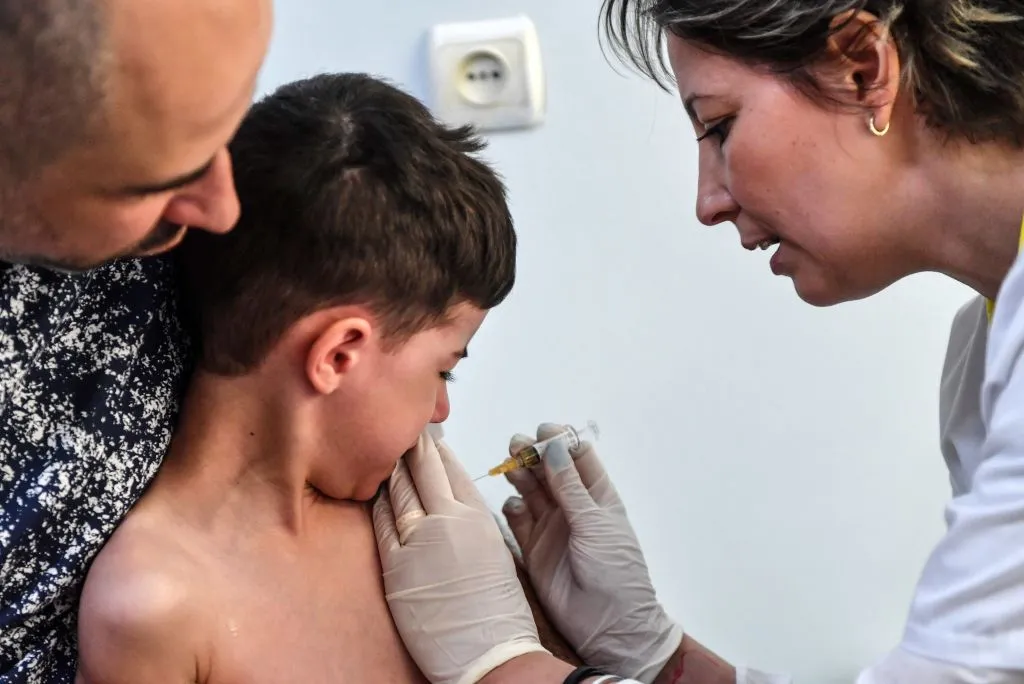
Controlling a measles epidemic, like the one in South Carolina that started in 2025, can cost millions of dollars.
(Image credit: DANIEL MIHAILESCU/AFP/Getty Images)
An opening for infectious disease
As concerning as recent outbreaks of measles have been, they herald a larger systemic problem.
How a country controls measles can be viewed as a proxy for how well it would control many other diseases. That's because the steps for stopping the spread are the same: deploying vaccines to prevent infections, detecting and isolating cases when they occur, identifying exposed contacts of infected people and making sure they stay home if they're likely to be contagious, and treating sick people safely.
But besides measles, we've already seen infections that were once controlled, like whooping cough, that rose sharply in 2024 and remained high in 2025 compared with before the COVID-19 pandemic.
That's because controlling the spread of many infectious diseases depends on the public's trust in the basic components of public health. Declining MMR vaccine coverage reveals underlying challenges in public support for vaccines. Public confidence in the current Centers for Disease Control and Prevention is also eroding, according to polling from 2023 to early 2026 by the health policy organization KFF. Less than half of the people polled trust the government even "a fair amount" to provide reliable vaccine information.
These growing cracks in the country's public health armor will complicate efforts to protect Americans from future disease threats — whether an outbreak, a pandemic or a biological attack.
Professor of Epidemiology and Director of the Pandemic Center, Brown University
Dr. Nuzzo is Professor of Epidemiology and Director of the Pandemic Center at Brown University School of Public Health. An epidemiologist by training, her work focuses on global health security, public health preparedness and response, and health systems resilience. Together with colleagues from the Nuclear Threat Initiative and Economist Impact, she co-leads the development of the first-ever Global Health Security Index, which benchmarks 195 countries’ public health and healthcare capacities and capabilities, their commitment to international norms and global health security financing, and socioeconomic, political, and environmental risk environments.
You must confirm your public display name before commenting
Please logout and then login again, you will then be prompted to enter your display name.