-
 New blood test can predict risk of postpartum depression with more than 80% accuracy
Scientists are learning more about this leading complication of childbirth. Treatments are improving and doctors can test for biological markers that flag heightened risk.
reproductive-health -
 Don't use cannabis during pregnancy or breastfeeding, leading OBGYN group says
The American College of Obstetricians and Gynecologists recommends that mothers abstain from cannabis use during prepregnancy, pregnancy and lactation, as research shows the drug is linked to serious health outcomes in newborns.
reproductive-health -
 Scientists created human egg cells from skin cells — then used them to make embryos
In a proof-of-concept experiment, scientists demonstrated that you can create and fertilize human eggs in the lab using sperm, genes from skin cells, and the "shells" of existing egg cells.
5 Commentsreproductive-health -
 Dangers of falling birth rates in the US have been 'dramatically overstated,' experts say
Opinion While the changes in population structure that accompany low birth rates are real, the impact of these changes has been dramatically overstated.
7 CommentsOpinion -
 Even brief exposure to air pollution can push the placenta into an inflammatory state, lab study suggests
A study of human placentas suggests that urban air pollution may push the organ's resident immune cells into an inflammatory state.
reproductive-health -
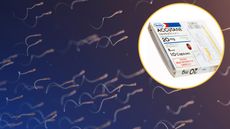 Acne drug Accutane may restore sperm production in infertile men, early study hints
Accutane, a decades-old acne treatment, could help men with infertility produce motile sperm and avoid invasive sperm retrieval surgery, a study finds.
reproductive-health -
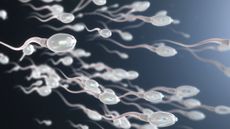 Scientists invented 'sperm bots' that they piloted through a fake cervix and uterus
Newly unveiled sperm microbots have the potential to improve reproductive health with magnetic controls and real-time X-ray tracking, according to a study.
2 Commentsreproductive-health -
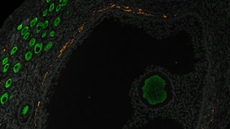 We finally have an idea of how the lifetime supply of eggs develops in primates
Scientists have studied female monkey embryos to map how, when and where the egg supply develops. This can now be used to build realistic models of ovaries in the lab to search for the causes of reproductive health issues that lead to infertility.
reproductive-health -
 'I would never let a robot incubate my child': Poll on 'pregnancy robots' divides Live Science readers
Live Science readers reveal whether they would use a hypothetical "pregnancy robot" — a humanoid machine fitted with an artificial womb to sustain a human pregnancy from conception until birth.
5 Commentsreproductive-health


