

-
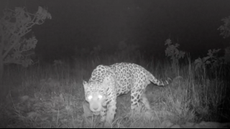 Jaguar in Brazil smashes record for the species' longest documented swim
A jaguar was captured on camera trap on an artificial island near the Serra da Mesa Hydroelectric Power Dam. The only way it could have gotten there was a very long swim.
2 Commentscats -
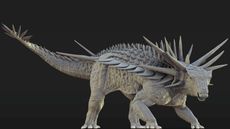 'So weird': Ankylosaur with 3-foot spikes sticking out of its neck discovered in Morocco
The ostentatious spikes of a newly described ankylosaur fossil suggest that its armor evolved via sexual selection.
dinosaurs -
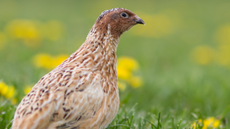 Japanese quail: The bird with weird sperm foam, a post-sex strut and a spot in space history
Male Japanese quails produce a strange seminal foam that appears to enhance the chances of successfully fertilizing an egg.
birds -
 Cats may have been domesticated much later than we thought — with earlier felines being eaten or made into clothes
Two studies of ancient felines find that cats were likely domesticated in Egypt or other regions in North Africa — and moved into Europe with humans much later than previously believed.
cats -
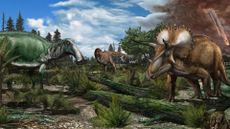 Dinosaurs might still roam Earth if it weren't for the asteroid, study suggests
The dinosaurs were not in decline before the asteroid hit, a new study finds. Instead, poor fossilization conditions and unexposed late Cretaceous rock layers mean they're either not preserved or hard to find.
10 Commentsdinosaurs -
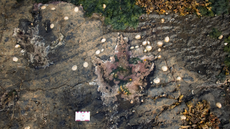 Trove of dinosaur footprints reveal Jurassic secrets on Isle of Skye where would-be Scottish king Bonnie Prince Charlie escaped
Paleontologists have discovered tracks belonging to meat-eating theropods and long-necked sauropods on the Isle of Skye.
dinosaurs -
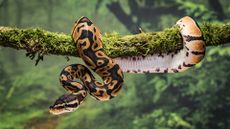 Snakes: Facts about one of the most iconic creatures in animal hiss-tory
Discover interesting facts about snakes, from how they hunt and eat, to why they don't have legs.
snakes -
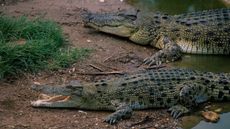 Crocodiles are overheating due to climate change — and it's changing their behavior
Global warming is raising the body temperature of Australian crocodiles, forcing them to spend less time diving and more time cooling down.
3 Commentsalligators-crocodiles -
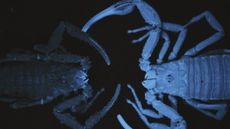 Scientists discover rare venom-spraying scorpion in Colombia
Newly described scorpion can spray and inject its venom — the first South American species known to do this.
spiders-arachnids -
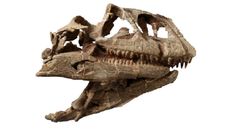 Enormous skull of 200 million-year-old giant dinosaur discovered in China
The well-preserved skull belongs to a never-before-seen species of sauropodomorph that potentially grew up to 33 feet long.
dinosaurs -
 How many weeks are there in a year?
We take our timekeeping rules for granted, but the history of these rules is long and complex.
human-behavior -
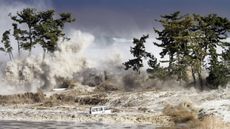 What's the difference between a tsunami and a tidal wave?
Tsunamis and tidal waves are the powerful types of wave on Earth, but very different processes are involved in their formation.
rivers-oceans -
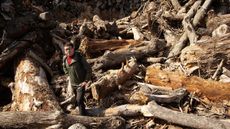 Ancient piece of driftwood hidden for thousands of years could hold secrets for combating climate change
A 3,775-year-old log found in Canada had barely lost any of its carbon content since being buried, indicating "wood vaulting" is a viable means of carbon storage.
climate-change -
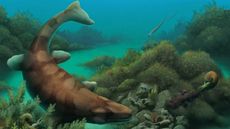 80 million-year-old sea monster jaw filled with giant globular teeth for crushing prey discovered in Texas
Rare fossils of the mosasaur Globidens alabamaensis — a 20 foot predator with strange, mushroom-shaped teeth — unearthed in northeastern Texas.
extinct-species -
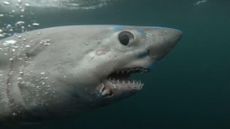 A really big shark got gobbled up by another, massive shark in 1st known case of its kind
A pregnant porbeagle shark is believed to have been eaten by a great white, with the larger predator swallowing its tracking device off the coast of Bermuda, scientists report.
sharks -
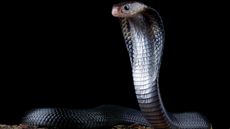 Cobras and their relatives evolved in Asia
Ancient origins of cobras traced back to Asia, before jumping continents to spread across the world up to 37.5 million years ago.
snakes -
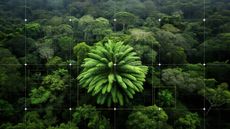 World's loneliest tree species can't reproduce without a mate. So AI is looking for one hidden in the forests of South Africa.
A single specimen of an ancient tree species was found in 1895. Now scientists are using AI to find it a mate.
plants -
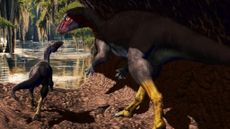 Pair of dog-size dinosaurs likely crushed to death in underground burrow collapse
New species of dinosaur discovered in Utah may have lived underground, with near-complete fossils indicating they died in burrows.
dinosaurs -
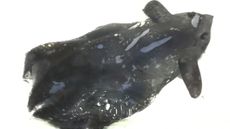 Never-before-seen vampire squid species discovered in twilight zone of South China Sea
Scientists discover what appears to be the second known living species of vampire squid swimming in deep water off Hainan island, China.
mollusks -
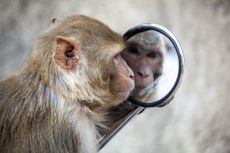 Which animals can recognize themselves in the mirror?
Research on whether animals can recognize themselves in the mirror began in 1970 1 and just a handful of species have since passed the test ever since.
primates -
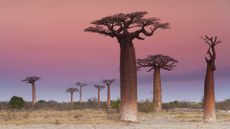 Bizarre evolutionary roots of Africa's iconic upside-down baobab trees revealed
The baobab tree evolved on the island of Madagascar before eventually spreading to Africa and Australia, new research suggests.
plants -
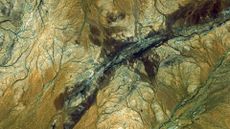 Earth may have had freshwater and continents soon after forming, ancient crystals reveal
Ancient zircon crystals hold chemical clues that of freshwater may have existed on Earth soon after it formed.
geology -
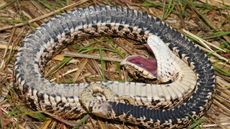 Dice snakes fake their own death, smearing themselves with blood and poop to make the performance extra convincing
Dice snakes theatrically stage their own deaths, using blood and feces to convince predators they've shuffled off their mortal coils.
snakes -
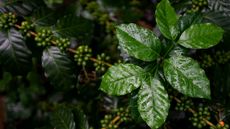 2 plants randomly mated up to 1 million years ago to give rise to one of the world's most popular drinks
Arabica coffee plant appears to have evolved between 600,000 and 1 million years ago after two other coffee species crossbred in the forests of what is now Ethiopia.
plants


