

-
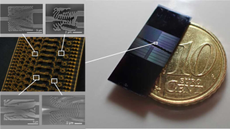 'Beyond human intuition': AI designs chip components 500 times smaller than what engineers could ever imagine
Three new AI-designed chip components are just a few micrometers long and go beyond what human engineers have previously envisaged.
electronics -
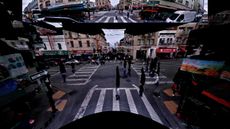 World's first 'native' color lidar will let robots and self-driving cars map the world in full color 3D
Ouster has launched the Rev8 set of lidar sensors that function as both a camera and a 3D mapping sensor at the same time. Its engineers say these are the first devices of their kind in the world.
electric-vehicles -
 Google AI breakthrough means chatbots use six times less memory during conversations without compromising performance
A compression algorithm like TurboQuant turns the data in the AI's working memory into a smaller, more efficient form.
2 Commentsartificial-intelligence -
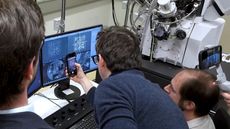 World's smallest QR code can store data for thousands of years — but you need an electron microscope to see it
Scientists created a tiny matrix that stores data by etching its grid into a thin ceramic film with a focused ion beam.
5 Commentscomputing -
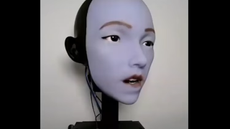 Creepy humanoid robot face learned to move its lips more accurately by staring at itself in the mirror, then watching YouTube
EMO the robot learned how its silicone lips would move in response to its 26 facial motors by staring at its reflection.
7 Commentsrobotics -
 Tapping into new 'probabilistic computing' paradigm can make AI chips use much less power, scientists say
A new digital system allows operations on a chip to run in parallel, so an AI program can arrive at the best possible answer more quickly.
computing -
 MIT's chip stacking breakthrough could cut energy use in power-hungry AI processes
Data doesn’t have to travel as far or waste as much energy when the memory and logic components are closer together.
2 Commentscomputing -
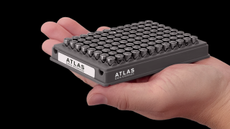 This new DNA storage system can fit 10 billion songs in a liter of liquid — but challenges remain for the unusual storage format
The new storage system could hold family photos, cultural artifacts and the master versions of digital artworks, movies, manuscripts and music for thousands of years, scientists say.
5 Commentscomputing -
 Japan trials 100-kilowatt laser weapon — it can cut through metal and drones mid-flight
A new high-power laser system will soon be sent to sea for its first tests under maritime conditions.
19 Commentsengineering -
 Snakes' mind-bending 'heat vision' inspires scientists to build a 4K imaging system that could one day fit into your smartphone
The human eye can only detect wavelengths in the visible light range, but a new imaging system will let us "see" infrared radiation using smartphones.
5 Commentstechnology -
 New 'DNA cassette tape' can store up to 1.5 million times more data than a smartphone — and the data can last 20,000 years if frozen
Scientists have discovered that over half a mile of DNA could hold over 360,000 terabytes of data.
7 Commentscomputing


