













How Satellites Find Shipwrecks From Space
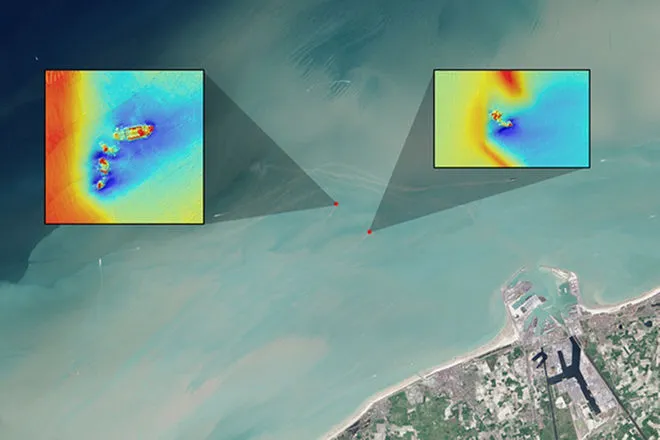
It's estimated that some three million shipwrecks are scattered across the oceans, with a quarter possibly resting in the North Atlantic. Now satellites can be used to help locate these lost ships, according to new research.
In a study published in the Journal of Archaeological Science, marine geologist Matthias Baeye at the Royal Belgian Institute of Natural Sciences and colleagues explain that wrecks produce Suspended Particulate Matter (SPM) concentration signals which can be detected by high-resolution ocean color satellite data such as NASA's Landsat-8.
Distinctive linear plumes of these particles extend as far as 2.5 miles downstream from shallow shipwreck sites and are therefore easily detectable from space.
'Landsat-8 data is free and therefore the method presented in the study is an inexpensive alternative to acoustic and laser survey techniques,' Baeye and colleagues wrote.
Shipwrecks Shed Light on Hurricane History
The researchers began their study by analyzing four known wreck sites near the Port of Zeebrugge on the Belgian coast.
Located within 3 miles of each other on a sandy sea floor in less than 49 feet of water, the wrecks were all civilian vessels.
Get the world’s most fascinating discoveries delivered straight to your inbox.
Two ships, the SS Sansip and the SS Samvurn sank after being mined during World War II. The Swedish steamship Nippon collided with another vessel in 1938, while the SS Neutron, a Dutch steel cargo vessel, went down in 1965 after hitting a wreck, presumed to be the SS Sansip.
Using tidal models and a set of 21 cloud-free Landsat-8 images, the researchers mapped sediment plumes extending from the wreck locations.
22 Shipwrecks Found in Greek Expedition: Photos
They found that SPM plumes originating from the sites of the SS Sansip and the SS Samvurn, which had substantial portions of their structure unburied, could be traced downstream during ebb and flood tides.
No SPM plumes were recorded in association with the SS Neutron and the SS Nippon, which are buried deeper in the seabed.
"SPM plumes are indicators that a shipwreck is exposed at the seabed and certainly not buried," Baeye and colleagues wrote.
According to the researchers, it's the exposed structure of the ships that creates scour pits around the wrecks. These act as sinks where fine-grained suspended material is deposited during slacks (the period of relatively still currents between ebb and flood tides).
Biggest Shipwreck Finds in History
The scour pits then act as sources for suspended material when the bottom current increases again. When the sediments reach the surface, they create the linear plumes.
It is not certain whether depth is a limit to the new wreck-detecting methodology since the four wrecks in the study all rest in relatively shallow waters. Satellites may not image plumes from deep sea wrecks.
Still, given the millions of shipwrecks scattered throughout the oceans, having one more tool to find them is significant.
"The ability to detect the presence of submerged shipwrecks from space is of benefit to archaeological scientists and resource managers interested in locating wrecks," the researchers concluded.
Originally published on Discovery News.