
















NASA Calls Igor 'Monstrous Hurricane'

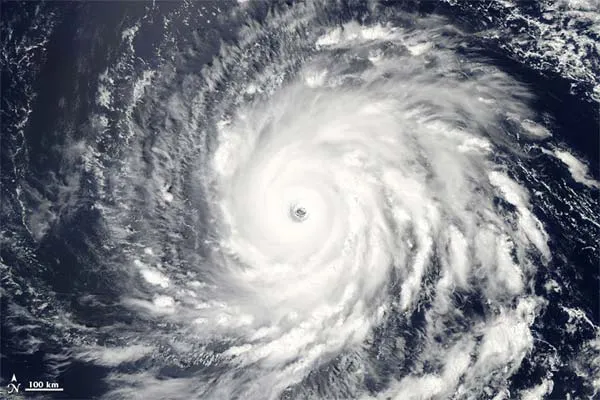
Hurricane Igor, currently churning across the Atlantic as a major Category 4 storm, has been followed by NASA satellites, and dubbed a "monstrous hurricane," in a NASA statement.
Igor is so large that it is the same distance from one end of the storm to the other as it is from Boston, Mass., to Richmond, Va., some 550 miles (885 kilometers). That's a 10-hour drive.
Astronauts aboard the International Space Station were so impressed by Igor's immensity that they nicknamed it, "Igor the Terrible."
Igor's winds have weakened slightly, hitting a maximum of 145 mph (233 kph), but it remains a major Category 4 hurricane. While it's projected path is somewhat uncertain, it could make a direct hit on Bermuda in the next three or four days.
But even if it doesn't make a direct hit, Igor is so large that the National Hurricane Center noted that Bermuda can be buffeted by winds of hurricane-force or tropical storm-force on its current track. Hurricane-force winds extend outward from the center of the storm up to 45 miles (72 km), while tropical-storm-force winds extend as far as 225 miles (362 km) from the storm's center.
Igor is accompanied by Hurricane Julia, also a Category 4 hurricane, in the Atlantic, and Tropical Storm Karl in the Gulf of Mexico, which made landfall at Mexico's Yucatan Peninsula earlier today (Sept. 15). Julia is not expected to be a threat to land, but Karl is expected to move over the Yucatan and back out over the Gulf before hitting the coast of mainland Mexico.
- A History of Destruction: 8 Great Hurricanes
- Which U.S. Cities Are Most Vulnerable to Hurricanes?
- Image Gallery: Hurricanes from Above
This article was provided by OurAmazingPlanet, a sister site to LiveScience.
Get the world’s most fascinating discoveries delivered straight to your inbox.
