













How Change of Seasons Affects Animals and Humans

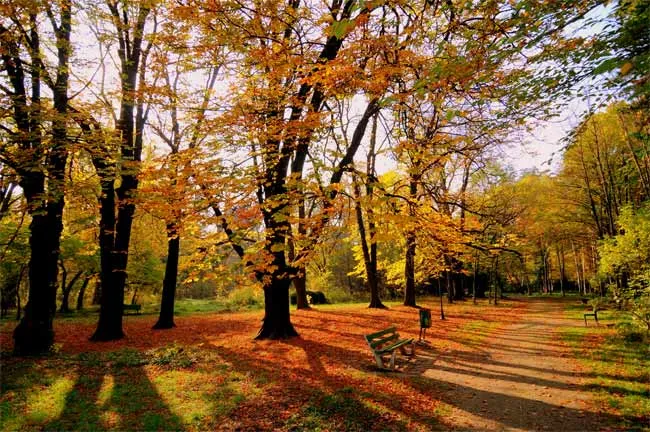
Tomorrow (Sept. 22) at 11:09 p.m., Eastern Daylight Time, the center of the sun will cross Earth's equator, marking the autumnal equinox, and the start of fall in the Northern Hemisphere.
For a brief period, days and nights around the world each last close to 12 hours (day and night are not exactly equal, as the term “equinox” is meant to imply). Then, as the Earth continues its path around the sun, days become shorter and nights lengthen, with the change becoming more pronounced in the higher latitudes, but remaining nonexistent at the equator.
This change in the amount of light is a signal to animals, plants and (before the light bulb) people, of changing seasons. For some creatures living at high latitudes, it can have a profound effect on their biology, particularly on reproduction, which must be carefully timed.
For instance, during long winter days, the Siberian hamsters' testes increase to almost 17 times their size during short days. And there is evidence that song birds living near sources of artificial light begin singing to attract mates, as well as laying eggs, earlier in the spring than their counterparts in places that remain dark at night.
Seasoned science
Earth's multiple motions — spinning on its axis and orbiting the sun — are behind everything from day and night to the changing seasons.
The Earth's axis is tilted at 23.5 degrees, which makes the Northern Hemispheres point more directly at the sun the sun half the year, and the Southern Hemisphere do the same the other half. In the Northern Hemisphere, days reach their maximum and minimum lengths at the two solstices – when the top half of the planet faces directly toward (summer solstice) or away from (winter solstice) the sun. Meanwhile, days and nights are roughly equal during the two equinoxes.
Get the world’s most fascinating discoveries delivered straight to your inbox.
As for why the beginning of fall falls on a different day each year, there are two reason: Our year is not exactly an even number of days; and Earth's slightly noncircular orbit, plus the gravitational tug of the other planets, constantly changes our planet's orientation to the sun from year to year.
The human exception
While that's all going on up in the heavens, the effects on the ground mean changes in light, and seasons, for those of us not living near the equator.
"Humans are not believed to be all that seasonal, (but) there are exceptions to this," said Iggy Provencio, a circadian biologist at the University of Virginia.
There is evidence of seasonal peaks in suicides, which occur more frequently in summer, and birth rates, which also tend to peak in spring and summer. Both, however, are influenced heavily by other factors, according to a chapter on chronobiology that Provencio contributed to "Comprehensive Textbook of Psychiatry" (Lippincott Williams & Wilkins, 2008).
The strongest evidence of human seasonality comes in the form of seasonal affective disorder, or SAD. Its victims suffer major depressive episodes related to the seasons, usually beginning in late fall or early winter, and remitting in spring or summer.
A 2001 study published in the journal Archives of General Psychiatry found that people suffering from SAD secreted the hormone melatonin for longer periods during winter nights than during summer nights, a fluctuation also seen among mammals whose behavior varies seasonally. Normally, human production of melatonin, which regulates sleep and is called the hormone of darkness, does not vary with the seasons.
In higher latitudes, SAD can affect 10 percent of the population, and it is estimated that as much 20 percent of the population suffers from a lesser form of the disorder, although this is controversial, Provencio said.
Daylight matters
Scientists have known that humans and other mammals have an internal clock that governs our sleep-wake cycles, among other daily functions. Light provides us with nonvisual cues that influence things like our pupil dilation, alertness, melatonin levels, and heart rate modulation, according to Provencio.
Light receptors in the retina of the eyes – rods, cones and a third type called intrinsically photosensitive retinal ganglion cells – pass along nonvisual information used to reset our circadian rhythms.
Everybody's clock doesn't tick on a 24-hour rotation, however. The average human day – as generated by our primary circadian pacemakers, called the suprachiasmatic nuclei and located in the hypothalamus of the brain – lasts about 24 hours and 11 minutes, although it can be longer or shorter for individuals. Light "resets" this internal clock, so our bodies are in synch with the time of day, according to Provencio.
People with a longer natural cycle tend to be night owls; meanwhile, early risers tend to be the morning larks, according to Domien Beersma, head of the chronobiology department of the University of Groningen in The Netherlands. Unfortunately for night owls, they face "sleep inertia" after a late night and less rest than a morning lark, he said.
While other factors, such as locomotion, can influence animals’ internal clocks, humans' rely primarily on light, he said.
- Five Things You Must Know About Sleep
- The Myth of Arctic Daylight and Darkness Exposed
- 10 Amazing Things You Didn't Know About Animals
