Scientists have discovered an orchid that never needs to get a date—it can fertilize itself by performing a sexual act never before seen in flowers.
The hermaphroditic orchid shuns the sexual practices of other flowers and completes the deed without the help of sticky liquids, birds or even a breath of wind, a new study reveals.
Many flowers rely on insects or birds, which they attract with sweet scent or tasty nectar, to help with fertilization. The hungry animals brush against the pollen-producing male bits (anther) of one plant and transfer it to the opening of a neighboring flower's female reproductive organs (stigma). Wind can also help this process along, although it's not as direct.
Latest Videos From
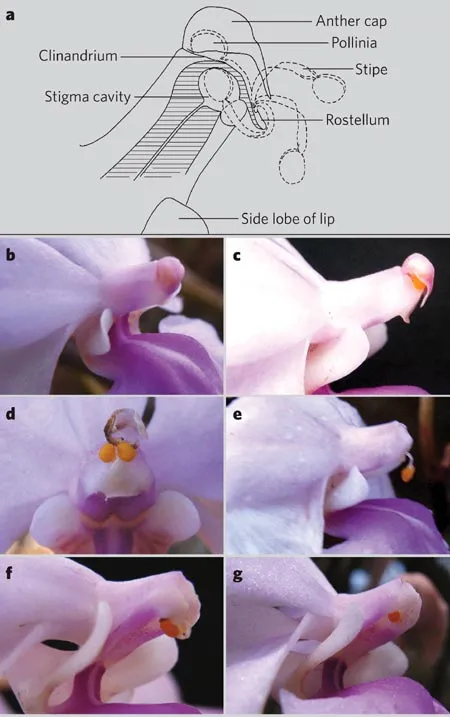
The orchid, Holcoglossum amesianum, performs a tricky, 360-degree, gravity-defying dance to pollinate itself. Here's how it works [Images]:
First, the cap covering the male anther pops off, uncovering two pollen-holding pollinia attached to a flexible rod called a stipe. The stipe rises up before curving forward and downwards past the edge of the rostellum, a structure that separates the male and female parts of the orchid. Finally, the stipe curves back up and around the rostellum and inserts the pollinia into the stigma cavity.
While most flowers spread their pollen to other plants, the new orchid is extremely exclusive and only mates with itself. The self-pollination act was also successful in flower terms, producing fruit about 50 percent of the time.
Of the 1,911 H. amesianum orchids the scientists observed growing on tree trunks in Simao, Yunnan, China, all used the same self-pollination strategy. This method of self-pollination, which comes in handy when winds are gentle or insects are lacking, adds to the variety of mechanisms flowering plants have evolved to ensure success.
The study is detailed in the June 22 issue of the journal Nature.