















Study Reveals Natural Air Cleaners
New! Improved! 20 percent more cleaning power!
That could be the label on new smog-reducing product found in Earth's atmosphere. Natural chemicals in the air scrub away pollution more effectively than previously thought, according to new research.
Chemicals in the air produce natural air cleaners called hydroxyl radicals, which gobble up smog hydrocarbons and break them down. These chemicals have turned out to be better than expected at producing a substance Mr. Clean would love: hydroxyl radicals, which consist of one oxygen atom and one atom of hydrogen.
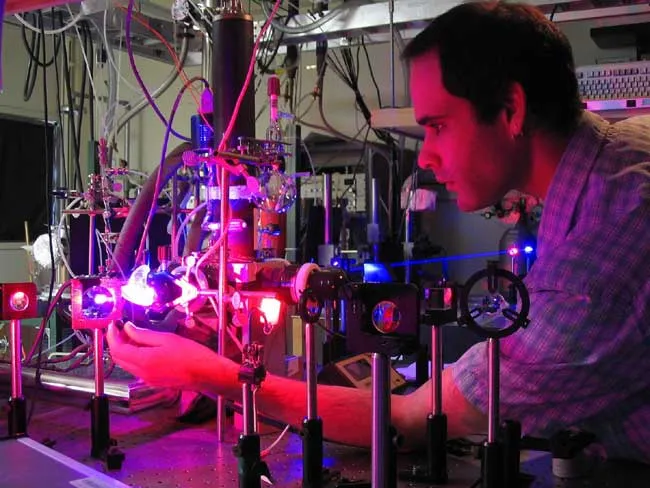
"Thanks to an innovative laser technique that at last allowed us to observe these chemicals in action, we now theorize that the atmosphere may produce up to 20 percent more hydroxyl from these chemicals than we once thought," says Joseph Francisco of Purdue University.
The laser technique a fresh peek at the molecules that produce the hydroxyl radicals. The scientists found a hidden chemical called methyl hydroperoxide. This chemical breaks up when it absorbs ultraviolet (UV) rays from the sun and forms hydroxyl radicals. The researchers speculate that other chemicals capable of producing hydroxyl radicals may be lurking in the air as well.
The discovery doesn't change the outlook for summer smog.
"This study in no way implies that we are out of the woods with regard to atmospheric pollution," said co-researcher Amitabha Sinha of the University of California, San Diego. "What it means is that we need to do a much more careful job with our measurements in order to accurately account for all sources of hydroxyl radicals present in the air."
Get the world’s most fascinating discoveries delivered straight to your inbox.
The finding, which appears in the May 24 issue of the Proceedings of the National Academy of Sciences, should help produce better models of how natural air and pollution interact.
"It's tough to get a handle on them because they are so reactive - which means they vanish fast - and also because we don't have complete knowledge of all the sources that produce them yet," Francisco said.
Related Stories
- U.S. Pollution Drops
- The Air Gains Weight
- Dandruff Found in the Air
- Fly the Crowded, Polluted Skies
- Children on School Buses Breathe More Pollution