













Remarkable Limb Regeneration Began 300 Million Years Ago

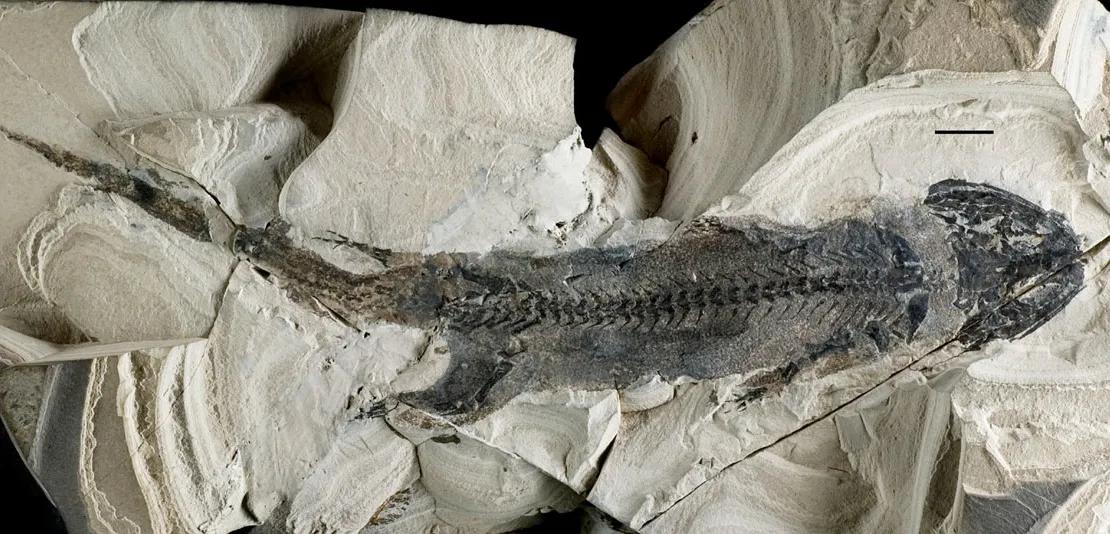
Fossilized, primitive amphibians with odd-looking appendages, some with extra toes and deformed shapes, suggest the ability of some vertebrates to regenerate or regrow amputated limbs first evolved at least 300 million years ago.
Salamanders are the only modern four-legged vertebrates, or animals that have backbones, able to fully regenerate their limbs into adulthood. But many other animals, including frogs, caecilians (amphibians that resemble earthworms) and some fish, also have some regenerative capabilities, suggesting the ability may have initially evolved a very long time ago. Yet, scientists have lacked fossil evidence for the ancient evolution of limb regeneration until now.
"In recent years, people have speculated about the evolution of regeneration, but the amount of data available has been limited," said David Gardiner, a developmental biologist at the University of California, Irvine, who studies limb regeneration but wasn't involved in the current research.
To observe limb regeneration in the fossil record, scientists need to find well-preserved specimens with abnormal limbs or limbs in the process of regenerating (a fully regenerated limb that has formed without defects is difficult to differentiate from an original limb). But in the majority of cases, researchers deal with fossils that are missing skeletal segments or entire body parts. [In Photos: Fossils Reveal Bizarre Boomerang-Headed Amphibian]
To better understand the early evolution of vertebrate limb regeneration, scientists at the Museum für Naturkunde (a natural history museum in Berlin) analyzed fossils of Micromelerpeton crederni, a primitive amphibian species and distant relative of modern amphibians that lived during the Upper Carboniferous to Lower Permian time periods, between about 310 million and 280 million years ago. The fossils were originally discovered in lake deposits in Central Europe, such as Lake Odernheim in southwest Germany — the oxygen-free environment at the bottom of the lakes helped preserve the animals' remains, including fine structures such as gills, stomach contents and scale patterns.
The team found that several of the Micromelerpeton fossils had abnormal limbs. For example, some of the limbs had certain bones fused together. Other limbs had additional toes that were narrower than normal toes. And some limbs had toes with too many or too few bones. Though odd, these types of abnormalities can also be seen in living animals.
"These same kinds of anomalies typically are observed in response to injury in modern salamanders that are capable of regeneration, both in the wild and in response to experimental amputations in the lab," Gardiner told Live Science, adding that the modern examples suggest Micromelerpeton was also capable of limb regeneration.
Get the world’s most fascinating discoveries delivered straight to your inbox.
The study suggests limb regeneration was an ancient ability present in the amphibian lineage that led to modern amphibians — an ability that salamanders retained. The ability of modern frogs to regenerate limbs as tadpoles further supports the idea, the researchers wrote in their paper, published today (Sept. 23) in the journal Proceedings of the Royal Society B.
"The similarity between the variant patterns in the limbs of extant salamanders and Micromelerpeton caused by limb regeneration is striking," the authors wrote. It is "suggestive of shared molecular mechanisms that are still acting in modern salamanders as they did in their 300-million-year-old relative Micromelerpeton."
Though the research suggests limb regeneration has been around for at least 300 million years, it's not clear just when that ability first evolved. And the answer may not lie within fossils. "I have always thought that we will not really understand the evolution of regeneration until we understand the mechanisms of regeneration," Gardiner said.
Follow Joseph Castro on Twitter. Follow us @livescience, Facebook & Google+. Original article on Live Science.
