













How Deadly H7N9 Flu Could Jump from Birds to Mammals

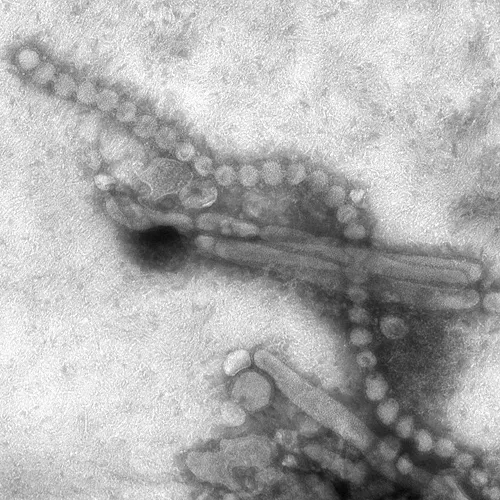
Chinese researchers have found new clues to the origins of the deadly H7N9 flu virus, and also found a new flu virus lurking in birds that could potentially infect mammals.
The new research shows that the deadly H7N9 flu virus, which emerged in China in March, likely originated in migratory birds, was passed to domestic ducks, and made the jump to chickens at least twice.
As the researchers studied the H7N9 flu, they found a previously unknown virus, called H7N7. In laboratory tests, this H7N7 virus infected ferrets, which are often used a model for human flu transmission. H7N7 viruses have appeared in other parts of the world, but the one the researchers found differed from those. It isn't deadly, but it is still a potential problem for humans, the researchers said.
Flu viruses are named for their proteins — the "H" in the name comes from hemagglutinin, and the "N" from neuraminidase. Both the H7N9 virus and the H7H7 virus belong to the H7 family of viruses. [6 Flu Vaccine Myths]
There are probably other viruses like H7N7 that are circulating in the poultry populations in China, said study researcher Yi Guan, of the Joint Influenza Research Centre in Hong Kong. China has about 65 percent of the world's domestic ducks, and many live poultry markets, where contact between people and chickens is common.
Many flu viruses, Guan noted, don't cause people any problems. They spread through poultry populations and "burn out" in a year or two. But H7-type flu viruses persist and often evolve into new forms.
Vincent Racaniello, professor of microbiology and immunology at Columbia University in New York, said this kind of surveillance study is important in finding new viruses and understanding them better.
Get the world’s most fascinating discoveries delivered straight to your inbox.
If scientists saw changes in the H7N7's proteins, for instance, they could see if it was becoming more dangerous to humans, said Racaniello, who was not involved in the new study.
To track the origins of H7N9, the researchers collected thousands of samples from sixkinds of domestic birds in southeastern China: chickens, ducks, quail, geese, pigeons and partridges. They sequenced the virus's genomes, and the results are published Thursday (Aug. 22) in the journal Nature.
The H7N9 virus has infected 130 people in China and caused 40 deaths. It seems to spread easily from chickens to people, though there's no evidence of sustained person-to-person transmission.
Guan said the most surprising thing the team found was just how widespread flu viruses are. "If the virus continues to circulate in poultry, further adaptation may occur, possibly leading to easier transmission to humans," he said.
Influenza viruses often change as they are transmitted between individuals and species; as H7N9 made its way from migratory to domestic birds, it exchanged genes with other types of flu. That's what gave it the ability infect people, the researchers said.
A key development for the virus was altering its proteins so it could bind to the cells in the upper respiratory tracts of chickens. Many varieties of flu live in the birds' intestines, but they aren't spread through the air. However, once the virus infects the chickens' upper respiratory tract, people in close contact with the animals are more likely to be infected.
The simplest way to deal with outbreaks, Guan said, is to cull the chickens and ban the overnight storage of live poultry. The Chinese government instituted such a ban in 2008, and a 2012 study found these measures reduced the spread of influenza.
Racaniello emphasized that while the number of deaths due to H7N9 may make the virus seem particularly worrisome, it's important to remember that not all cases of infection are reported. In other words, there might be many people infected who never show symptoms or aren't sick enough to go to a hospital.
"The people who died might have other health problems," he said.
Guan said his team plans to study how H7N9 kills and transmits to people. It's also important to keep sending research teams out to watch the birds. "Surveillance in birds is essential to let us know what is happening to viruses in the field, and what threats may be emerging," Guan said.
Follow LiveScience on Twitter, Facebook and Google+. Original article on LiveScience.
