













Galapagos Tortoise 'Lonesome George' to Be Preserved

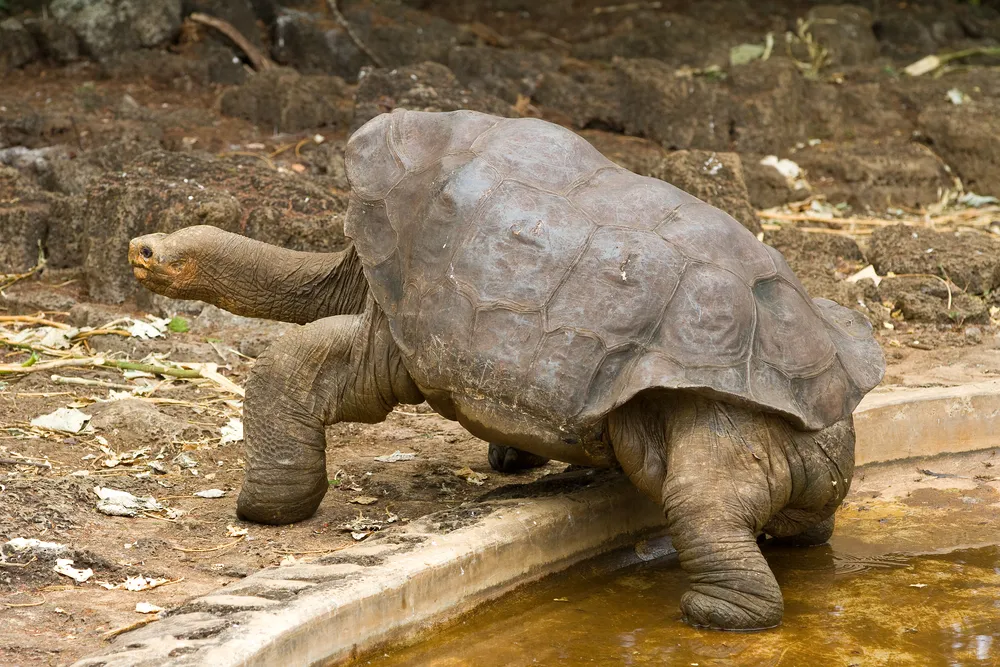
The world-famous Galapagos tortoise Lonesome George, the last known specimen of his kind, will be preserved by a team of taxidermists in New York, the American Museum of Natural History announced this week.
Lonesome George was the final holdout of the Pinta Island tortoises (Chelonoidis abingdoni). Despite numerous breeding attempts, the tortoise never reproduced. His death of natural causes in June 2012, at the estimated age of 100, marked the extinction of his subspecies.
The tortoise's body, which weighs 200 pounds (90 kilograms) and measures 5 feet (1.5 meters) long, will be in the hands of the taxidermy and conservation team that recently restored the bears, wolves and moose in the museum's Hall of North American Mammals.
Lonesome George will go on display in New York for a limited time starting this winter, museum officials said. Then, the tortoise will be returned to Ecuador's Galápagos Islands, where he had become a poster child for conservation. The island chain in the Pacific Ocean is teeming with unique species and is the place where Charles Darwin hatched some of his pioneering ideas about natural selection.
"We are honored to receive this incredibly important specimen and ultimately, put it on display for the public," Michael Novacek, senior vice president and provost of science at the museum, said in a statement. "Our team of experts, using preservation and taxidermy techniques that have earned this institution recognition throughout the world, will ensure the legacy of Lonesome George lives on and is appreciated by future generations."
Though Lonesome George never produced any offspring of his own, a study last year found that some genes from his subspecies may live on. Researchers from Yale who took DNA samples from more than 1,600 giant tortoises in the Galapagos found that 17 were hybrids that had a parent like Lonesome George from the subspecies Chelonoidis abingdoni. They reported their finds in the journal Biological Conservation.
Follow Megan Gannon on Twitter and Google+. Follow us @livescience, Facebook & Google+. Original article on LiveScience.com.
Get the world’s most fascinating discoveries delivered straight to your inbox.
