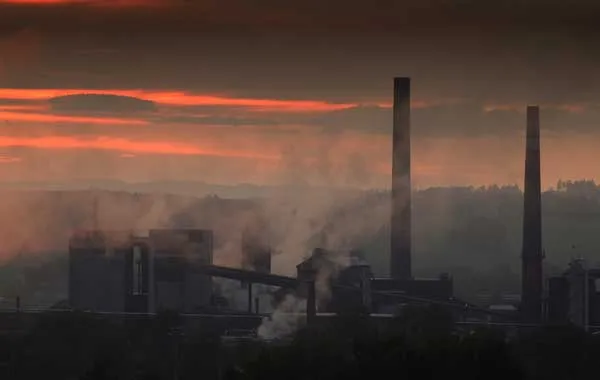
Increases in a city's ozone levels may slightly boost people's risk of cardiac arrest, a condition in which the heart stops beating, a new study suggests.
The study analyzed information from more than 11,600 people living in Houston, Texas, who'd had suffered a cardiac arrest in their home or some other place outside of a hospital between 2004 and 2011. The researchers also collected information about levels of ozone — the main component of smog — from 44 monitoring stations in the city.
An increase in ozone levels of 20 parts per billion (ppb) over a three-hour period was associated with about a 3 to 4 percent increase in a person's risk of cardiac arrest, the researchers said. During the summer months, it would not be uncommon for the ozone levels in Houston to increase from about 60 to 80 ppb over a three-hour period, said study researcher Katherine Ensor, a statistician at Rice University in Houston.
Latest Videos From
Each year about 1,400 people in Houston have a cardiac arrest outside the hospital, and about 1,260 deaths occur, Ensor said. If the new findings are true, they suggest that about 45 of these deaths are related to increases in ozone levels, Ensor said.
However, the study only found an association, and cannot prove that increases in ozone levels cause cardiac arrest, Ensor said. Among participants in the study, the risk of cardiac arrest was greatest for men, African-Americans and the elderly.
A cardiac arrest is not the same as a heart attack, which occurs when a blockage in the arteries keep blood from reaching the heart.
Although previous studies have found a link between high air-pollution levels and an increased risk of cardiovascular disease and death, the new study is one of the first to specifically link high ozone levels to an increased risk of cardiac arrest, Ensor said.
Ozone is not specifically emitted from cars or factories. Rather, it forms when other pollutants from these sources come together and react, according to the Environmental Protection Agency. Because sunlight triggers the reaction, levels of ozone are higher during the day. Breathing ozone can trigger chest pain, coughing and throat irritation, the EPA says. Currently, the EPA says that cities should not exceed a peak ozone level of 75 ppb.
The city of Houston is using information from the study to identify areas where people are particularly at risk for out-of-hospital cardiac arrest, and to increase CPR training among people living in those locales, the researchers said. Proper use of CPR before emergency personnel arrive increases a person's chances of surviving a cardiac arrest.
The study was published online Feb. 13 in the journal Circulation. It was presented this past week at the annual meeting of the American Association for the Advancement of Science in Boston.
Pass it on: A city's ozone levels are linked to a person's risk for cardiac arrest.
This story was provided by MyHealthNewsDaily, a sister site to LiveScience. Follow MyHealthNewsDaily on Twitter @MyHealth_MHND. Find us on Facebook.

 Live Science Plus