













Colicky Babies May Have Wrong Bacteria

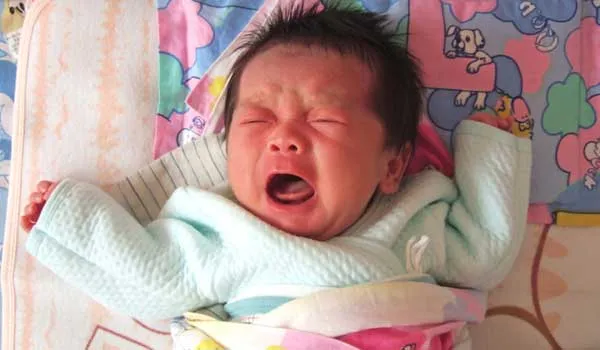
Doctors don't clearly understand why some babies cry excessively and others don't, but a new study suggests abnormal gut bacteria could play a role.
The research identified a distinct bacterial "signature" in the guts of infants with colic, a term that describes babies who cry for more than three hours a day without a medical reason.
In the first few weeks of life, the research found, colicky babies had higher numbers of bacteria from a group called Proteobacteria in their guts compared to babies without colic. Proteobacteria include bacteria known to produce gas, which may cause pain in infants and lead to crying, said study researcher Carolina de Weerth, a developmental psychologist at Radboud University Nijmegen in the Netherlands.
Colicky babies also had lower numbers of bacteria from other groups, called bifidobacteria and lactobacilli. The members of these groups can have anti-inflammatory effects, which may reduce gut inflammation and pain, de Weerth said.
"For a long time, many researchers and professionals have believed that colic could just be one extreme of the normal crying curve in young infants," de Weerth told MyHealthNewsDaily. "This study shows how, at least in some cases of colic, abnormalities in early colonization of the infant intestines may lead to colic behavior." (Babies are born with sterile bowels, which are devoid of bacteria, and bacteria start to grow, or colonize, within the gut a few hours after birth).
The abnormities in gut bacteria appear to disappear after the first few months of life, suggesting they are temporary. However, this study was small and conducted for just a few months, so additional, longer studies are needed to confirm the results.
Previous studies had suggested differences in gut bacteria may be involved in colic, but these studies had typically included infants who were more than 6 weeks old, past the peak time for colic.
Get the world’s most fascinating discoveries delivered straight to your inbox.
The new study examined 12 colicky infants and 12 normal infants, periodically looking at stool samples from birth until the babies were 100 days old. Researchers chose these 24 subjects from a larger group because, at age 6 weeks, they displayed the highest or lowest levels of daily crying.
The researchers used DNA sequencing technology to analyze stool samples for the presence of more than 1,000 different kinds of bacteria.
The results also showed bacteria were slower to colonize the guts of colicky babies compared to normal babies.
Dr. William Muinos, co-director of the gastroenterology department at Miami Children's Hospital, said the findings made sense because the type of bacteria in the gut are known to affect gas production and bowel movements, which could cause crying. However, Muinos said more things likely contribute to colic, with gut bacteria just one factor among many.
Some babies with colic, for example, have gastric reflux problems, or heartburn, said Muinos, who was not involved in the study. In addition, emotions such as fear and even excitement can lead to colicky symptoms in babies, according to the National Institutes of Health.
The study's results suggest that researchers could look at gut bacteria to predict which babies will develop colic, de Weerth said. In addition, therapies such as probiotics (or "good" bacteria) may aid in the treatment of colic, de Weerth said, although future studies would be needed to test this. [See Are Probiotics Safe for Kids?]
The new study is published today (Jan. 14) in the journal Pediatrics.
Pass it on: Abnormalities in gut bacteria may play a role in infant colic.
This story was provided by MyHealthNewsDaily, a sister site to LiveScience. Follow MyHealthNewsDaily on Twitter @MyHealth_MHND. Find us on Facebook.

Rachael is a Live Science contributor, and was a former channel editor and senior writer for Live Science between 2010 and 2022. She has a master's degree in journalism from New York University's Science, Health and Environmental Reporting Program. She also holds a B.S. in molecular biology and an M.S. in biology from the University of California, San Diego. Her work has appeared in Scienceline, The Washington Post and Scientific American.