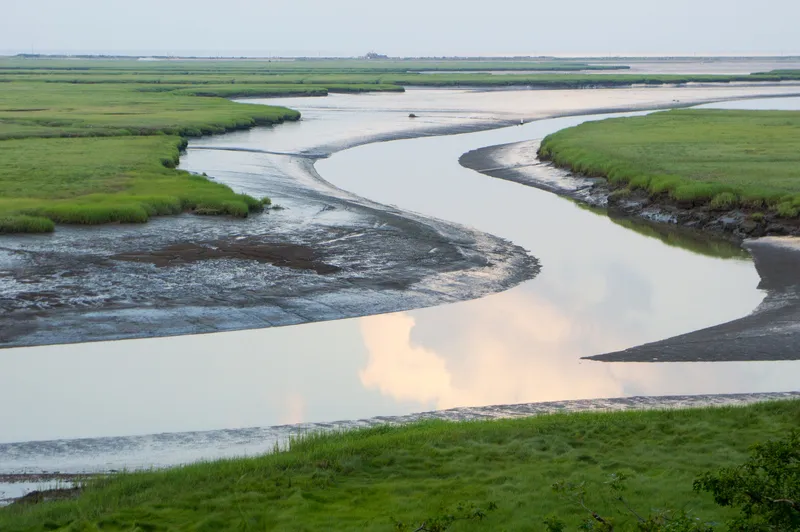
New research suggests the destruction of coastal habitats may release as much as one billion tons of carbon into the atmosphere each year — as much as Japan's annual emissions.
Previous research has shown that wetland plants such as seagrass might help store as much carbon as the world's forests. But when these damp environments are drained and destroyed, the soil layers are exposed to air, unleashing massive amounts of that stored-up "blue carbon" into the atmosphere.
"These coastal ecosystems are a tiny ribbon of land, only 6 percent of the land area covered by tropical forest, but the emissions from their destruction are nearly one-fifth of those attributed to deforestation worldwide," researcher Linwood Pendleton, of Duke's Nicholas Institute, said in a statement. "One hectare, or roughly two acres of coastal marsh, can contain the same amount of carbon as 488 cars produce in a year. Comparatively, destroying a hectare of mangroves could produce as much greenhouse gas emissions as cutting down three to five hectares of tropical forest."
In a study published this month in the journal PLoS ONE, Pendleton and his colleagues estimated that the loss of coastal habitats accounts for 0.15 to 1.2 billion tons of carbon emissions annually. Another Duke researcher, Brian Murray, said the high end of that estimate rivals the carbon produced by the world's fifth-largest emitter, Japan.
"This means we have previously ignored a source of greenhouse gas emissions that could rival the emissions of many developed nations," Murray said in a statement.
For the science geek in everyone, Live Science offers a fascinating window into the natural and technological world, delivering comprehensive and compelling news and analysis on everything from dinosaur discoveries, archaeological finds and amazing animals to health, innovation and wearable technology. We aim to empower and inspire our readers with the tools needed to understand the world and appreciate its everyday awe.