















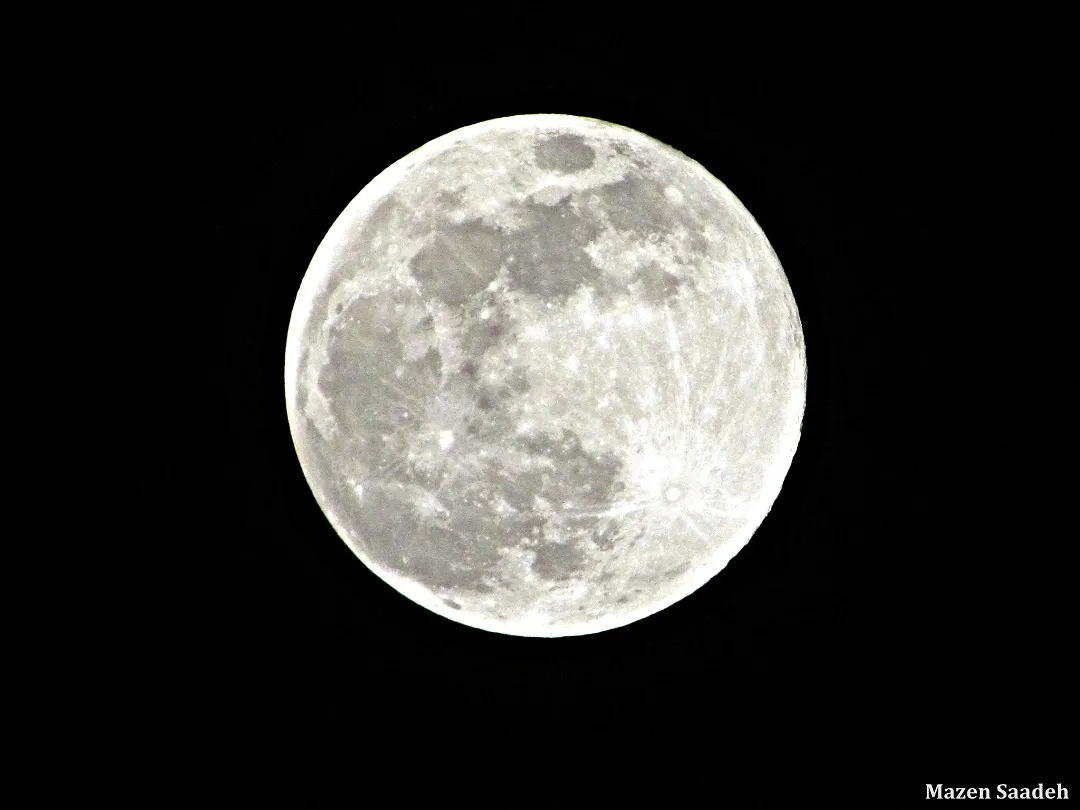
The first of August's two full moons occurs tonight (Aug. 1), offering a lunar preview for a so-called "blue moon" rising at the end of the month.
The moon will reach its full phase at 11:27 p.m. EDT tonight (0327 GMT on Aug. 2), then come back big and bright with a full blue moon on Aug. 31. Night sky observers won't have a chance to see two full moons in a single month again until July 2015.
While high levels of dust or ash in the atmosphere can make Earth's nearest neighbor take on various hues, blue moons aren't named for their color. They usually look like any other full moon in the sky.
The term has always been associated with an "extra" full moon, but its meaning has changed over time. Earlier this century, for example, it referred to the third full moon of a season — spring, summer, winter or fall — that contained four full moons instead of the usual three.
But that definition, found in the Maine Farmers Almanac, was misinterpreted several times over the years, and today we call the second full moon in a single month a "blue moon."
The term "once in a blue moon" has long been used to denote an absurd or unusual occurrence, but blue moons aren't really that rare, coming on average once every 2.7 years.
The existence of blue moons is a result of the fact that calendar months aren't exactly lined up with lunar months.
Get the world’s most fascinating discoveries delivered straight to your inbox.
It takes 29.5 days for the moon to travel around the Earth, during which time we see the satellite go through all of its phases. But all calendar months (except for February) have 30 or 31 days, so it's possible to squeeze two full moons into a month every now and again.
In 1999, in fact, moon watchers saw two blue moons in the span of just three months.
If you snap any good photos of tonight's full moon and would like them to be considered for a future story or gallery, please send them to SPACE.com managing editor Tariq Malik at tmalik@space.com.
Follow SPACE.com senior writer Mike Wall on Twitter @michaeldwall or SPACE.com @Spacedotcom. We're also on Facebook and Google+.
