Coolest Science Stories of the Week


A study of Greenland's rocks may have turned up something unexpected: the oldest and largest meteorite crater ever found on Earth. <br><br> Researchers think the crater was formed 3 billion years ago, making it the oldest ever found, said Danish researcher Adam Garde. The impact cratercurrently measures about 62 miles (100 kilometers) from one side to another. But before it eroded, it was likely more than 310 miles (500 km) wide, which would make it the biggest on Earth, Garde told OurAmazingPlanet. <br><br> [Full Story: <a href=http://www.livescience.com/21307-oldest-meteorite-crater-found.html> World's Oldest Meteorite Crater Found </a>]
The ash from a Pompeii-style volcanic eruption more than a half-billion years ago smothered a nursery of what may be some of the earliest known animals, researchers say. <br><br> These well-preserved findings shed light on the evolution of early life on Earth, and reinforce evidence suggesting that life became more complex earlier than often suspected, investigators added. <br><br> [Full Story: <a href=http://www.livescience.com/21248-earliest-baby-animals-volcanic-ash.html> Earliest Baby Animals Preserved in Ancient Volcanic Ash </a>]
Anyone with normal color vision agrees that blood is roughly the same color as strawberries, cardinals and the planet Mars. That is, they're all red. But could it be that what you call "red" is someone else's "blue"? Could people's color wheels be rotated with respect to one another's? <br><br> "That is the question we have all asked since grade school," said Jay Neitz, a color vision scientist at the University of Washington. In the past, most scientists would have answered that people with normal vision probably do all see the same colors. The thinking went that our brains have a default way of processing the light that hits cells in our eyes, and our perceptions of the light's color are tied to universal emotional responses. But recently, the answer has changed. <br><br> [Full Story: <a href=http://www.livescience.com/21275-color-red-blue-scientists.html> Your Color Red Really Could Be My Blue </a>]
A teensy sluglike animal that wriggled around the sediment in search of food at least 585 million years ago didn't die in vain. The tiny mover left behind tracks that researchers now say represent evidence of the earliest known bilateral animal, or multicellular life with bilateral symmetry. <br><br> The finding, detailed in the June 29 issue of the journal Science, pushes back the date for the existence of advanced multicellular animal life by at least 30 million years. The oldest evidence before this discovery came from Russia and dated to 555 million years ago. <br><br> [Full Story: <a href=http://www.livescience.com/21256-tiny-tracks-earliest-multicellular-animal.html> Tiny Tracks of First Complex Animal Life Discovered </a>]
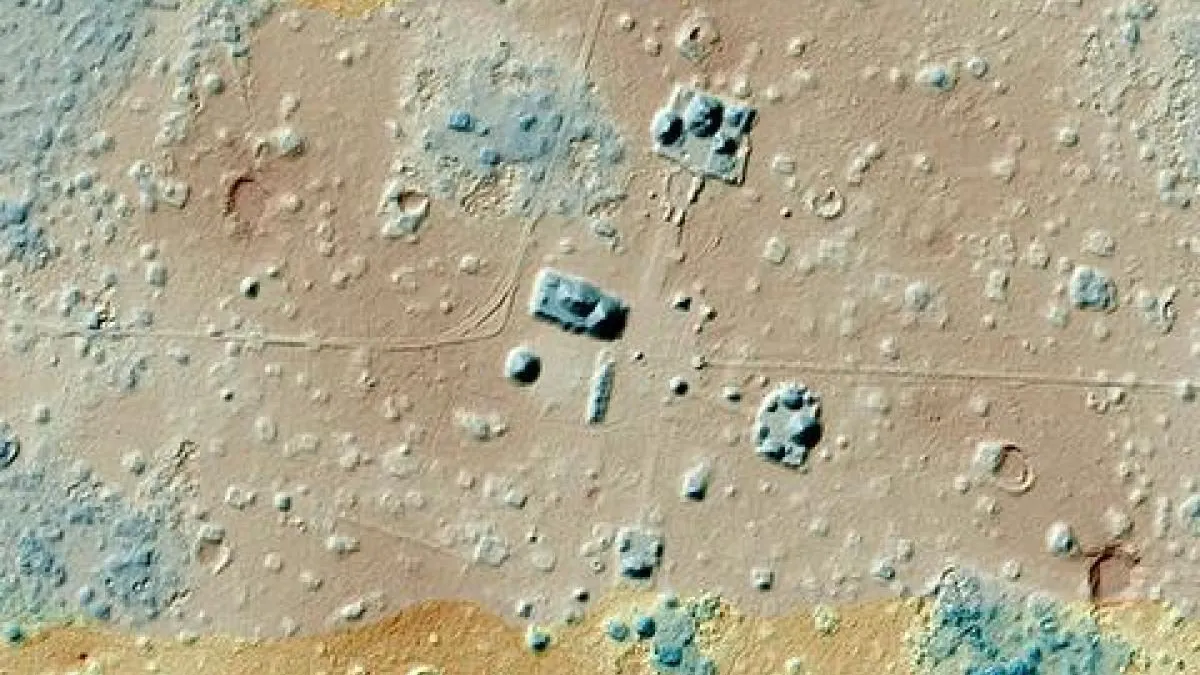
A newly discovered Mayan text reveals the "end date" for the Mayan calendar, becoming only the second known document to do so. But unlike some modern people, ancient Maya did not expect the world to end on that date, researchers said. <br><br> "This text talks about ancient political history rather than prophecy," Marcello Canuto, the director of Tulane University Middle America Research Institute, said in a statement. "This new evidence suggests that the 13 bak'tun date was an important calendrical event that would have been celebrated by the ancient Maya; however, they make no apocalyptic prophecies whatsoever regarding the date." <br><br> [Full Story: <a href=http://www.livescience.com/21255-ancient-text-confirms-mayan-calendar-end.html>Ancient Text Confirms Mayan Calendar End Date</a>]
Dinosaurs may not have been the slow, sunbathing reptiles researchers used to think. In fact, they may have been warm-blooded, new research suggests. <br><br> The researchers studied the "growth lines" on animal bones, which are similar to the growth rings in tree trunks. During slow-growing times like during the winter, they are darker and narrower, while in fast-growing times the bones have lighter, wider bands. <br><br> [Full Story: <a href=http://www.livescience.com/21215-dinosaur-bones-warm-blooded.html> How Sweet! Dinosaurs May Have Been Warm-Blooded After All </a>]
A new survey finds that 80 million Americans, or 36 percent of the population, believe UFOs are real. One in 10 respondents say they have personally witnessed an alien spaceship. And if aliens were to invade the country sometime in the next four years, 65 percent of survey respondents said President Obama would be better suited for handling the invasion than Republican presidential candidate Mitt Romney. <br><br> The market research company Kelton Research conducted the survey by polling a nationwide sample of 1,114 Americans ages 18 and older, who were representative of the demographics of the nation as a whole. The survey was commissioned by the National Geographic Channel to promote its new series "Chasing UFOs." <br><br> [Full Story: <a href=http://www.livescience.com/21216-americans-ufo-belief.html> One-Third of Americans Believe in UFOs, Survey Says </a>]
Hell has its benefits. A strong belief in fiery punishment is good for a country's crime rates, indicates a new study that looked at religious belief and crime data from around the world. <br><br> While the researchers found stronger belief in hell was linked to less crime, the opposite turned out to be true for a belief in heaven. This suggests countries where citizens put more stock in heaven than in hell suffer from higher crime rates, and the bigger the gap, the worse the crime, the analysis revealed. <br><br> [Full Story: <a href=http://www.livescience.com/21198-hell-belief-crime-rates.html> Hell Helps Keep Society Safe</a>]
A fireball that tears across the sky is not just a one-time skywatching event — it can reap scientific dividends long afterward. In fact, one that lit up Mexico's skies in 1969 scattered thousands of meteorite bits across the northern Mexico state of Chihuahua. And now, decades later, that meteorite, named Allende, has divulged a new mineral called panguite. <br><br> Panguite is believed to be among the oldest minerals in the solar system, which is about 4.5 billion years old. Panguite belongs to a class of refractory minerals that could have formed only under the extreme temperatures and conditions present in the infant solar system. <br><br> [Full Story: <a href=http://www.livescience.com/21197-allende-meteorite-panguite-mineral.html> 1969 Fireball Meteorite Reveals New Ancient Mineral</a>]
A giant atom-smashing racetrack of sorts has just broken a Guinness World Record by reaching the highest man-made temperature ever recorded, scientists announced Monday (June 25). <br><br> How hot? 250,000 times hotter than the center of the sun. <br><br> [Full Story: <a href=http://www.livescience.com/21183-rhic-guinness-highest-temperature.html> Atom Smasher Sets Guinness Record for Hottest Man-Made Temperature</a>]