It's quick and easy to access Live Science Plus, simply enter your email below. We'll send you a confirmation and sign you up for our daily newsletter, keeping you up to date with the latest science news.
A rare and endangered monkey in an African equatorial rainforest, the wild drill, may see a dramatic population decline if the forest dries out and vegetation becomes sparser amid warming temperatures, researchers report.
Monkeys called wild drills, already an overhunted species, may see a dramatic population decline if their forest home dries out and vegetation becomes sparser amid warming temperatures, researchers report.
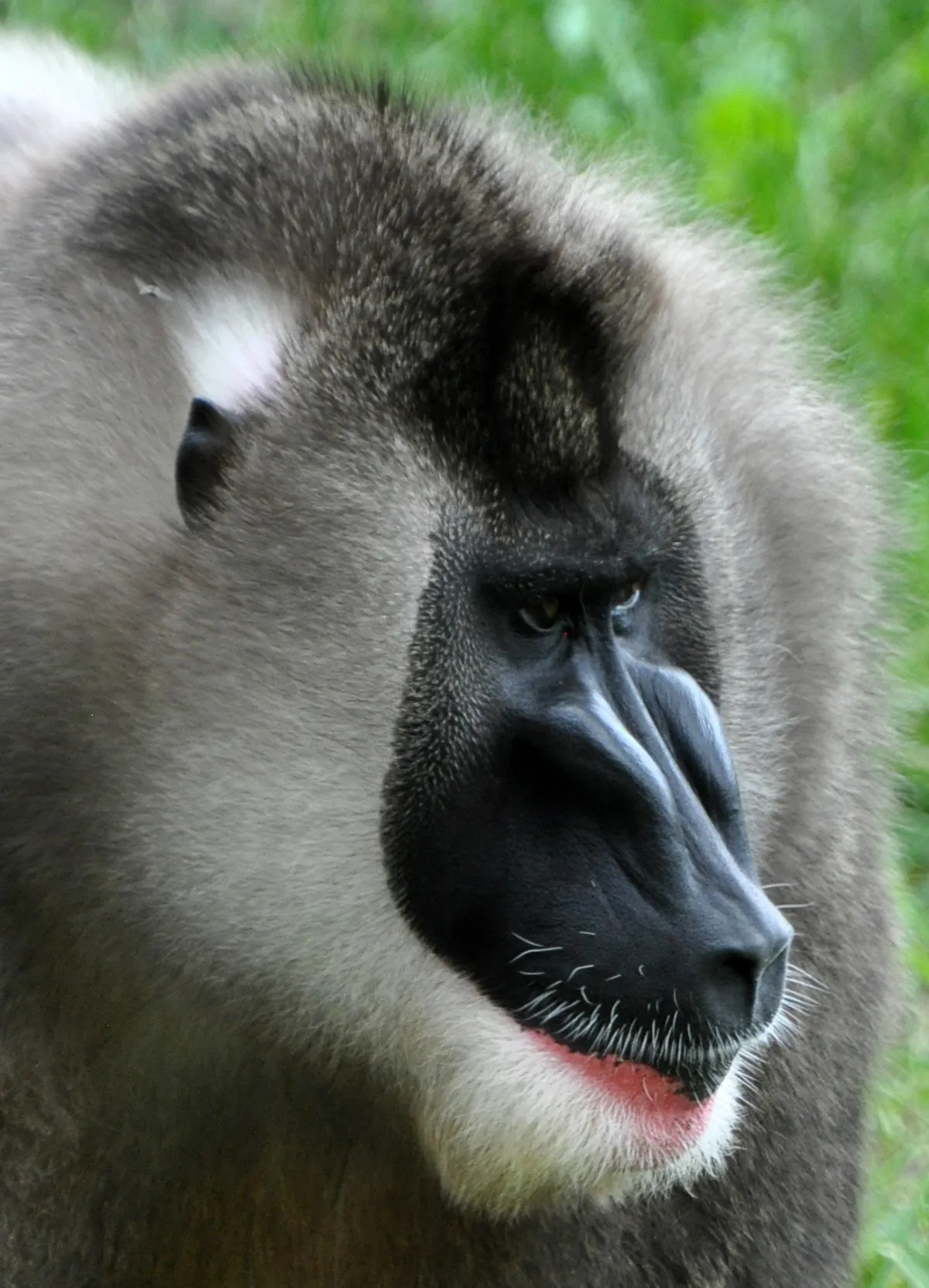
Closely related to baboons and mandrills, endangered wild drills (Mandrillus leucophaeus) are found in the African equatorial rainforest. Researchers studied DNA from 54 drill samples, most of which were poop collected in the Cross-Sanaga-Bioko Coastal forests that stretch across portions of Nigeria, Bioko Island (equatorial Guinea) and Cameroon.
Comparing monkey DNA sequences can tell researchers about their ancestors. If the ancestral population was small, there would be fewergenetic differences in the population, andgenetic sequences would be similar between two, even unrelated, individuals.
"Looking at its modern genetic diversity, you can infer changes in past population size," study researcher Nelson Ting, a professor at the University of Oregon, said in a statement. They saw a clear population decrease in the drill's genes. "The drills went through a large population collapse — as much as 15-fold."
A drill holding a flower.
(Image credit: Courtesy of Nelson Ting)
That evidence led them to the fossil and pollen records, looking for when this population collapse occurred. They found a drop in forest pollen (and by extension, a drop in forest habitats, the drill's prime habitat) that "occurred sometime around the mid-Holocene, which was about 3,000 to 5,000 years ago," Ting said.
At that time, temperatures across equatorial Africa were hotter and dryer and there was less forest cover. Today's changing climate could have the same effects, which could spell disaster for the drill.
"We could see many of these equatorial forests becoming very arid. Forest will be lost as vegetation changes to adapt to dryer conditions," Ting said. "This type of animal, which already is very much endangered because of hunters, would not be able to deal with the level of climate changes that could be coming."
Sign up for the Live Science daily newsletter now
Get the world’s most fascinating discoveries delivered straight to your inbox.
The study was published online Feb. 10 in the journal Ecology and Evolution.
You can follow LiveScience staff writer Jennifer Welsh on Twitter @microbelover. Follow LiveScience for the latest in science news and discoveries on Twitter @livescienceand on Facebook.
Jennifer Welsh is a Connecticut-based science writer and editor and a regular contributor to Live Science. She also has several years of bench work in cancer research and anti-viral drug discovery under her belt. She has previously written for Science News, VerywellHealth, The Scientist, Discover Magazine, WIRED Science, and Business Insider.