Ancient Mud Volcanoes Perfect for Early Life, Rock Study Suggests

Ancient deep-sea mud volcanoes may have been ideal settings for early life on Earth, researchers suggest.
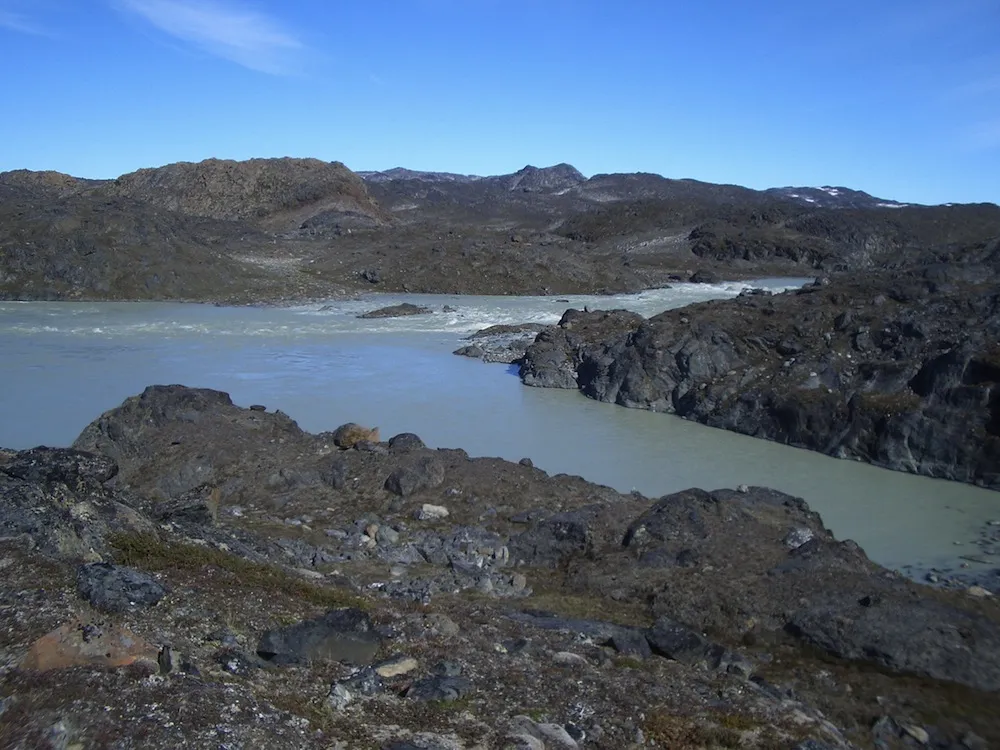
Life may have first developed on Earth nearly 4 billion years ago, but much remains mysterious about its beginnings. To learn more about life's origins, scientists investigated some of the oldest remnants of crust on Earth — rocks 3.7 billion to 3.8 billion years old from Isua on the southwestern coast of Greenland.
The researchers found these ancient rocks once were permeated with lukewarm alkaline fluids rich in carbonates. These liquids resemble those seen today in so-called serpentine mud volcanoes located in the deep sea near the Mariana Islands, an archipelago in the Pacific Ocean formed by the summits of volcanoes; the conditions would have made the area off the coast of Greenland an especially friendly place for amino acids, helping keep them stable in the distant past. Amino acids are key ingredients of life, serving as the building blocks of proteins. [7 Theories on the Origin of Life]
"These serpentine mud volcanoes would have been the best environment for sustaining life," researcher Francis Albarede, a geochemist at the Ecole Normale Supérieure of Lyon in France, told LiveScience. "These findings mean that you could have sparked life at those places and also have it survive there."
Scientists have long thought that life might have begun at deep-sea hydrothermal vents typically found near volcanically active locales. These are rich in chemical and thermal energy, often helping sustain vibrant ecosystems. However, the vast majority of hydrothermal vent fields seen now are too hot and too acidic for a soup of free-floating amino acids to have survived.
"It'd be like trying to make life evolve from hot Coca-Cola," Albarede said. In contrast, serpentine mud volcanoes are relatively lukewarm, and alkaline instead of acidic.
Although these serpentine mud volcanoes are relatively uncommon now, they would have been more prevalent when the seas more thoroughly dominated the world. They seem to prefer to form at oceanic subduction zones — that is, areas where oceanic plates dive under one another. Nowadays, subduction zones are mostly located at the borders of continental plates instead.
Get the world’s most fascinating discoveries delivered straight to your inbox.
As to why serpentine mud volcanoes prefer to form at oceanic subduction zones, "that's an issue people haven't figured out yet," Albarede said.
Albarede and his colleagues detailed their findings online Oct. 17 in the journal Proceedings of the National Academy of Sciences.